Counter-Strike started as a free mod for Half-Life, made by two hobbyists who hadn't met in person. Twenty-seven years later it has been rebuilt three times, on three engines, and every main game in the series is still on Steam. Here is how the series got from the 1999 beta to Counter-Strike 2.
The series at a glance
| Version | Released | Engine | What it's remembered for |
|---|---|---|---|
| Counter-Strike (mod) | Beta 1, June 19, 1999 | GoldSrc (Half-Life) | The original rules, maps and economy |
| Counter-Strike 1.0 | November 2000 | GoldSrc | The first retail release, after Valve bought the rights |
| Counter-Strike 1.6 | September 12, 2003 | GoldSrc | The last big update, released with the Steam client |
| Condition Zero | March 2004 | GoldSrc | Single-player missions against bots |
| Counter-Strike: Source | October 7, 2004 | Source | Physics and modern graphics |
| Global Offensive | August 21, 2012 | Source | Skins, Majors and free to play |
| Counter-Strike 2 | September 27, 2023 | Source 2 | Sub-tick, volumetric smokes, the CS:GO inventory carried over |
1999 and 2000: the mod
Minh "Gooseman" Le and Jess "Cliffe" Cliffe planned the mod in early 1999. In Cliffe's own retrospective, the two discussed names over ICQ on March 15, 1999, opened the mod's website on March 24, and released Beta 1 on June 19. Liquipedia's record of that first beta lists nine weapons, from the USP and Glock to the AWP and M249, and a hostage rescue scenario on four custom maps, including cs_siege.
The pair worked entirely online. PCGamesN reported that Le and Cliffe didn't meet face to face until 2003, months before version 1.6. Many of the maps that defined the game came from community mappers in those beta years. Dust, for example, was made by David Johnston, a 16-year-old at the time according to PCGamesN, and the Counter-Strike Wiki dates it to November 1999, alongside Nuke.
Valve stepped in during the fifth beta and eventually bought the rights, hiring the creators. After a year of betas, the mod's first full release came on November 9, 2000, and the boxed retail version, published with Sierra, reached North American shops on November 14, 2000, according to the Counter-Strike Wiki.
2001 to 2003: version 1.6 and Steam
Valve kept patching the game. The Counter-Strike Wiki lists a new spectator mode in 1.1, voice communication in 1.3 and anti-cheat technology in 1.4, and PCGamesN notes that Valve Anti-Cheat, VAC, arrived alongside Counter-Strike in 2002. Version 1.5, released on June 12, 2002, was the last one available as a separate download.
Version 1.6 was different: it came through Steam. After a public beta that began in January 2003, the final 1.6 shipped together with the Steam client on September 12, 2003. It was the last major content update, and "1.6" became the name players still use for the original game. Le told PCGamesN that by then the community had become so resistant to change that "this was basically Counter-Strike from now on."
2004: Condition Zero and Source
Condition Zero had a long road. The Counter-Strike Wiki lists four studios on it before release: Rogue Entertainment, Gearbox Software, Ritual Entertainment and finally Turtle Rock Studios. It came out in March 2004, still on GoldSrc, with updated multiplayer models and a single-player mode against bots. Ritual's earlier version shipped alongside it as a separate campaign called Deleted Scenes.
Counter-Strike: Source followed the same year. Valve announced it at E3 in May 2004 as the multiplayer part of Half-Life 2, opened a beta in August, and released it on October 7, 2004, more than a month before Half-Life 2 itself. It rebuilt the game in the Source engine, with physics objects, ragdolls and servers of up to 64 players. Parts of the competitive community stuck with 1.6, which left Counter-Strike with two separate player bases for years.
2012 to 2023: Global Offensive
CS:GO grew out of a smaller project. In 2010 Hidden Path Entertainment began porting Source to consoles, and Valve turned it into a new game, announced on August 12, 2011 and released on August 21, 2012 for PC, Mac, Xbox 360 and PlayStation 3. Hidden Path's CEO told PC Gamer the main design goal was a version that both the 1.6 and Source communities would accept.
It didn't take off at first. PC Gamer wrote in 2015 that for a year after release CS:GO wasn't even the most popular Counter-Strike. The turning point was the Arms Deal update of August 2013, which added weapon skins, cases and the Market. PC Gamer counted an average of 357,535 players in August 2015, about 14 times the figure two years earlier. The first Valve-sponsored Major followed in November 2013; our list of every CS Major covers them all.
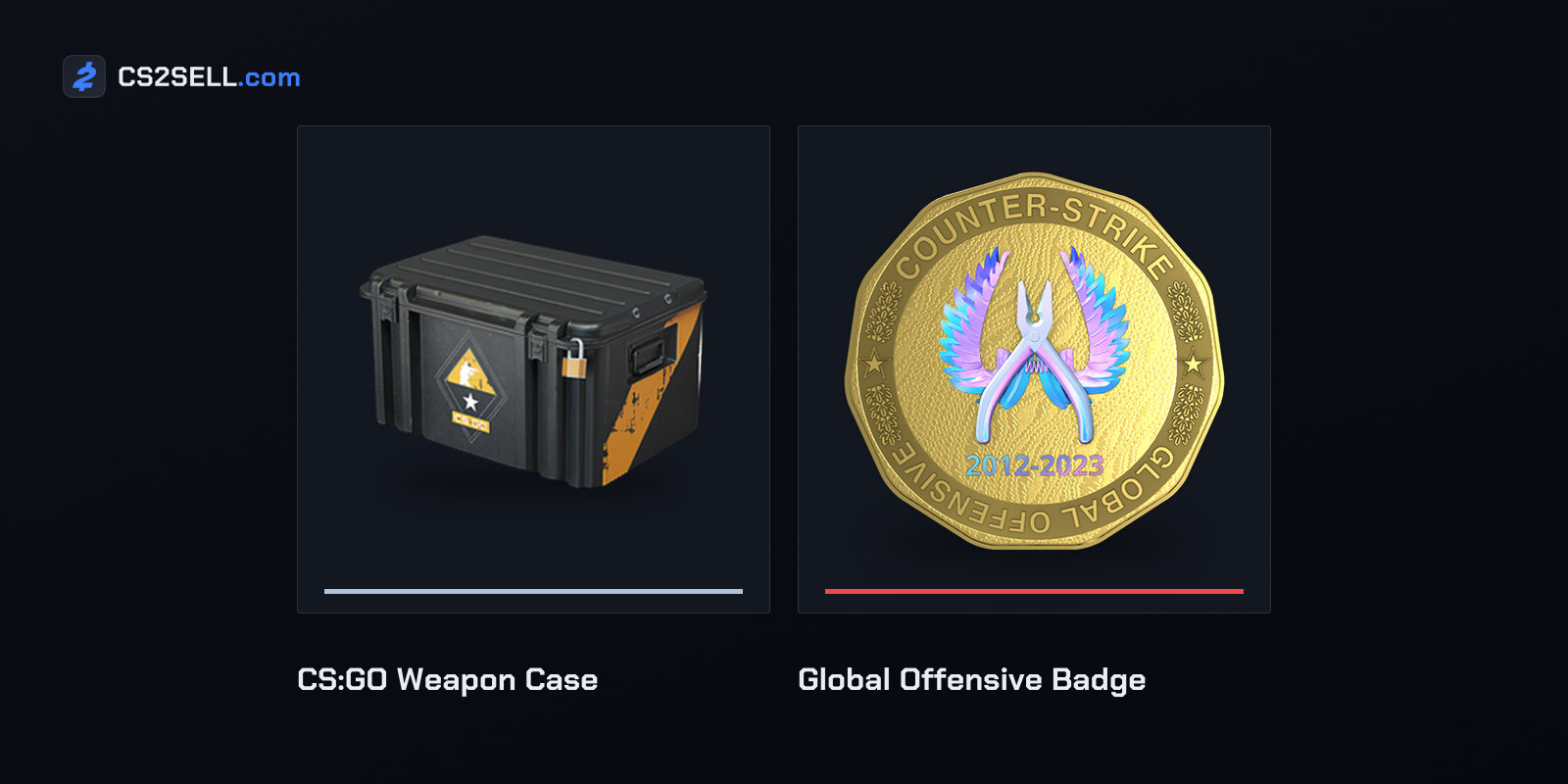
From there, CS:GO became the longest-running version. It went free to play in December 2018, as our article on free to play and Danger Zone explains, and its operations added many of the collections still traded today, covered in our operations history.
2023 onwards: Counter-Strike 2
Valve announced Counter-Strike 2 on March 22, 2023 and opened the CS2 Limited Test the same day. CS2 launched on September 27, 2023 as a free upgrade on the Source 2 engine, taking CS:GO's place in the same Steam listing. Valve's promise was that players could "bring your entire CS:GO inventory", so the item economy built in the CS:GO years carried straight over. Our launch article covers what changed on day one.
CS:GO didn't vanish. A frozen legacy build stayed available, and in March 2026 it got its own Steam page again, as our article on the CS:GO legacy version explains. Counter-Strike 1.6, Condition Zero and Source also still have their own store pages, and Source received a major update in February 2025 that moved it to 64-bit.
What the old versions left in CS2
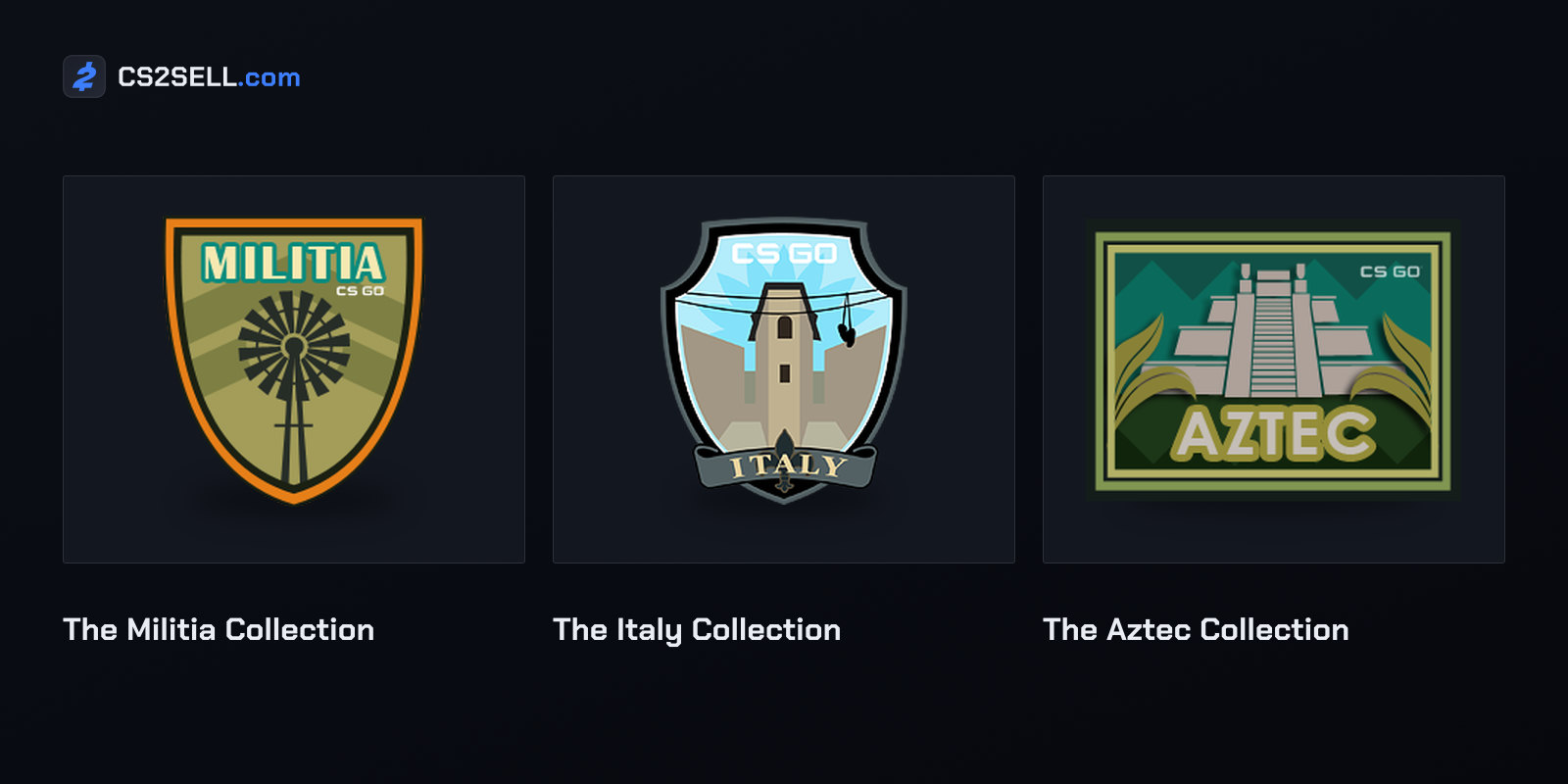
The clearest link is the maps. Dust II, Nuke, Train, Inferno, Italy, Office and Militia all trace back to the mod or its early retail years, and many have CS2 collections, pins or map coins named after them. The economy is newer: skins, StatTrak and cases only date from 2013, as our StatTrak history and history of weapon cases explain.
Sources
- Counter-Strike: A Retrospective in Pictures — counter-strike.net (archived)
- Beta 1.0 — Liquipedia Counter-Strike Wiki
- The making of: Counter-Strike — PCGamesN
- Counter-Strike — Counter-Strike Wiki
- Counter-Strike: Condition Zero — Counter-Strike Wiki
- Counter-Strike: Source — Counter-Strike Wiki
- Counter-Strike: Global Offensive — Counter-Strike Wiki
- How $400 virtual knives saved Counter-Strike — PC Gamer