In July 2015 Kory "Semphis" Friesen said his former Cloud9 team had been "all on Adderall" at ESL One Katowice that March. No one was punished, but ESL wrote an anti-doping policy within weeks, and its first random drug tests, at ESL One Cologne in August, all came back negative. Today ESL and BLAST events follow the code of the Esports Integrity Commission (ESIC), which still bans Adderall without a medical exemption.
What Semphis said
Friesen made the remark on Mohan "Launders" Govindasamy's show. Talking about Cloud9's communication at Katowice, he said: "I don't even care. We were all on Adderall." Cloud9 had dropped him about a month after the event, and he had since joined Nihilum.
At Katowice the team went out in the group stage, losing to Virtus.pro and then to Team SoloMid in the group decider. The ESL One Katowice 2015 article has the full results.
Adderall is an amphetamine prescribed for attention deficit hyperactivity disorder (ADHD) and narcolepsy. Outside medicine it is taken to stay focused, and focus drugs of this kind, rather than steroids, are what esports anti-doping mostly targets. Friesen later said he had tried it while the team was struggling, in the hope it might help, and added: "You don't just take Adderall and instantly become better."
No punishment, but a policy within weeks
ESL's rulebook already banned playing "under the influence of any drugs, alcohol, or other performance enhancers", but it didn't name Adderall, and players weren't tested. With Katowice four months past, there was nothing left to test, and ESL said it would not punish Friesen or Cloud9. "We can't punish someone if we are not 100 percent sure he is guilty," Anna Rozwandowicz, ESL's head of communications, told Vice's Motherboard. Cloud9 owner Jack Etienne disputed Friesen's account and said the team didn't "condone the use of Adderall unless it was prescribed for medical reasons".
On July 23 ESL announced an anti-doping policy to be drawn up with NADA, Germany's national anti-doping agency, and the World Anti-Doping Agency (WADA). It promised random tests at ESL One Cologne in August and aimed to test at every Intel Extreme Masters (IEM), ESL One and ESL ESEA Pro League event. Players caught using performance-enhancing drugs, or admitting to it, would face penalties.
The details came in August:
- ESL adopted WADA's list of prohibited substances.
- Saliva tests replaced the planned skin tests, taken at ESL's discretion on tournament days.
- Players with a prescription, for Adderall for example, needed a doctor's note before the event.
- Cannabis was banned from the first to the last day of competition.
- The heaviest penalty was a two-year ban from ESL events; lighter ones included disqualification and deducted prize money or points.
The first tests at ESL One Cologne 2015
ESL ran its first random drug tests at ESL One Cologne in August 2015, using saliva swabs, and NADA brought an anti-doping prevention programme to the event. Every tested player was negative, though ESL didn't say how many it had tested. Cloud9's Sean "sgares" Gares welcomed the change: "Drug testing is something that's way past overdue in our game," he told PCWorld.
Guinness World Records lists Cologne as the first randomised drug testing at an esports tournament. Not every source agrees: Ars Technica reported in 2015 that the International Esports Federation (IESF), a WADA Code signatory since 2013, had included drug testing in its anti-doping work since that year. The ESL One Cologne 2015 article covers the event itself and its autograph stickers.
ESIC takes over
The Esports Integrity Coalition (ESIC) launched in London on July 5, 2016, with Ian Smith as its first integrity commissioner and ESL and DreamHack among its members. Doping was one of the kinds of cheating it set out to tackle. Now called the Esports Integrity Commission, it is also the body that banned 37 coaches over a spectator bug in 2020, as the coach bug scandal article explains.
By 2017 ESIC ran the tests at ESL events, including saliva tests at ESL One Cologne 2017 and oral-fluid tests at the ESL Pro League Season 5 Finals in Dallas. Smith called WADA's code a poor fit: testing for every substance and taking urine and blood samples were, in his view, neither necessary nor affordable for esports. ESL's Ulrich Schulze wanted an esports-specific list, and that is what ESIC now publishes.
ESIC's rules today
ESIC's Esports Prohibited List 2024, valid since January 1, 2024, bans stimulants including Adderall, Vyvanse, Ritalin, Concerta and Focalin unless the player holds a Therapeutic Use Exemption (TUE), a medical permission applied for in advance. A separate monitoring list covers non-stimulant ADHD drugs, some anxiety medications and modafinil.
The main points of its Anti-Doping Code:
| Rule | What the code says |
|---|---|
| Exemptions | A TUE requires significant harm to health without the drug and no reasonable alternative |
| Samples | Body fluid or hair, with or without notice |
| Admissions | Admitting to use is itself a violation |
| First offence | A fine of up to 100% of prize money and/or a suspension of up to 24 months |
| Second offence | A suspension of one year to life |
| Third offence | Up to a lifetime ban from all esports |
| Publicity | No one under investigation is normally named before a formal charge |
Testing since the pandemic
In March 2023 Cloud9's nafany said he had never been tested at an in-person (LAN) event. Replying, ESL FACEIT Group's Ulrich Schulze said ESL had tested frequently until early 2020, when the pandemic disrupted the staff and facilities ESIC used, and promised the tests would continue. Astralis's blameF said he had been tested at IEM Cologne 2022, and in 2024 G2 posted a photo of an ESIC test at IEM Cologne with the line "Smashed the lower bracket so hard we got drug-tested".
In April 2025 ESL FACEIT Group and BLAST both told Dust2 Brasil that they follow ESIC's code. ESL FACEIT Group added that it had recorded no violations in recent years and would make any confirmed case public.
Valve's Major rulebook has no anti-doping section, but BLAST asked ESIC to test at the BLAST.tv Austin Major in June 2025. ESIC said it had run more than 700 tests at major esports events over the past few years.
Stickers from the two events
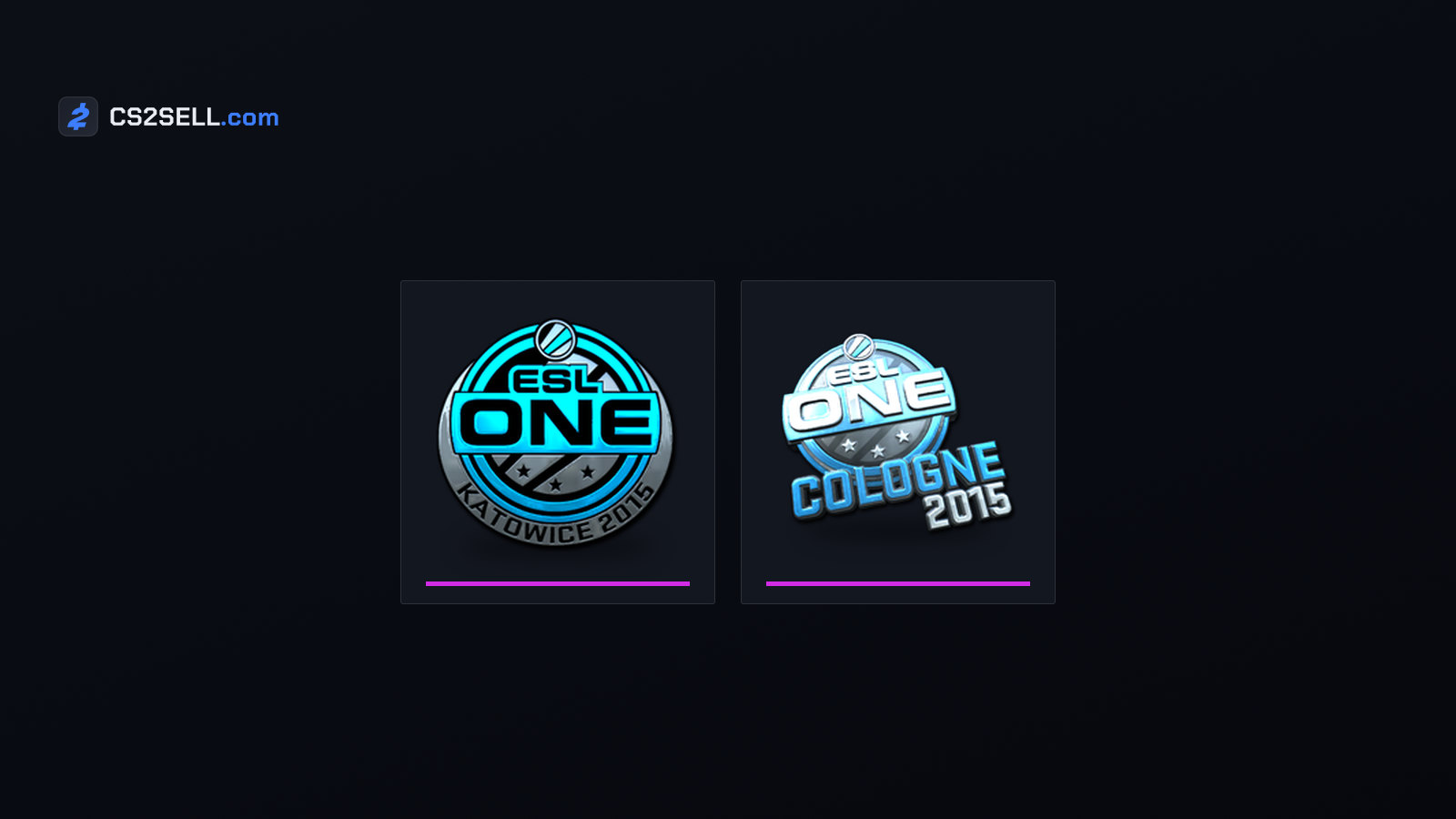
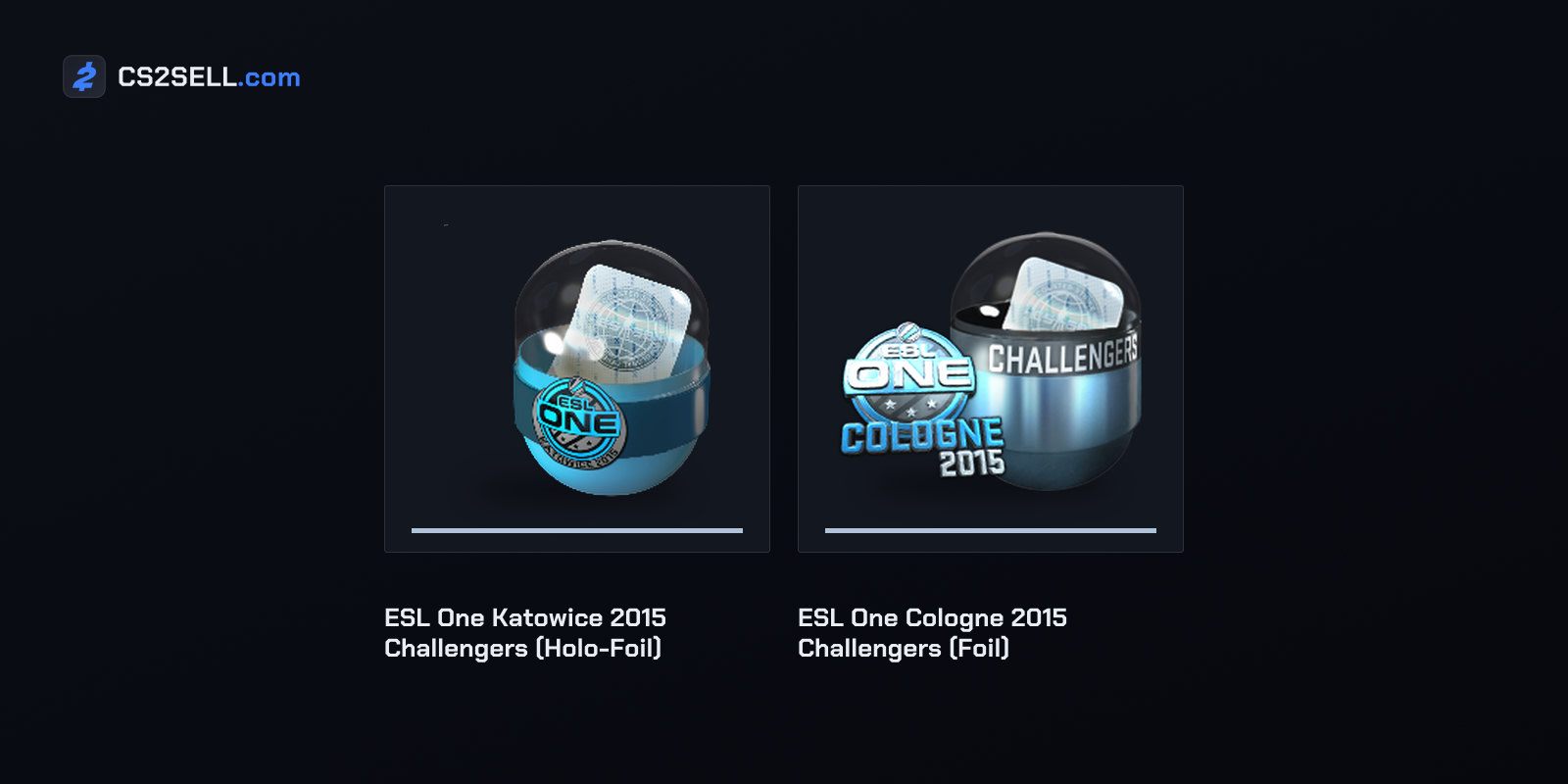
At both events Cloud9's team stickers came in the Challengers capsule. The ESL One Katowice 2015 Challengers (Holo-Foil) capsule held their holo and foil stickers, while the ESL One Cologne 2015 Challengers (Foil) capsule had only foil ones.
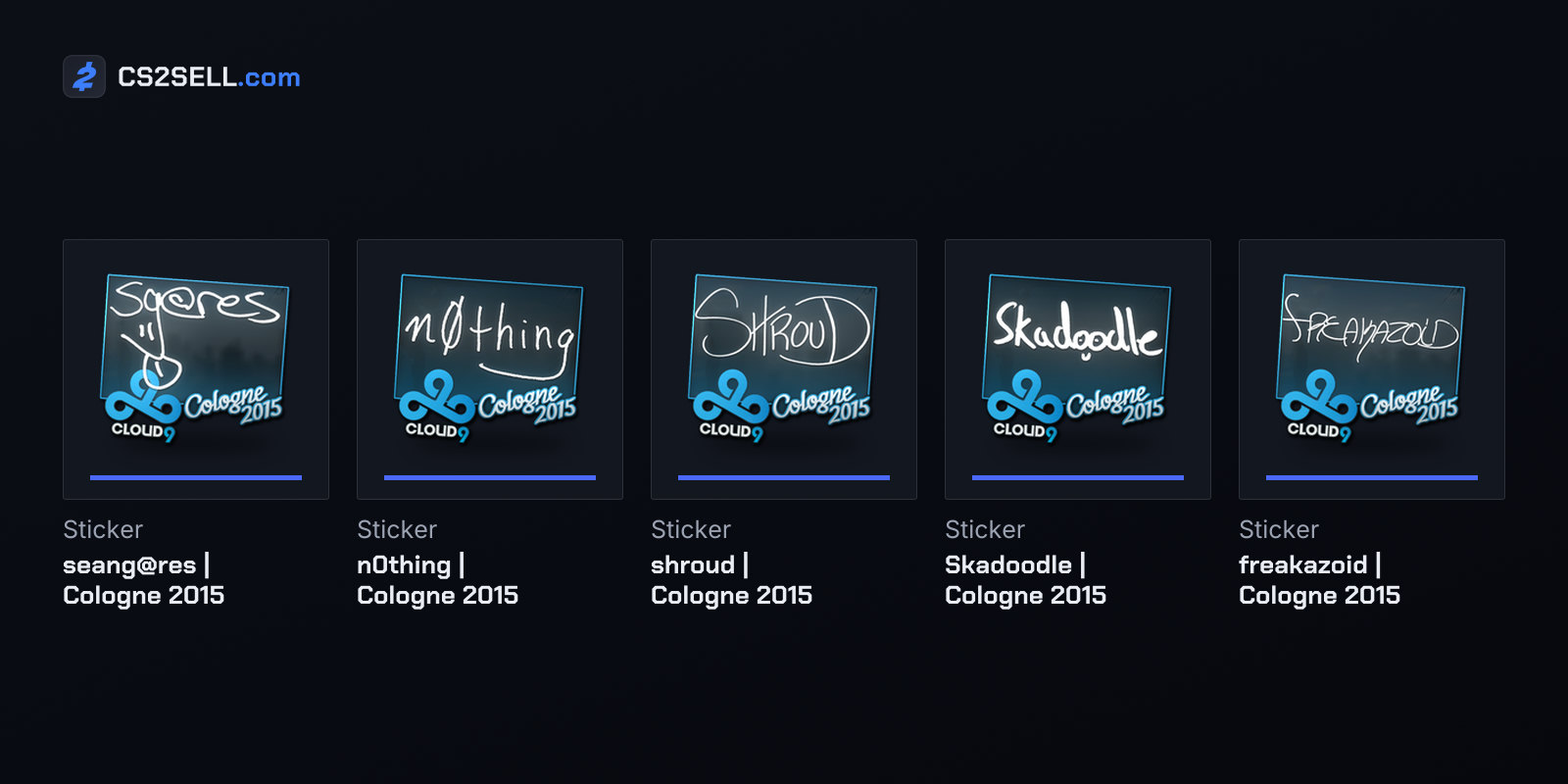
Cologne also had player autographs. Gares's is listed as Sticker | seang@res | Cologne 2015, and the other four Cloud9 autographs are n0thing, shroud, Skadoodle and freakazoid. Valve's description of each says 50% of the proceeds support the players and organisations. The sticker filter on Buy finds skins with one of these autographs applied.
Sources
- Counter-Strike eSports Pro: 'We Were All on Adderall' — Vice
- After Adderall Scandal, eSports Company Will Police Performance-Enhancing Drugs — Vice
- ESL to create anti-PED esports policy with support of NADA — ESL FACEIT Group
- Electronic Sports League reveals list of drugs banned from e-sports — The Verge
- Professional gaming grows up: Drug testing comes to e-sports at ESL One Cologne — PCWorld
- Anti-Doping Code — ESIC
- ESIC Prohibited Substance List — ESIC
- ESIC's anti-doping testing program at the BLAST.tv Austin Major 2025 — ESIC