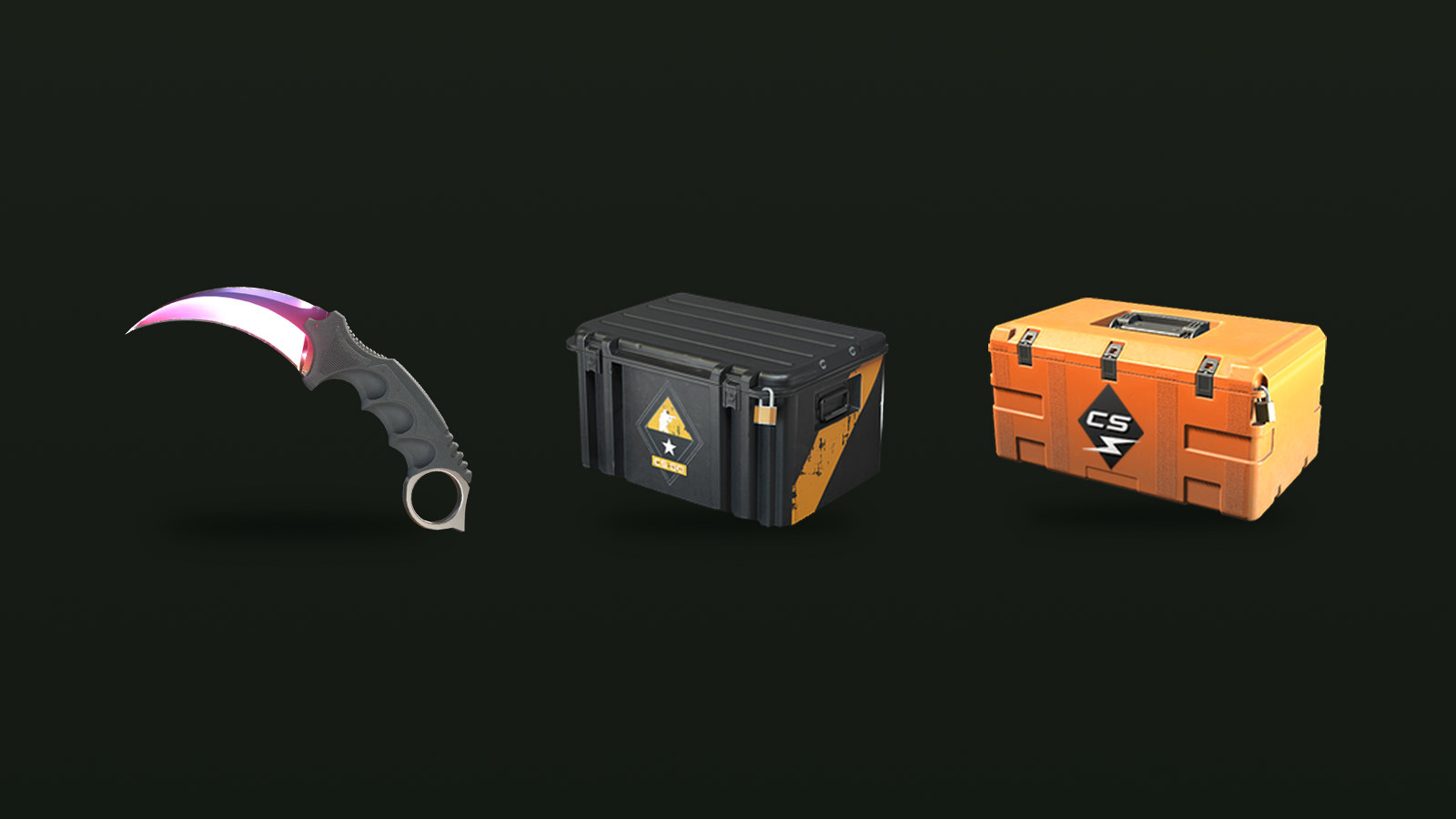
Weapon cases have been the backbone of Counter-Strike's item economy for more than a decade. They arrived in August 2013 as one part of a CS:GO update and became the main source of knives, gloves and a large share of the skins people trade today. Here is how they got there, and what has changed since CS2 replaced CS:GO.
2013: the Arms Deal update
Valve shipped the Arms Deal update on August 14, 2013. It added more than 100 weapon finishes spread across ten themed collections and gave players three ways to get them: timed drops while playing, trades with other players, or opening a dropped weapon case with a matching key. Anything you owned could also be sold on the Steam Community Market.
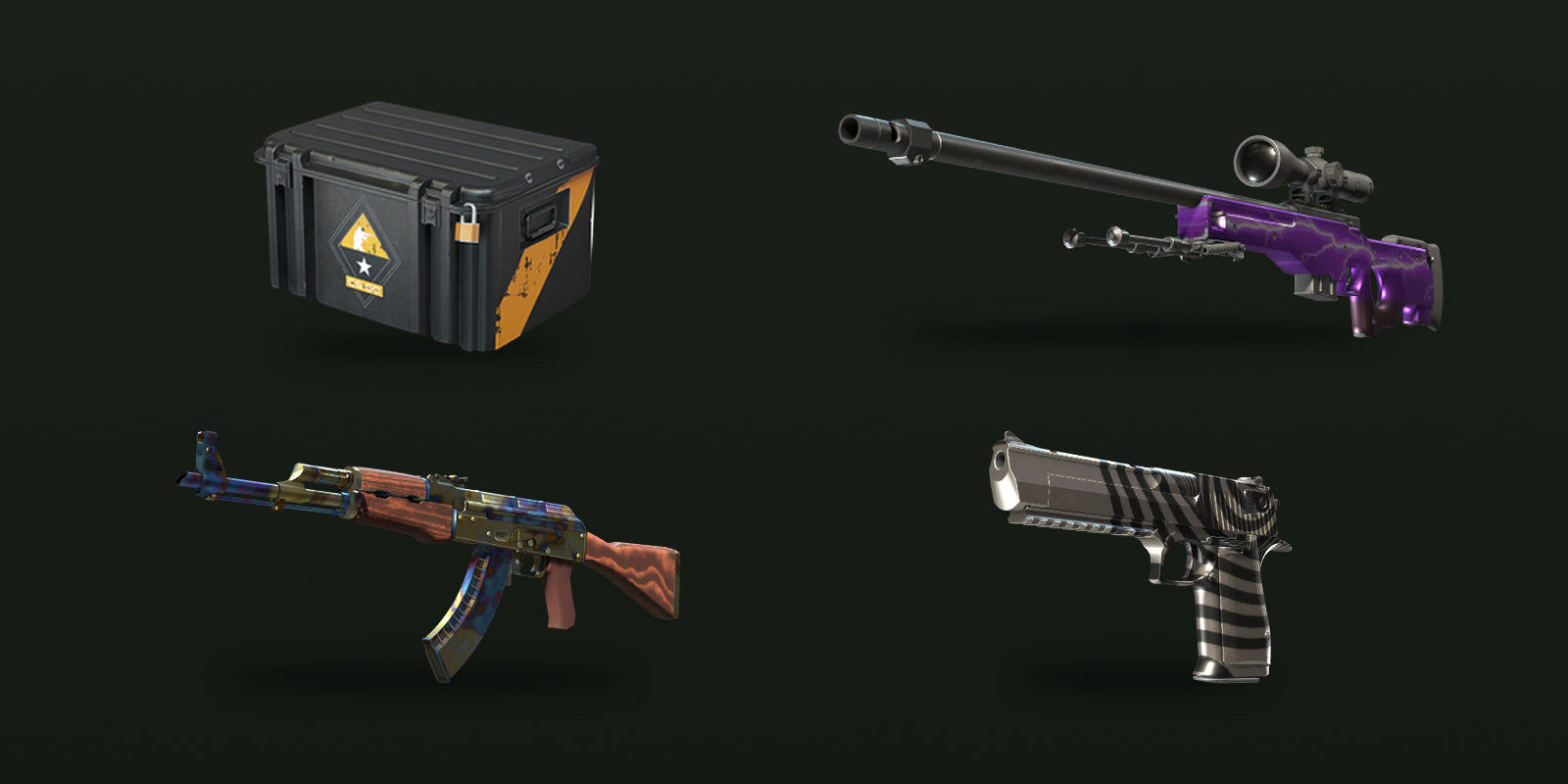
Two containers launched that day. The CS:GO Weapon Case held Valve-made finishes such as the AWP | Lightning Strike, AK-47 | Case Hardened and Desert Eagle | Hypnotic, plus a small chance at a knife: Bayonet, Flip, Gut, Karambit or M9 Bayonet. The eSports Weapon Case needed its own key, and Valve said part of every eSports key sale would go into prize pools for CS:GO events. The same update introduced StatTrak, a kill counter fitted to the weapon, which at launch came only from cases.
Operation cases and community designs
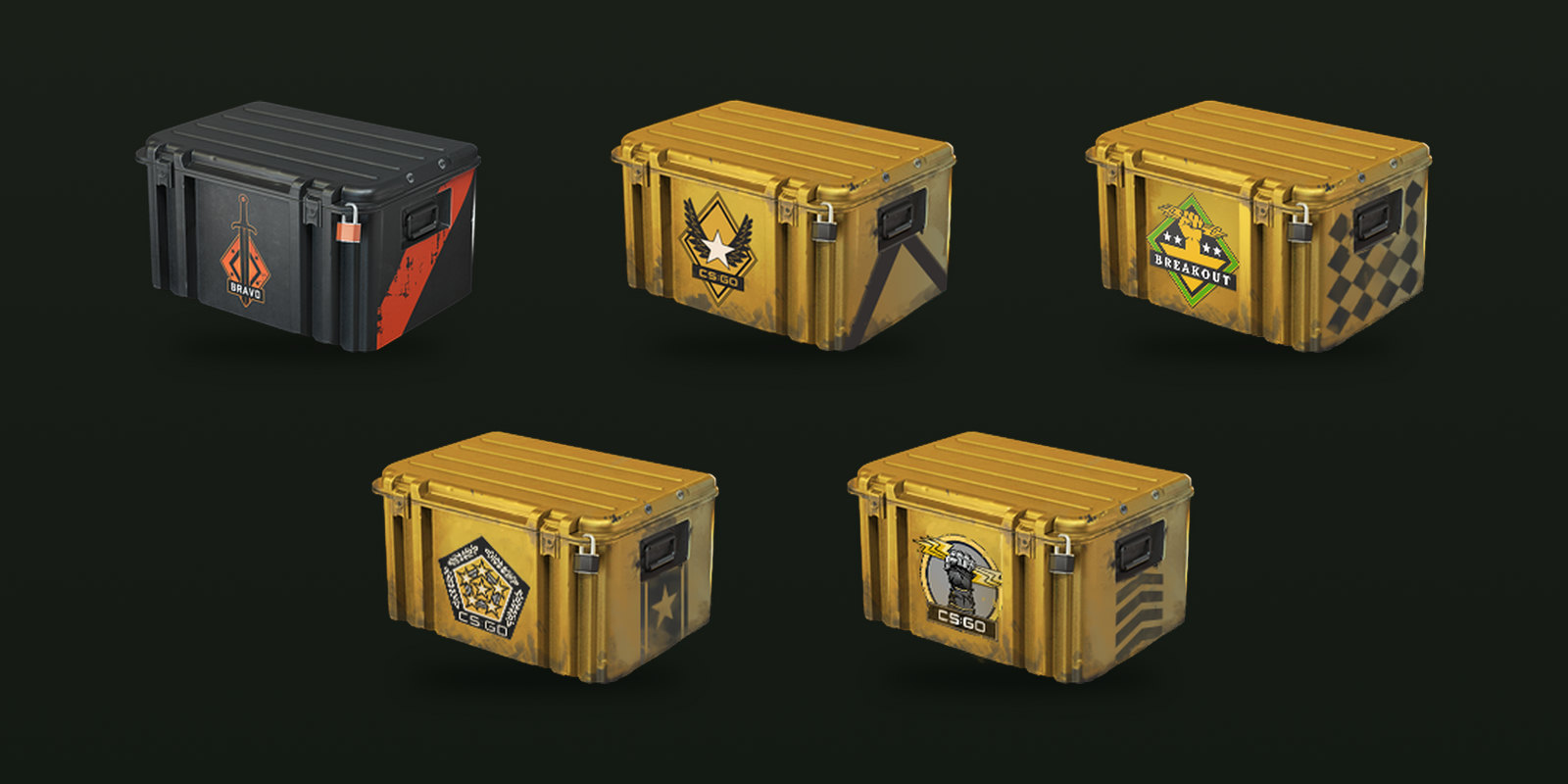
Operations became the next source. Operation Bravo went live on September 19, 2013 with its own case: anyone could get it as a drop while the operation ran, and players who bought the Bravo pass received extra case drops on top of their normal ones. Later operation cases were used to debut new items. Operation Breakout in July 2014, for example, introduced the Butterfly Knife inside its case.
The bigger shift came on December 18, 2013. Valve's notes for that day call the Winter Offensive Weapon Case "the first-ever community-made case": its finishes, including the M4A4 | Asiimov and AWP | Redline, were designs players had submitted to the Steam Workshop. Most cases since then have been built mainly from community work.
Cases also became the place where new kinds of rare items appeared. The Chroma Case (January 8, 2015) brought new knife finishes such as Doppler, Marble Fade and Tiger Tooth. The Glove Case (November 28, 2016) swapped knives for 24 gloves as its special items, the first glove skins in the game.
Odds, keys and regulation
For years Valve did not publish drop rates. That changed in September 2017, when Perfect World, Valve's publishing partner in China, disclosed them to comply with Chinese rules on paid random items. The rates it published per rarity grade were:
| Grade | Chance per opening |
|---|---|
| Mil-Spec (blue) | 79.92% |
| Restricted (purple) | 15.98% |
| Classified (pink) | 3.20% |
| Covert (red) | 0.64% |
| Rare special item (knife or gloves) | 0.26% |
From Mil-Spec to Covert, each grade is five times rarer than the one below it. Any item that has a StatTrak version has a one-in-ten chance of rolling as StatTrak.
Keys went through their own changes. From January 2015, keys bought on the Steam Community Market carried a seven-day trade and market restriction. On October 28, 2019, Valve went further: keys bought in-game could no longer be traded or sold at all. Valve's reason was fraud; it said "nearly all key purchases that end up being traded or sold on the marketplace are believed to be fraud-sourced." Keys bought before that date kept their tradability.
Some countries restrict how cases work. Belgium and the Netherlands restricted case opening in 2018. Since September 2019, players in France must run each container through an X-Ray Scanner, which reveals the item before they buy a key, and they can no longer buy containers on the Steam Community Market. In March 2026 Valve made the X-Ray Scanner mandatory in Germany and the Netherlands as well.
Cases in the CS2 era
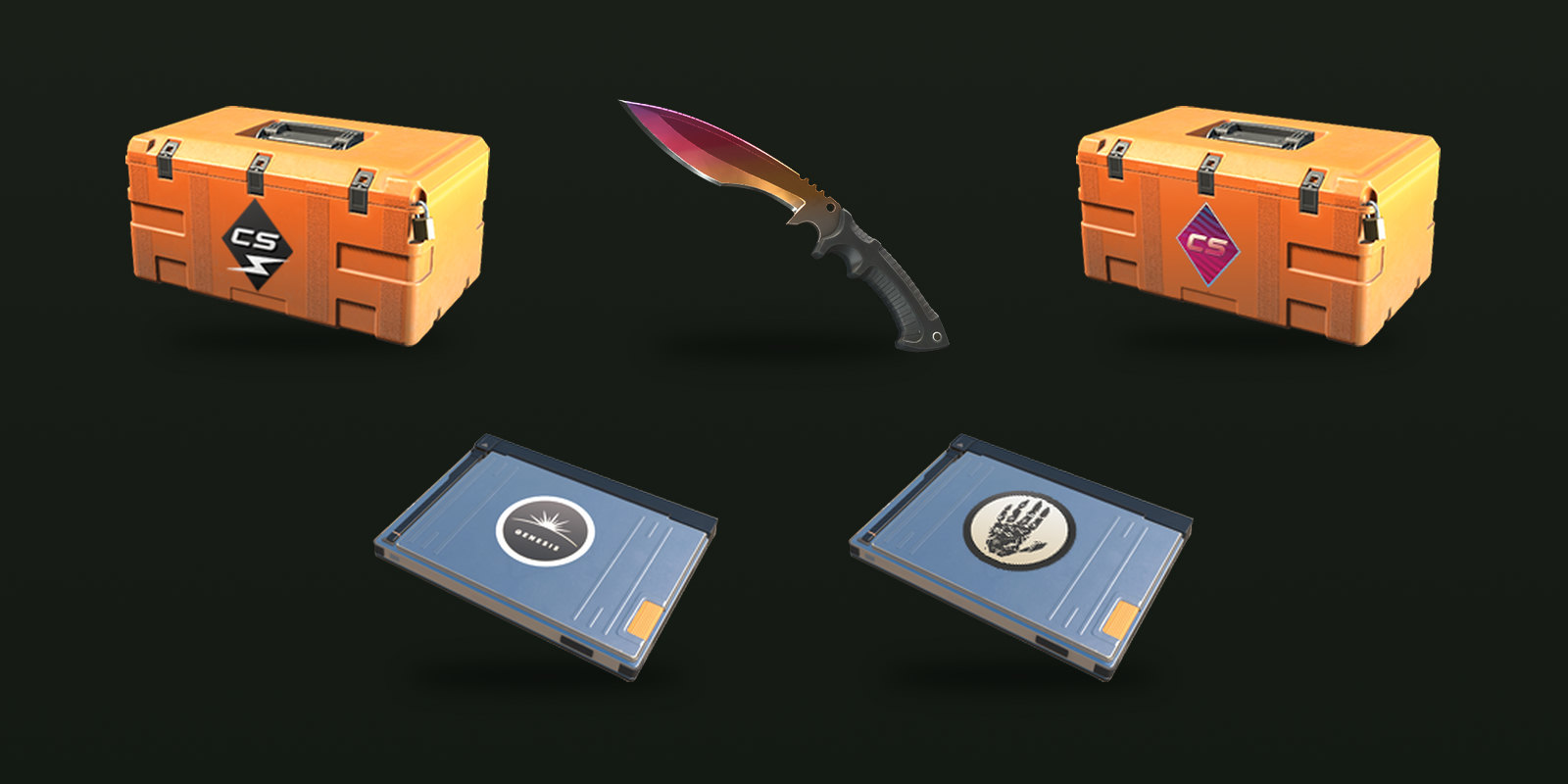
CS2 replaced CS:GO on September 27, 2023, and players' inventories, cases included, carried over. The first case made for CS2 was the Kilowatt Case on February 6, 2024, with 17 community finishes and a new knife, the Kukri, as its rare special item. In May 2024 Valve added an unusual option: opening a Kilowatt case could rent you the whole collection, minus the knife, for a week instead of granting one item.
The two newest cases both arrived through the Armory, a pass-based store introduced on October 2, 2024, where you earn credits by playing and spend them on items. The Gallery Case launched with it.
The Fever Case followed on March 31, 2025, pairing 17 community finishes with Shattered Web knives in Chroma finishes. The Gallery Case left the Armory in October 2025. The Armory update also removed the option to delete weapon cases from your inventory.
Trade-ups and Terminals
Two changes in late 2025 loosened the link between cases and rare items. On October 22, 2025, Valve extended trade-up contracts so that five Covert skins can be exchanged for a knife or gloves from the collection of one of the submitted items; five StatTrak Coverts give a StatTrak knife. For the first time, opening cases was not the only way to get a knife.
A month earlier, on September 17, 2025, the Genesis Collection introduced a new container type. A Sealed Genesis Terminal needs no key. Unsealing it presents up to five offers, one at a time, each a specific skin at a fixed price; you can buy one or pass to the next, and if you pass on all five the Terminal is gone.
The second one, the Dead Hand Terminal from March 11, 2026, added 22 new gloves to the same model. Valve also added a setting that caps the price of offers a Terminal will show you.
What this history means when you buy a case
A case's age and availability shape its supply more than anything else. Cases that no longer drop or have left the Armory have a fixed supply that only shrinks as people open them, while cases in the current drop rotation keep arriving every week. Before you buy a case to open or to hold, check where it currently comes from (the guide to weekly drops and drop pools explains the system) and look at its recent sales on Prices rather than a single listing.
Sources
- 8/13 – The Arms Deal Update — Counter-Strike blog
- CS:GO – The Winter Offensive Update — Counter-Strike blog
- Release Notes for 9/30/2019 (X-ray Scanner) — Counter-Strike blog
- Key Change — Counter-Strike blog
- Container — Counter-Strike Wiki
- Valve releases Dead Hand CS2 collection featuring new glove finishes — Dust2.us