Counter-Strike 2 launched on September 27, 2023 as a free upgrade that took CS:GO's place on Steam. Valve's launch post, "Welcome Home", called it "the largest technical leap forward in Counter-Strike's history". The release notes that day started Season One of Premier, switched on Competitive and Wingman matchmaking, replaced weekly drops with a weekly Care Package and gave long-time CS:GO players a commemorative coin and music kit.
What launched on September 27, 2023
| Area | What changed at launch |
|---|---|
| Ranked play | Premier Season One began, with a visible CS Rating and leaderboards |
| Match length | Premier and Competitive capped at 24 rounds, with 6-round overtime |
| Modes | Competitive, Wingman and private matchmaking enabled; Training Day added for new players |
| Netcode | Sub-tick updates instead of tick-bound movement and shooting |
| Grenades | Volumetric smokes that react to lighting, bullets and explosions |
| Rewards | Weekly Care Package replaced weekly drops |
| Veterans | Commemorative CS:GO coin and CS:GO music kit |
| Store and inventory | New Store tab; all interactions with inventory items enabled |
Some of these had been running in the Limited Test for months. Launch day made them available to everyone.
Premier, CS Rating and 24-round matches
Valve describes Premier as "our Active Duty Pick-Ban competitive mode": the map is decided by picks and bans from the Active Duty pool rather than chosen in advance. Playing it earns a CS Rating, a visible number that places you on global and regional leaderboards. Season One started with the launch and ran until Season Two began in January 2025, as our Season Two article covers.
The Active Duty pool at launch was Ancient, Anubis, Inferno, Mirage, Nuke, Overpass and Vertigo. Dust II wasn't in it. HLTV noted that Dust II had left the pool to make way for Anubis about 18 months before it returned in April 2024, replacing Overpass.
Matches also got shorter. In August 2023 Valve announced "a maximum of 24 rounds in regulation time (with a 6 round overtime in case of a tie) for Premier, Competitive, and the Majors". In practice that means 12-round halves, where CS:GO's Competitive mode used 15. Valve's reasoning was that years of economy and weapon balance changes had cut down uncontested rounds, so close matches could be decided in fewer of them.
Two launch-day matchmaking rules are worth knowing. When a party member is convicted of cheating and permanently banned, everyone in that party loses Profile Rank and CS Rating. And in Premier, players with a very high established CS Rating can't queue with accounts that have no rating yet.
Sub-tick and the new smokes
Valve's CS2 page calls sub-tick updates "the heart of Counter-Strike 2". Servers used to evaluate the game only at fixed intervals called ticks. With sub-tick, the server knows the exact moment you start moving, fire or throw a grenade, so Valve says moving and shooting feel equally responsive "regardless of tick rate" and grenades always land the same way.
Smoke grenades became volumetric objects. They expand to fill the space around them, seep through open doorways, travel up and down stairs, take on the map's lighting, and can be pushed open briefly by bullets or an HE grenade. That created new plays, such as clearing a sightline through a smoke for a split second, and new risks when spraying into one.
Neither system stood still after launch. The February 2024 Kilowatt update, for example, adjusted sub-tick shooting, cut steady-state peeker's advantage by 16 ms and made smokes cast shadows.
Overhauls, upgrades and touchstones
Valve sorted the maps it brought from CS:GO into three groups:
- Overhauls were "fully rebuilt from the ground up" in Source 2. Valve's example was Overpass, and HLTV's first look showed Italy as another. HLTV later described Inferno as overhauled for CS2 as well.
- Upgrades kept their layouts but got Source 2 lighting and physically based materials. Valve's example was Nuke; HLTV also pointed to Ancient.
- Touchstones were classic maps that "haven't been changed" apart from lighting and character visibility, kept so players could judge gameplay changes against CS:GO. Valve's example was Dust II, and HLTV named Mirage.
The launch notes also split Casual and Deathmatch maps into several map groups, and added Office and Vertigo as main menu scenery.
Your inventory came with you
Nobody lost anything in the move. Valve's promise was that you would "bring your entire CS:GO inventory" and keep every item, and the launch notes enabled all interactions with inventory items in CS2. What changed was the rendering: Source 2 lighting, new high-resolution weapon models and reworked stickers changed how many skins look. Our article on what changed for skins in CS2 covers that side in detail.
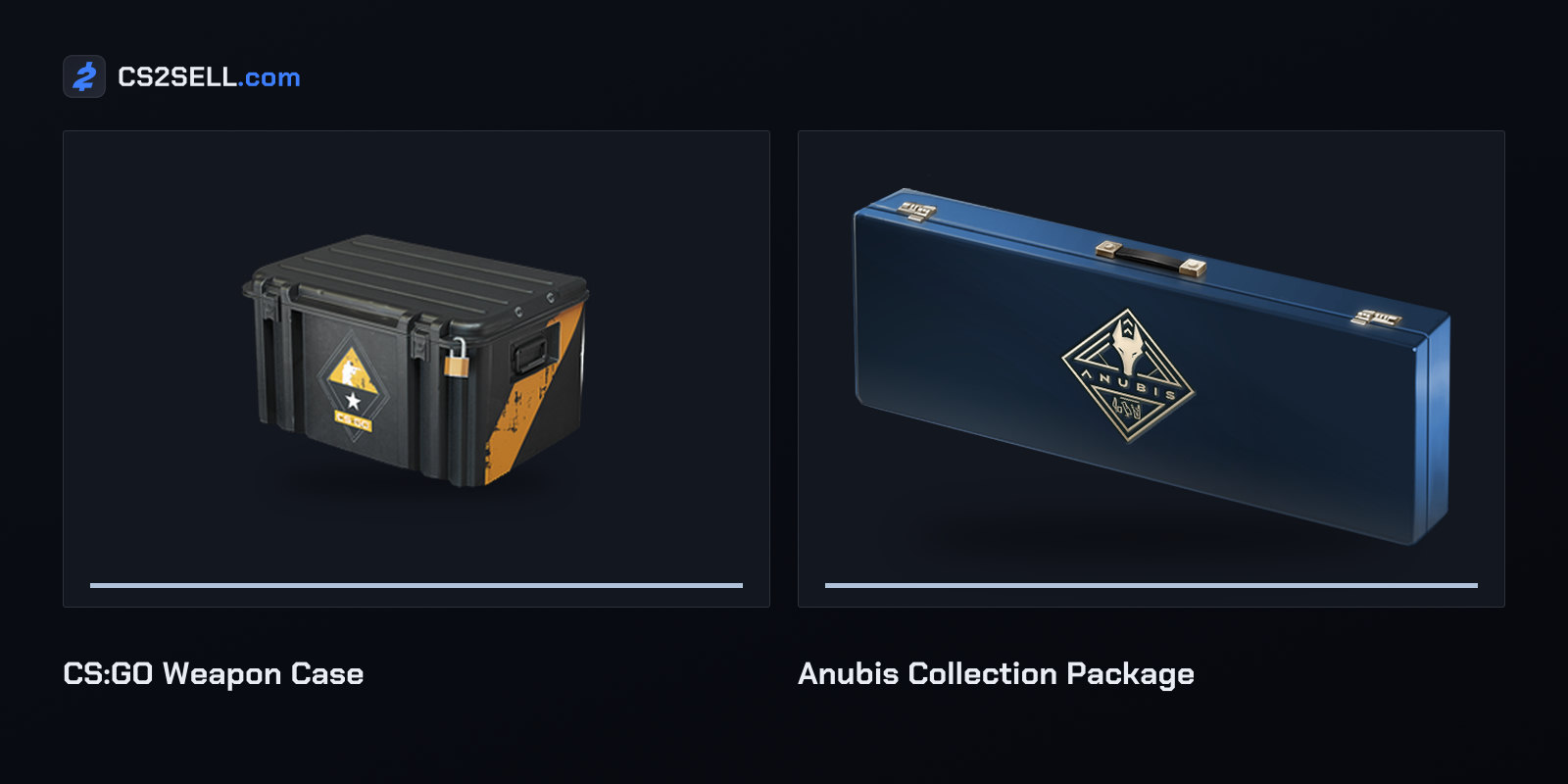
No new case arrived with the launch itself. The first case made for CS2, the Kilowatt Case, followed in February 2024. Launch day did bring smaller inventory features: a Store tab in the main menu, new item icons, and the option to favourite and shuffle loadout items.
Weekly Care Packages replaced drops
CS:GO's weekly drops were replaced by a weekly Care Package. In the launch notes' words, you "choose from weapon cases, weapon finishes, and graffiti". The package still exists, but what it can contain has changed several times since. Our guide to weekly drops and drop pools explains how it works today, including which cases are still dropping.
Rewards for CS:GO veterans
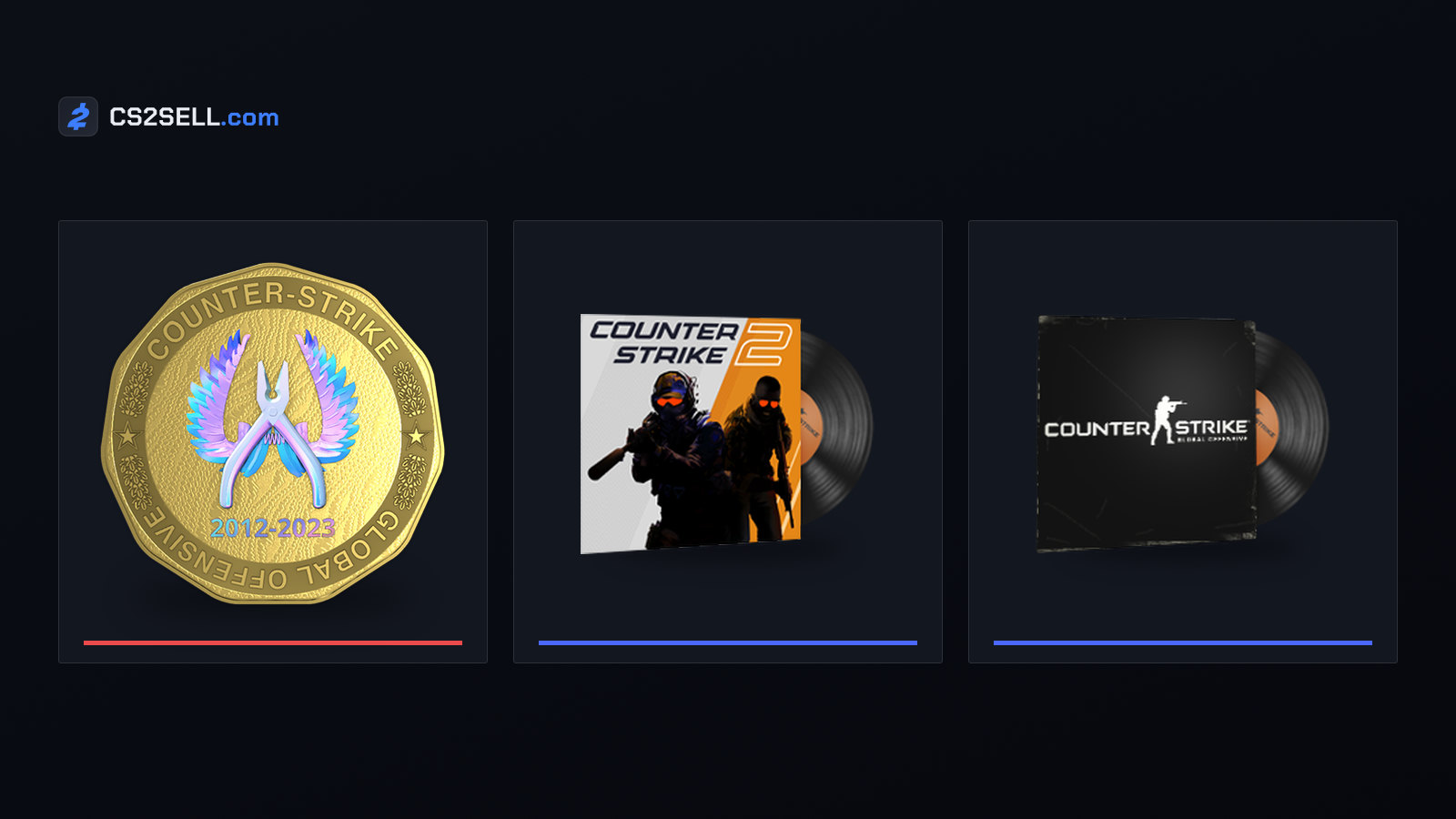
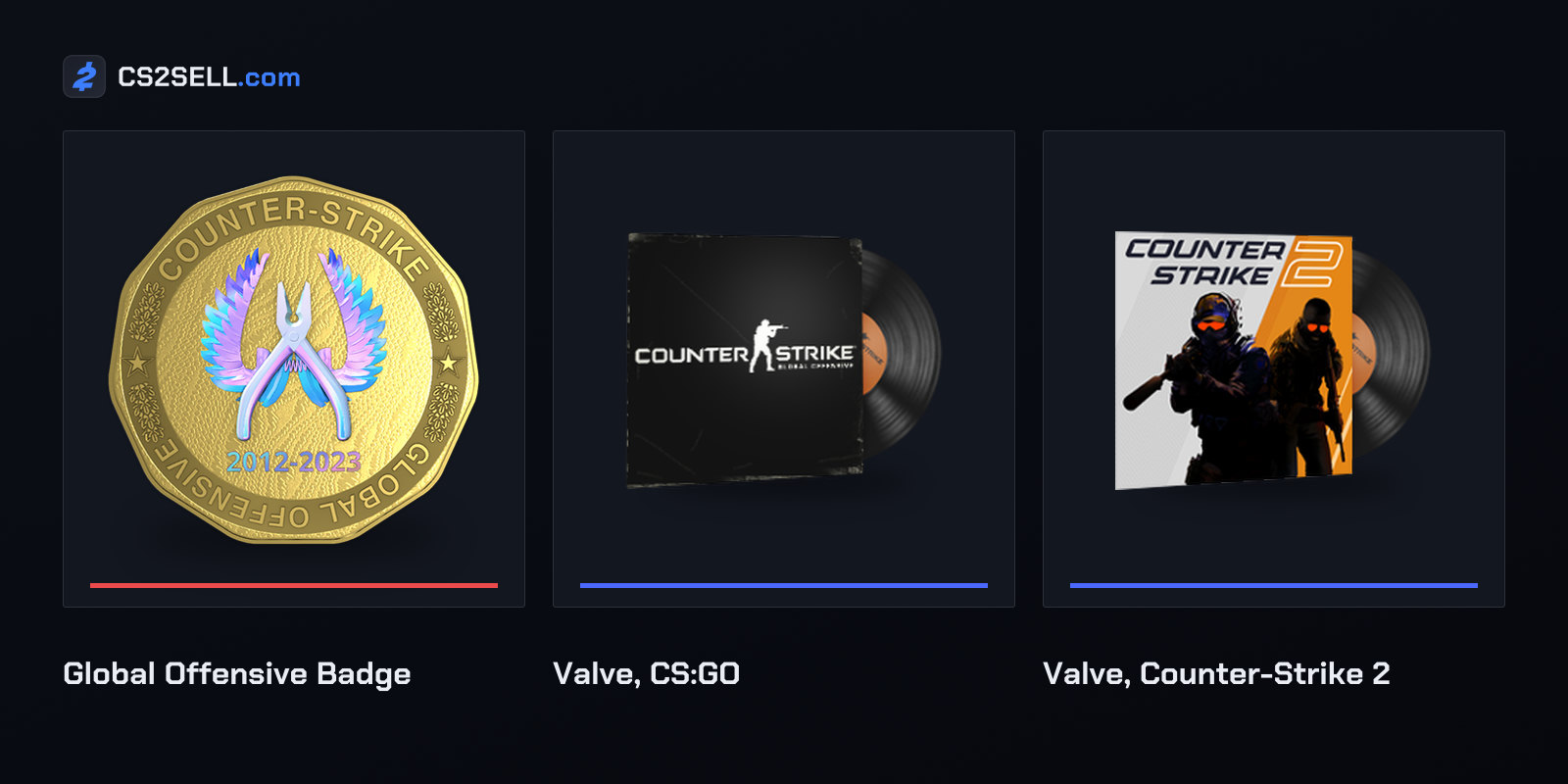
CS:GO players who had started playing more than a week before launch received a commemorative CS:GO coin and the CS:GO music kit. In the inventory the coin is called the Global Offensive Badge, and its description says it commemorates loyal membership in the CS:GO community before the release of Counter-Strike 2. The music kit is Valve's own CS:GO kit, described in-game as the default kit introduced with CS:GO in 2012. The launch also added a new default music kit for CS2.
The Limited Test (March to September 2023)
Valve announced CS2 on March 22, 2023 and started a Limited Test for selected CS:GO players the same day, promising the game "this summer" as a free upgrade. Over the next six months the test introduced much of what shipped:
- June 6, 2023: Mirage replaced Dust II, until then the test's matchmaking map. The loadout system arrived, with a starting pistol slot plus four pistol, five mid-tier and five rifle slots per side, so you could carry both M4s. A grid buy menu replaced the wheel, unused purchases could be refunded in the same round, and CS2 Workshop Tools let artists make finishes, stickers and maps. Market items also became inspectable in CS2.
- August 31, 2023: Inferno arrived, along with Premier, the CS Rating and the 24-round format. Valve also began inviting every eligible player: Prime status, an active Competitive Skill Group, and most matches played in a test region.
What happened to CS:GO
CS2 replaced CS:GO in the same Steam listing rather than launching alongside it. It doesn't run on macOS, DirectX 9 or 32-bit Windows, and HLTV reported in October 2023 that players on those systems could claim a Prime Status Upgrade refund until December 1, 2023. A frozen legacy build of CS:GO stayed available under Steam's Betas tab, with every feature except official matchmaking, and its support ended on January 1, 2024.
Where it stands now
Much of the launch setup has changed since. Dust II returned to Active Duty in the April 2024 update, Arms Race came back in February 2024, and the first community maps arrived in June 2024. Premier reached Season Five in July 2026, as our Season Five article explains. For every major change since launch in order, see the CS2 update history.
Sources
- Welcome Home — Counter-Strike 2 news
- Release Notes for 9/27/2023 — Counter-Strike 2 news
- Counter-Strike 2 — counter-strike.net
- Your Time is Now — Counter-Strike 2 news
- First look at Counter-Strike 2 maps — HLTV.org
- Dust2 replaces Overpass in map pool; Inferno gets changes in big post-Major update — HLTV.org
- Community reacts: Dust2 replaces Overpass in map pool — HLTV.org
- CS:GO remains available on Steam in frozen build — HLTV.org