Counter-Strike: Global Offensive (CS:GO) came out on August 21, 2012, at $14.99 on PC, Mac, Xbox 360 and PlayStation 3, after a closed beta that professional players helped shape. It had no skins, cases, visible skill groups or GOTV, and for a year it wasn't even the most popular version of Counter-Strike.
Timeline
| Date | What happened |
|---|---|
| August 12, 2011 | Valve announces CS:GO, made with Hidden Path Entertainment |
| November 30, 2011 | Closed beta opens as a stress test for key holders |
| February 14, 2012 | Beta widens to the most active CS:S and 1.6 players |
| August 21, 2012 | Launch on PC, Mac, Xbox 360 and PS3 |
| October 2012 | Queue-based Competitive matchmaking, Skill Groups and GOTV |
| April 25, 2013 | Operation Payback begins |
| August 14, 2013 | Arms Deal update adds weapon finishes and cases |
From console port to new game
In 2010 Hidden Path Entertainment, a Seattle studio, began porting Counter-Strike: Source to the Xbox 360, and the project grew into a new game, as the history of the Counter-Strike series explains.
Valve announced CS:GO on August 12, 2011, for early 2012 on PlayStation Network, Xbox Live Arcade and Steam for PC and Mac. It promised new maps, weapons and modes, updated classics such as Dust, and matchmaking with leaderboards. At PAX that year it was demoed only on Xbox 360.
The CS:GO beta, shaped by professional players
Professional players tried early builds first, and their feedback pushed back the closed beta, planned for October 2011. Valve's Chet Faliszek said the beta would end "when the community tells us", as Eurogamer reported.
The beta opened on November 30, 2011, as a stress test for about 10,000 key holders. Valve widened it on February 14, 2012, and that week gave access to the top 7,000 active players of CS:S and 1.6.
HLTV's look back calls the early builds "a mess". In March 2012, after players said movement felt "sluggish and constrained", Valve retuned it with input from the pros pR. and J3Di. It also added de_dust2_se, a version of Dust II with the fog off and props removed, "created especially for pro-competitive play and leagues".
March also brought Italy, complete with chickens, plus Aztec and the Arms Race mode. Valve dropped the planned cross-play between PC and PS3 because it wanted to update the PC game often after launch. "To do that we need to separate the platforms so one doesn't hamstring the other," Faliszek told Joystiq, as IGN reported. Valve announced the August 21 date and $14.99 price at E3 in June.
CS:GO release date: what shipped on August 21, 2012
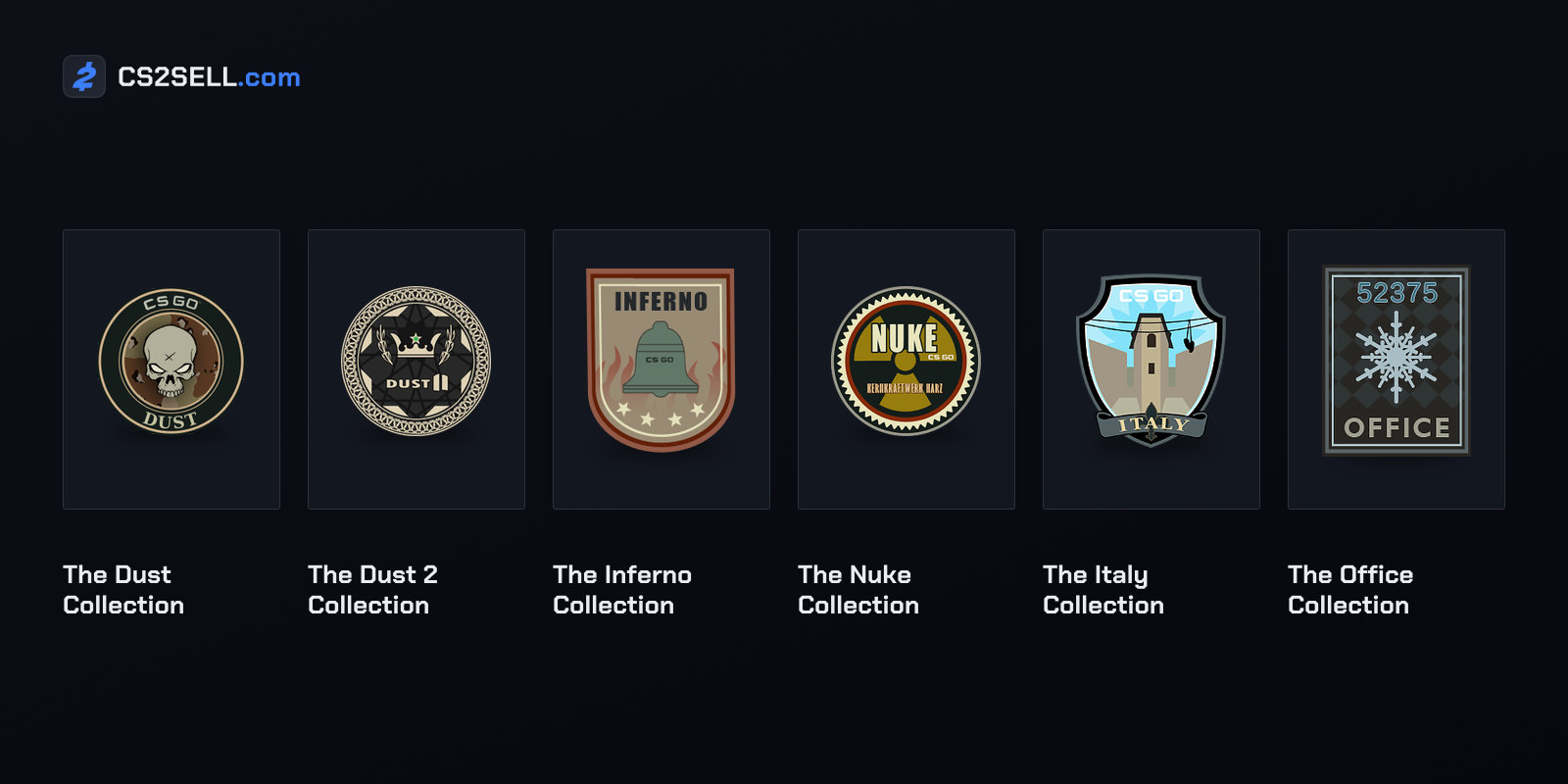
CS:GO launched with 16 maps. Eight were remakes of classics: Dust, Dust II, Inferno, Nuke, Train, Aztec, Italy and Office. The other eight were new, but PC Gamer noted they were all locked to Arms Race and Demolition, two modes based on the community Gun Game mod. Arms Race hands you a new weapon with every kill, ending with a golden knife, while Demolition gives you a new one after each round in which you get a kill.
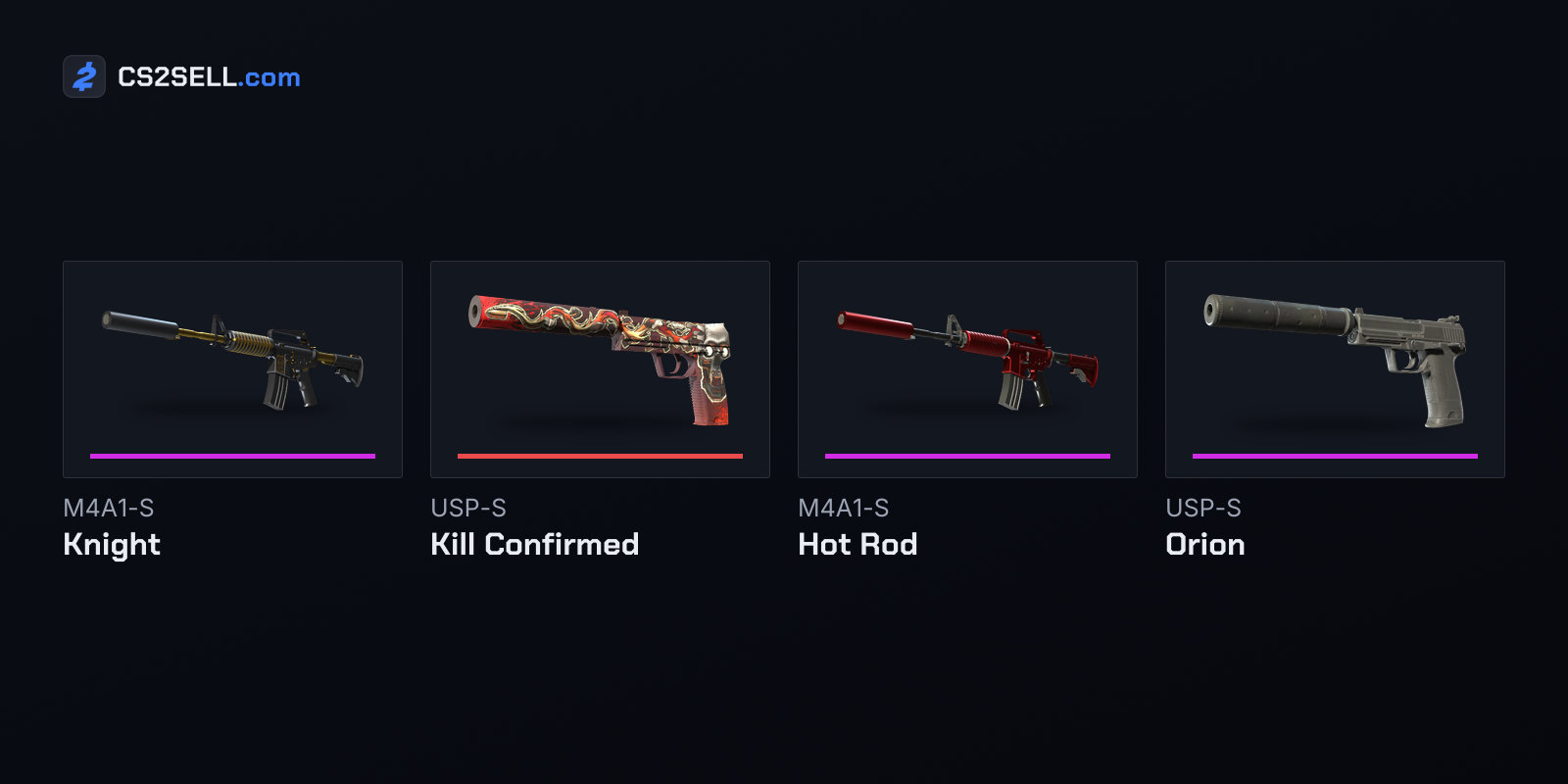
In the arsenal, the P2000 replaced the USP, and the MP7 and MP9 took the place of the MP5 and TMP. New arrivals included the PP-Bizon, MAG-7, Nova, Negev and Zeus x27, along with the Molotov, incendiary and decoy grenades. There was no silenced M4 or USP until the Arms Deal added the M4A1-S and USP-S in August 2013.
Reviews were warm. PC Gamer scored it 84 and called it "a $15 invitation to reconnect with a classic FPS". Eurogamer wrote that its core "is a reminder that quality can be permanent rather than fleeting", but complained of "no new maps for the core game". Metacritic lists averages of 83 on PC, 80 on PS3 and 79 on Xbox 360.
The console versions
On PS3, CS:GO supported PlayStation Move, the Move sharp shooter and keyboard and mouse, and matchmaking kept a separate ranking for each input device. Xbox 360 players had the gamepad only. PlayStation Plus members paid $11.99.
In Europe, the PS3 version was missing from the PlayStation Store in launch week, and Sony apologised. With cross-play gone, each platform was updated separately, and the console versions never received the Arms Deal.
A slow first year
PC Gamer wrote in 2015 that for a year after release, CS:GO "wasn't even the most popular version of Counter-Strike". HLTV notes that at the start of 2013 it was still behind both 1.6 and Source in active players.
On October 1, 2012, Competitive matchmaking switched from joining games in progress to a queue that starts a match once it finds 10 players, with best-of-30 matches and cooldowns for abandoning. On October 25 came Skill Groups, shown after 10 competitive wins, and GOTV for watching matches inside the game. From November 15, smoke grenades put out Molotov fire, after consistent feedback from pro teams and the community.
Ninjas in Pyjamas dominated the early pro scene. The Swedish team returned on August 10, 2012 with f0rest, GeT_RiGhT, Xizt, friberg and Fifflaren, and beat VeryGames in the finals of DreamHack Valencia in September and DreamHack Winter in November. Their LAN streak reached 87 maps without a loss before Virtus.pro beat them 16-14 on de_mirage_go in April 2013.
Deathmatch arrived in January 2013 and the Maps Workshop in February. Seven of its top-voted maps made up Operation Payback in April, the first operation, which paid their makers. The Arms Deal update of August 14, 2013 added over 100 decorated weapons, timed drops, cases opened with keys, trading and sales on the Steam Community Market.
PC Gamer notes that the Arms Deal coincided with CS:GO permanently overtaking its older siblings. The average player count grew from 25,961 in August 2013 to 357,535 in August 2015, about 14 times as many. In November 2013 came the first Major, DreamHack Winter 2013.
Launch-era items
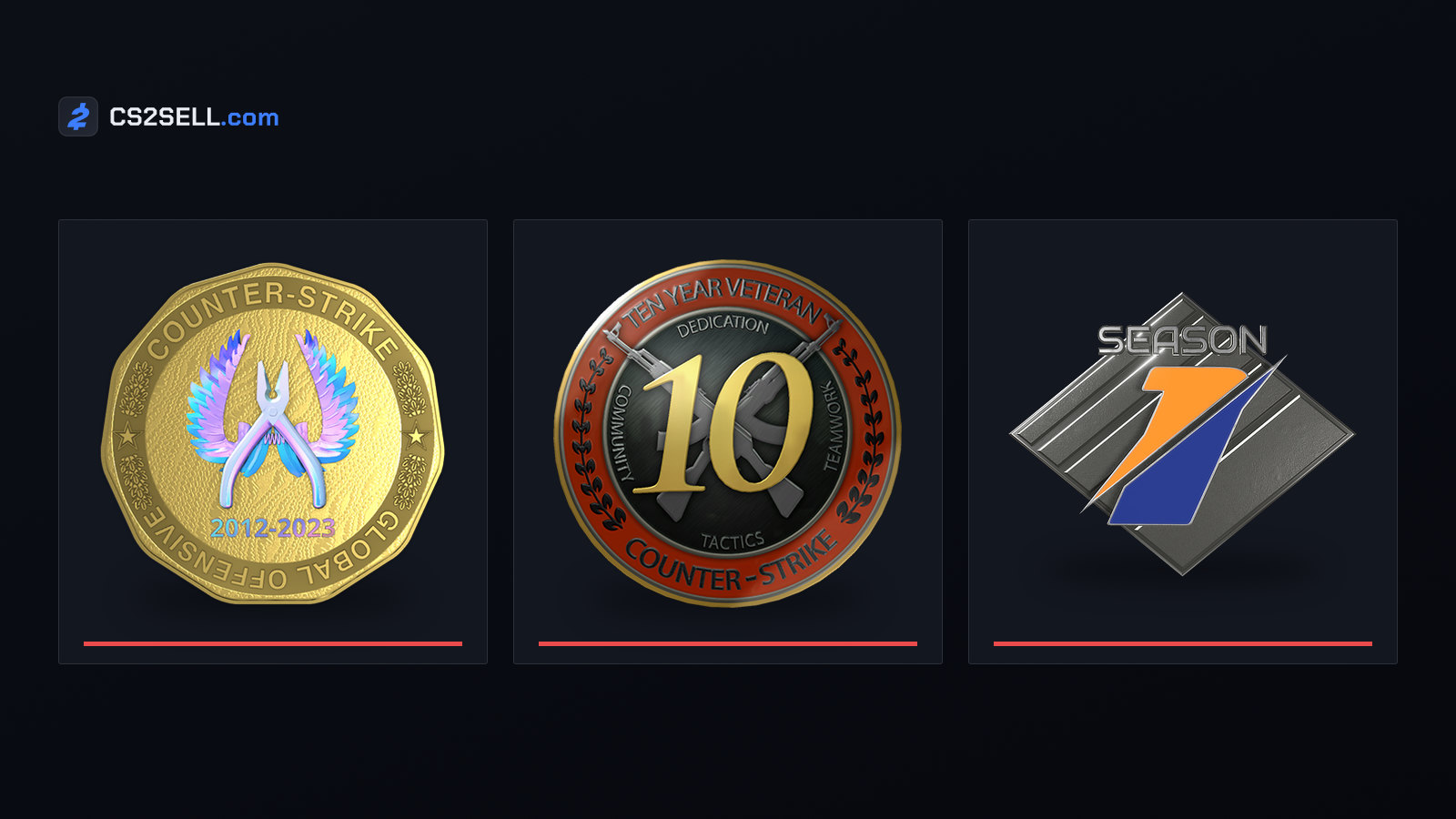
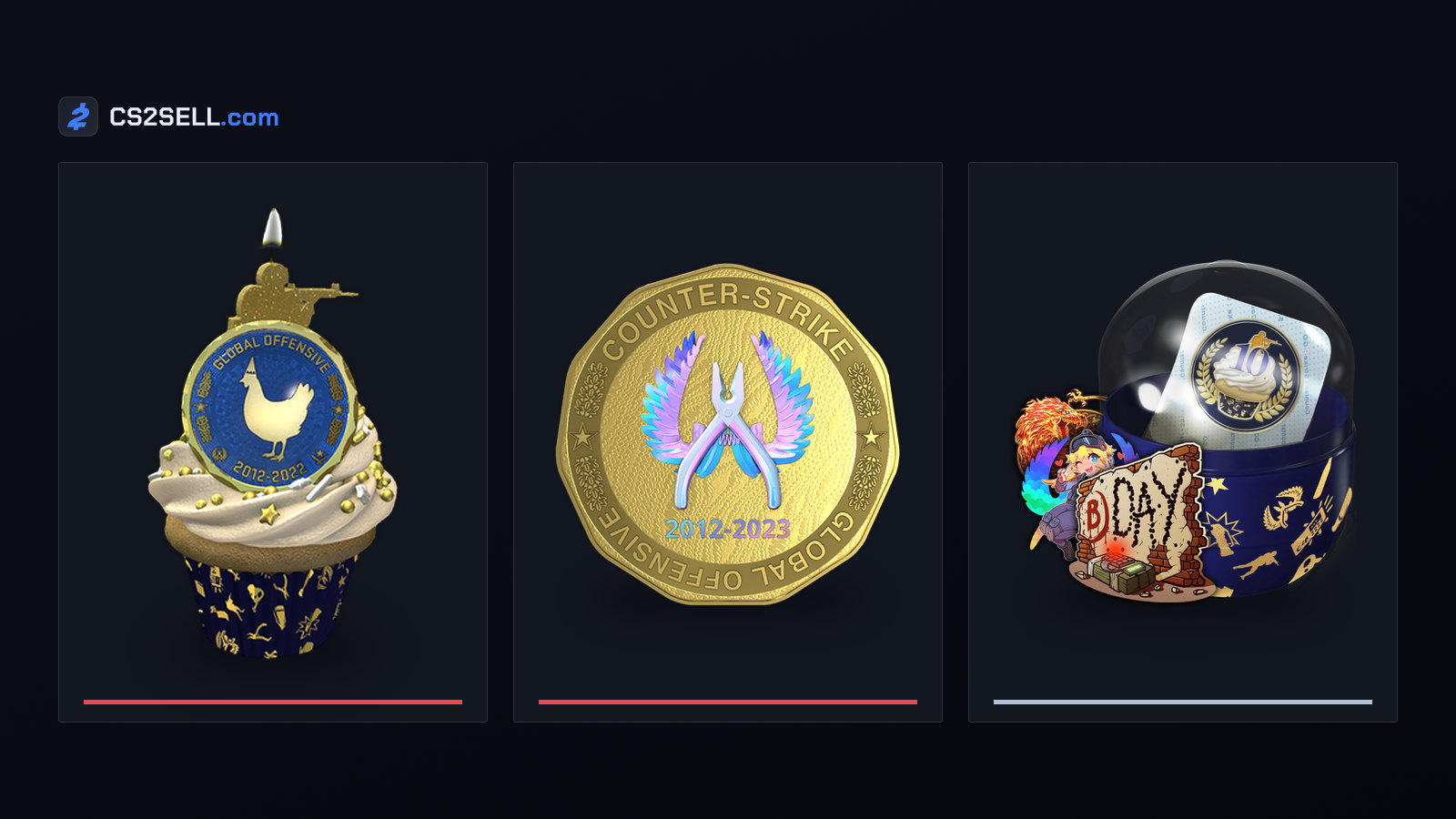
No skins date from the launch itself, because weapon finishes only arrived with the Arms Deal in August 2013, so launch-era items are later commemoratives. From August 16, 2022, players got the 10 Year Birthday Coin by earning enough XP for the week's first drop, and from August 23 it could no longer be earned. Its description reads: "Celebrated CS:GO's 10th birthday with the CS:GO community." The same update added the 10 Year Birthday Sticker Capsule.
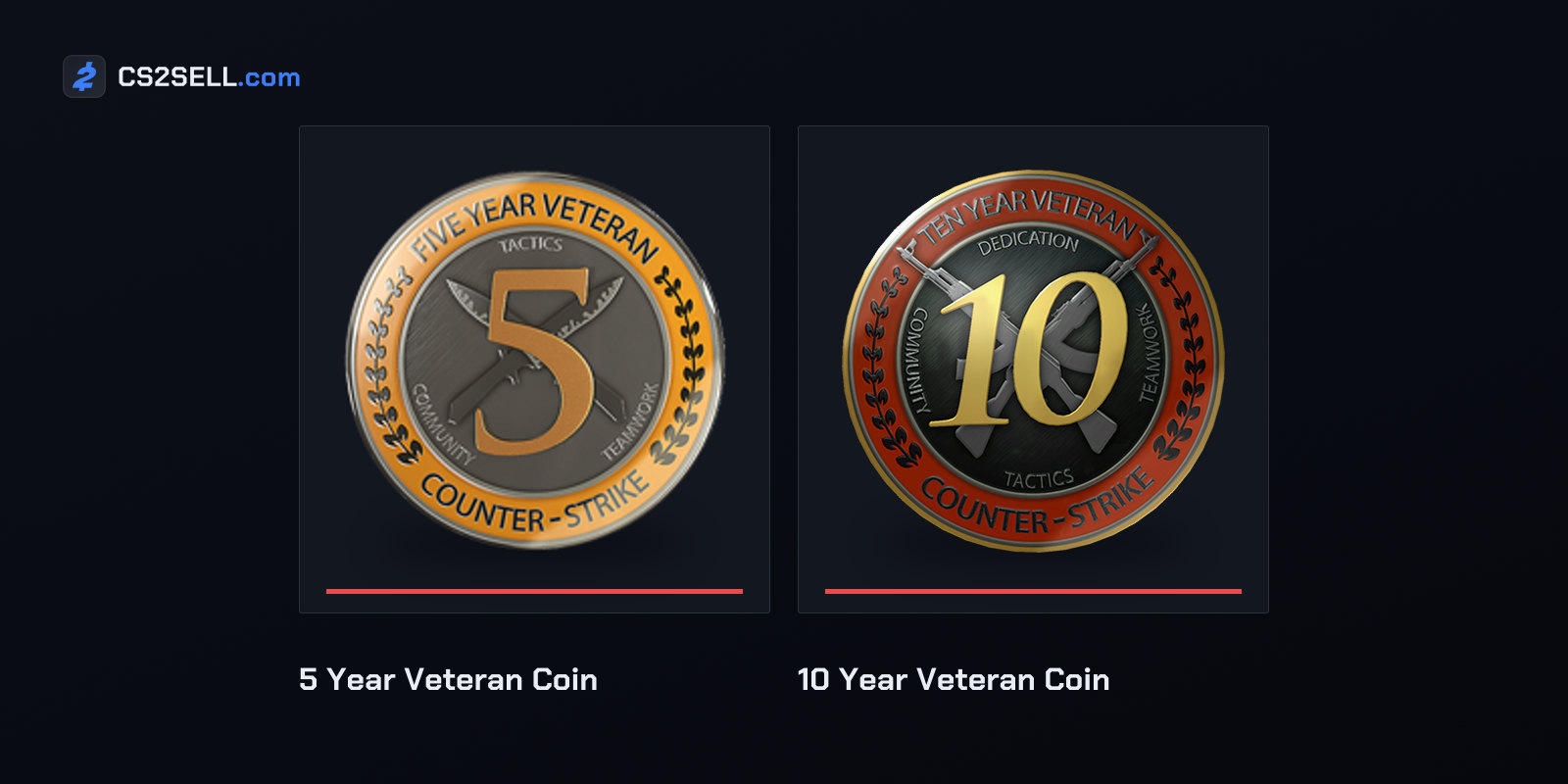
The Global Offensive Badge "commemorates loyal membership in the Counter-Strike: Global Offensive community prior to the release of Counter-Strike 2". The 5 Year Veteran Coin and 10 Year Veteran Coin mark players who have been members of the Counter-Strike community for over five or ten years.
Each of the eight launch classics also has a weapon collection named after it, such as the Dust 2 Collection and the Italy Collection. So do four maps from the launch Demolition and Arms Race modes: the Lake Collection, Safehouse Collection, Bank Collection and Baggage Collection. CS2Sell's Buy page can filter by collection if you want skins from one of them.
Sources
- Valve announces Counter-Strike: Global Offensive (CS: GO) — Steam News
- Valve delays Counter-Strike: GO beta — Eurogamer
- Cross-Platform Play Cut from Counter-Strike: GO — IGN
- Counter-Strike: Global Offensive Coming to PSN August 21st — PlayStation.Blog
- Counter-Strike: Global Offensive review — PC Gamer
- Counter-Strike: Global Offensive review — Eurogamer
- How $400 virtual knives saved Counter-Strike — PC Gamer
- CSGO10: A successor to the Counter-Strike franchise arrives (2012) — HLTV.org