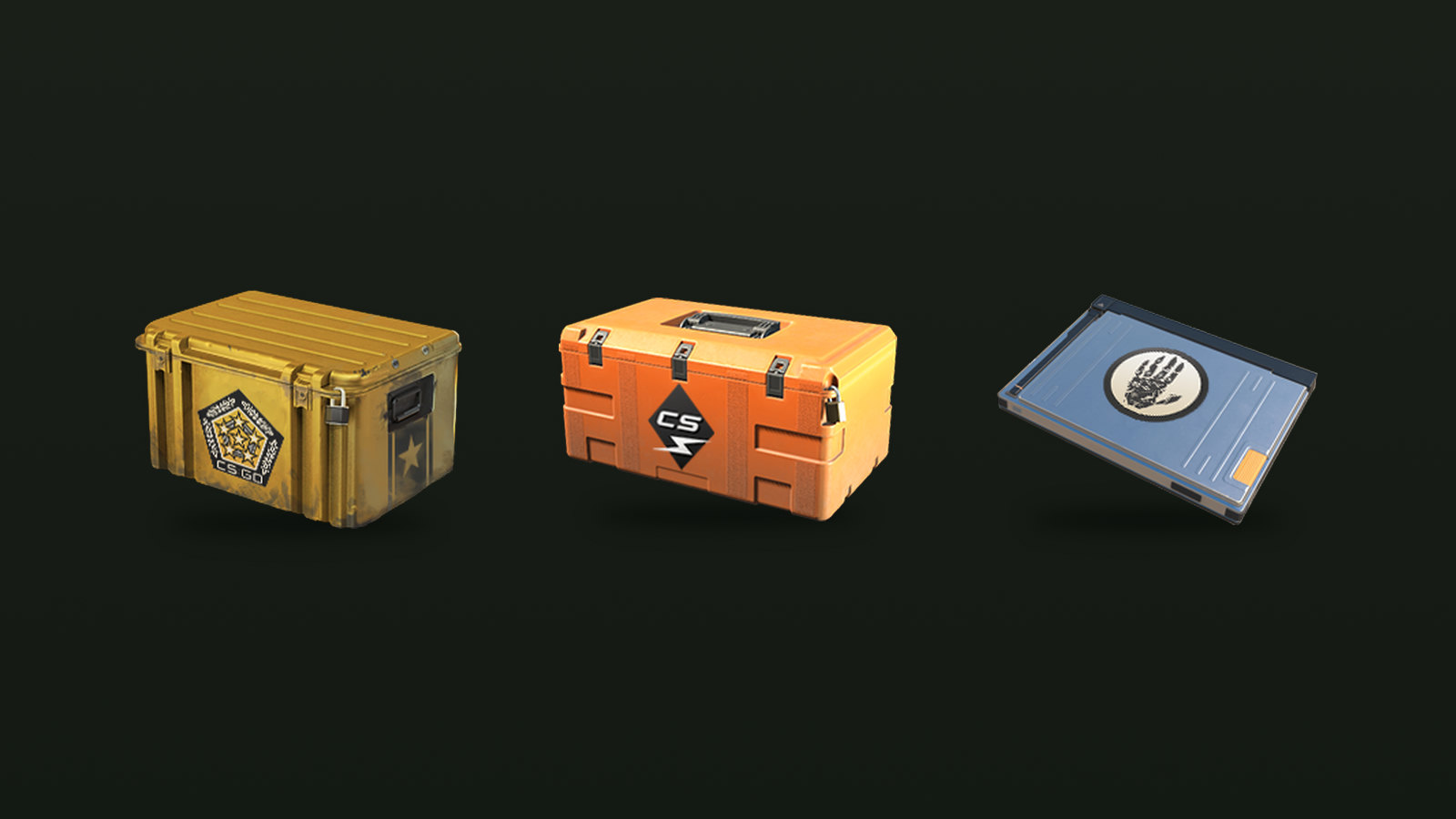
In Counter-Strike 2, every weapon skin belongs to a collection, a named set of finishes arranged by rarity. Some collections live inside a weapon case that needs a key. Others come from weekly drops, the Armory, souvenir packages or the newer Terminals. Where a skin comes from decides how rare it is, whether it can be StatTrak or Souvenir, and what a trade-up can turn it into.
Collections are the basic unit
The Counter-Strike Wiki sums up the structure. Apart from knives and gloves, every weapon skin is part of a collection. The contents of a case, minus its knives or gloves, count as one collection, such as the Chroma Collection inside the Chroma Case. Collections that don't come from a case are built around a theme or a map, like the 2021 Vertigo Collection or the Gods and Monsters Collection.
Knives and gloves sit outside this system. They are the rare special items of a case, not members of its collection, which is why they never appear in a collection's rarity list.
The Wiki also clears up a common myth: the map you are playing has no effect on which collection a drop comes from. Playing Train doesn't make a Train Collection skin more likely.
Case collections
A weapon case holds one collection plus a pool of knives or gloves, and opening it needs a key. Case odds are published by Perfect World, Valve's partner in China: in a keyed case, 79.923% of results are Mil-Spec, 15.985% Restricted, 3.197% Classified, 0.639% Covert and 0.256% a knife or gloves. Our rarity guide explains the grades.
Cases are also the classic source of StatTrak. The Wiki notes that skins in map or themed collections can't be obtained in StatTrak quality at all.
Valve has experimented with cases in CS2. In May 2024 it let players who open a Kilowatt Case with a key rent the whole Kilowatt Collection for a week instead of keeping a single item, and in November 2024 it added the ability to rent weapons from all previous CS:GO cases. The Gallery Case (October 2024) and the Fever Case (March 2025) were introduced through the Armory. According to esports.gg, a Fever Case costs two Armory Credits and still needs a key to open.
Collections without a case
Weekly drop collections
When CS2 launched in September 2023, Valve replaced weekly drops with a weekly Care Package, letting players choose from weapon cases, weapon finishes and graffiti. The finishes come from collections on a drop list that Valve rotates. In March 2025 it added the Ascent, Boreal and Radiant collections and removed Bank, Italy, Lake and the original Train collection. In January 2026 it added Harlequin and Achroma and removed Safehouse, Dust 2, the 2018 Nuke and the 2018 Inferno collections. How the drop pool works is covered in our drop pools guide.
Souvenir and operation collections
Map collections also appear in souvenir packages tied to Major matches, the traditional source of Souvenir copies. Since 2026 Valve has also let players craft Souvenirs, as covered in StatTrak vs Souvenir. Perfect World's odds page lists separate rates for these packages; in one that runs from Consumer Grade to Covert, a Covert comes up 0.027% of the time. Past operations handed out collection items as rewards too, as described in the operations history.
Armory collections
The Armory, launched on October 2, 2024, introduced three weapon collections, two charm collections, two sticker collections, the Gallery Case and a Limited Edition Heat Treated Desert Eagle. Players buy an Armory Pass, earn credits by gaining XP and redeem them for items. The lineup rotates. In July 2026 Valve added the Arabesque and Spy Tech collections and retired Train 2025 and Sport & Field. Perfect World lists the Armory weapon collections as running from Industrial Grade to Covert with no knife or glove tier.
Valve has also used the Armory for single Limited Edition items, adding the XM1014 | Solitude in March 2025 and the AK-47 | Aphrodite in January 2026.
Terminal collections
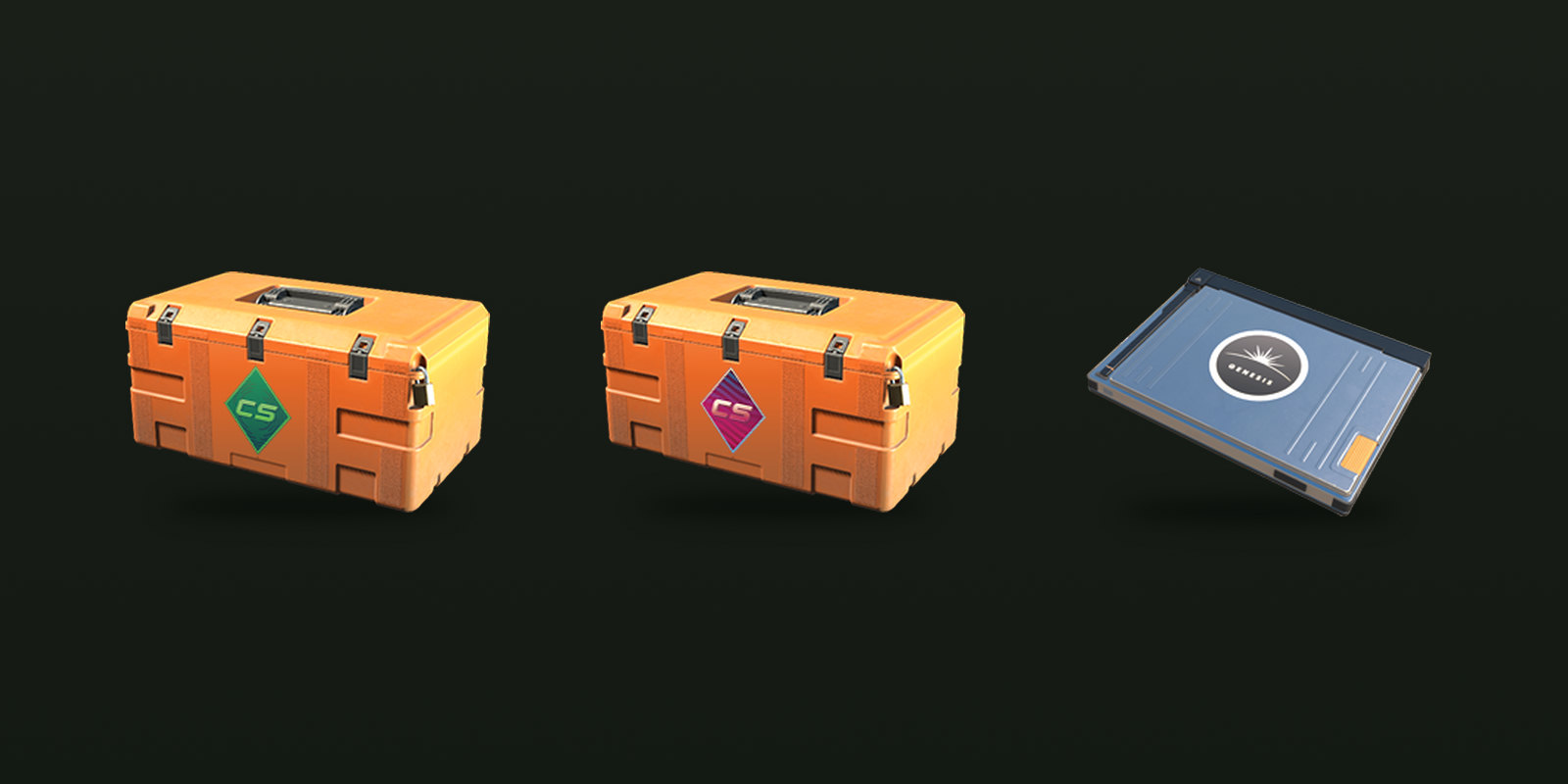
The newest route is the Terminal. The Genesis Collection arrived in September 2025 behind the Genesis Uplink Terminal, and the Dead Hand Collection followed in March 2026 with 22 new gloves as its rare special items. Both Terminals appear as weekly drops. As Dust2.us explained at launch, unsealing a Terminal brings up an in-game Arms Dealer who offers a skin from the collection at a set price. You can buy it or pass, and passing on all five offers burns the Terminal. Perfect World groups the Dead Hand Terminal's odds with keyed cases, while the Genesis Terminal has no gold tier.
Why the source matters when you trade
- Quality. Skins from map and themed collections don't come as StatTrak. Souvenirs are tied to Major matches, so check the stickers to see which event a copy belongs to.
- Supply. When a collection leaves the drop list or the Armory, that route stops creating new copies, which is worth knowing before you buy or sell.
- Trade-ups. A contract's result comes from the collections of its inputs, so the collection matters more than the case art. Knife trade-ups only work with Coverts whose collection comes from a case with a knife or glove pool. The trade-up guide has the details.
- Price checks. Compare a skin with others of the same grade from the same collection, not just the same weapon.
On CS2Sell, the collection filter on Buy shows every listed skin from one collection, which makes it easy to see the whole set side by side.