The Valve Regional Standings, or VRS, are Valve's official ranking of Counter-Strike teams. Since 2025 they decide who is invited to the Majors and to every large event that wants to count towards the ranking, which makes them the most important table in professional CS. Valve publishes the standings, the method and the code on GitHub, so anyone can check how a team's number was reached.
What the VRS ranks
The VRS ranks rosters, not organisations. Valve's tournament rules define a roster as "a collection of five specific Athletes, irrespective of their current or later association with a given Team organization". A new standing is published every month, and Valve's rules say only the versions in the repository's invitation folder count for invites.
There are four lists: a global one and three regional ones, for Europe, the Americas and Asia. Each roster appears on one regional list, decided by where most of its players are from. Match data comes from HLTV, which each standings file credits.
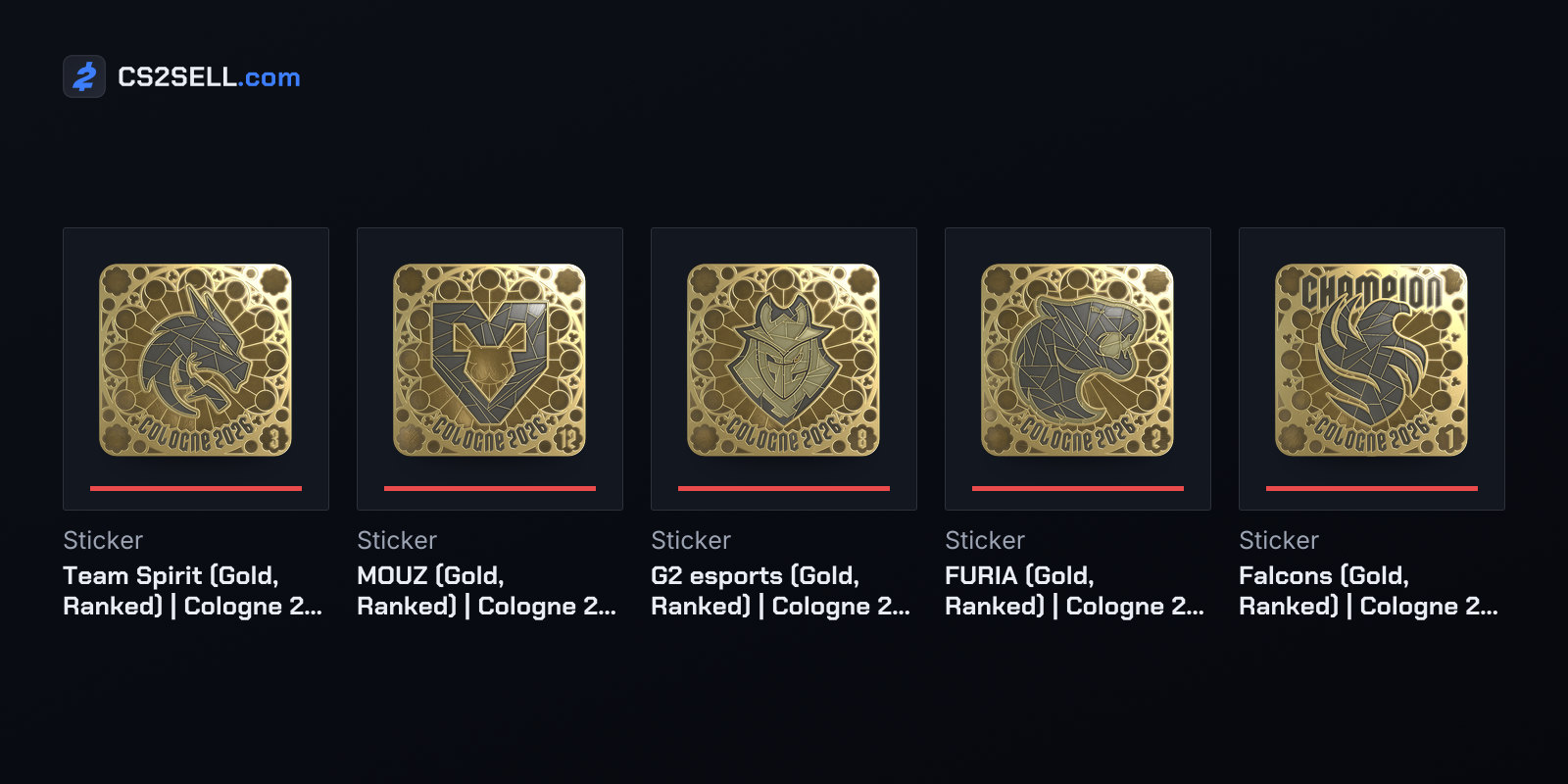
In the October 5, 2026 list, the latest before this article was written, the global top five were Team Spirit, Legacy, Team Vitality, MOUZ and G2 Esports.
How points are calculated
Each roster's score is built in two steps.
Step one: a starting value. Valve takes the average of four factors, each scored between 0 and 1:
- Bounty Offered: the roster's own prize money, from its ten best results weighted by how recent they are, compared with the fifth-highest total among all rosters.
- Bounty Collected: credit for beating teams that have themselves won prize money.
- Opponent Network: credit for beating teams that have beaten many opponents of their own.
- LAN Wins: wins at events played on LAN.
For the last three, only the ten best results from the past six months count. Recent matches weigh more through an age weight, and Bounty Collected and Opponent Network are also scaled by an event weight, so wins at bigger events count for more. The average is then stretched onto a range of 400 to 2,000 points, with the best average in the world getting 2,000.
Step two: head-to-head. Every match then moves the score up or down depending on who you beat or lost to, judged by the opponents' starting values. Valve's original description of the model listed the same ideas in plainer terms: your prize money, the prize money and number of wins of the teams you beat, and head-to-head results.
Valve's file for the October 5 leader shows how it adds up. Team Spirit's four factors were 1.000, 0.872, 0.398 and 0.932, an average of 0.800, the best in the world, which gave a starting value of 2,000. Head-to-head results added 46.2, for a final value of 2,046.
How the model has changed
Valve has adjusted the model several times since it started deciding invites:
- February 24, 2025. HLTV reported four changes: forfeits now count as losses, results only count once an event has finished, a roster needs five matches instead of ten to be ranked, and placement-based "club share" money that some organisers pay alongside prize money now counts as winnings.
- June 2025. Teams split between two regions now appear on only one regional list. In Valve's changelog, quoted by HLTV, a tie goes to "the stronger of the two regions".
- October 6, 2026. For the Singapore Major, a roster can only be assigned a region if it did not appear on another region's list in the previous three calendar months.
Valve can also grant exceptions. On October 7, 2026 it assigned BC.Game, with s1mple, to the Asia region and made the roster eligible for a Singapore invitation.
How the VRS decides Major invites
Since Budapest 2025, every one of a Major's 32 places has come from the VRS. The organiser names the VRS date in advance; for PGL Singapore it is the list published on November 2, 2026. Places are split between the three regional lists, and the regions' shares in Stages 2 and 3 depend on how their teams did at the previous Major. The global list is used only to seed the teams once invites are accepted. Our Major format guide explains the stages.
Outside the Majors, ranked events invite from the VRS in order, starting from the rank they announced in advance, and can add open qualifiers. A Tier 1 event must invite at least 20 rosters this way, starting from the world number one. For a directly invited roster to take its place, at least three of its five players must still be on it. Our article on Valve's tournament rules covers the rest.
Why it is argued about
The VRS is meant to be accurate, hard to game and transparent, in Valve's words. Teams and media have questioned parts of it. In February 2025, 22 organisations signed an open letter saying the system "as it stands is not a level playing field", that new rosters struggled to earn points without open qualifiers, and that a GitHub repository written "in a very technical way" was hard for smaller teams to follow. In September 2025 HLTV described teams "scrambling to attend as many LANs as possible" before the Budapest invite cut-off, including open LANs with prize pools as small as $10,000.
For where the next Majors are and when their VRS cut-offs fall, see our upcoming Majors guide.
Sources
- counter-strike_regional_standings — Valve (GitHub)
- Global standings as of October 5, 2026 — Valve (GitHub)
- Spirit roster details, October 5, 2026 — Valve (GitHub)
- Tournament Operation Requirements — Valve (GitHub)
- Valve releases update to ranking model — HLTV.org
- Valve removes multi-region representation in VRS model update — HLTV.org
- Teams write open letter to Valve about "significant flaws" in new ecosystem — HLTV.org
- How the CS scene got into an arms race for last-minute VRS points — HLTV.org