Operation Phoenix was CS:GO's third operation, running from February 20 to June 11, 2014. It brought back eight maps from the first two operations, picked by a player vote, and put a new community-made weapon case behind the pass: the Operation Phoenix Weapon Case, home of the AWP | Asiimov. It sits between Payback and Bravo and Breakout; the operations overview covers the whole series.
Dates and the pass
Phoenix launched on February 20, 2014. Polygon and VG247 reported that it was scheduled to run until June 4; Valve's closing post is dated June 11, 2014, so it ran a week longer than first planned.
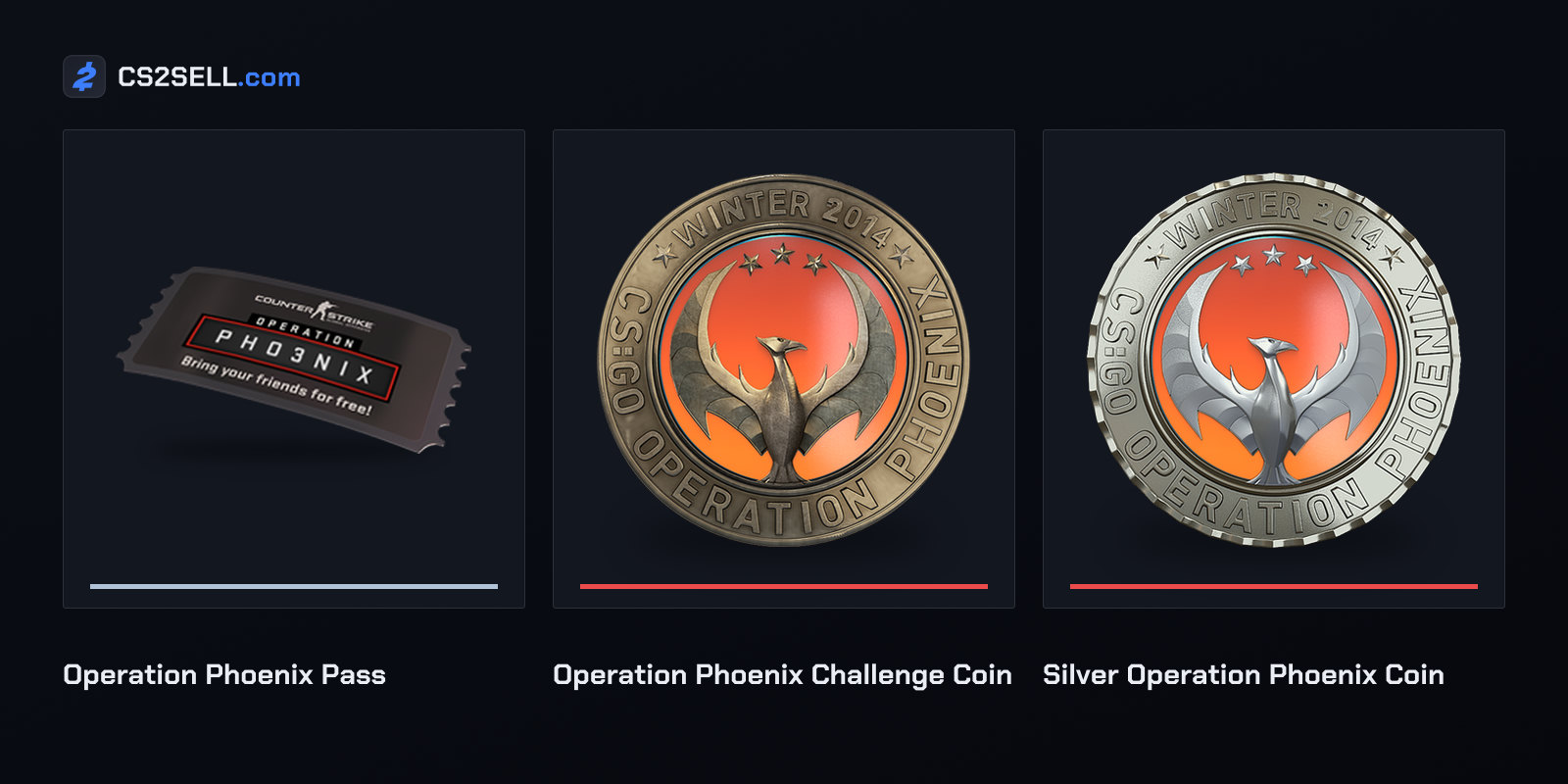
The pass cost $2.99, according to both Polygon and VG247, half of what Bravo's had cost at launch. Valve's release notes listed what it included:
- Unlimited access to eight community-chosen maps in official Competitive, Casual and Deathmatch modes.
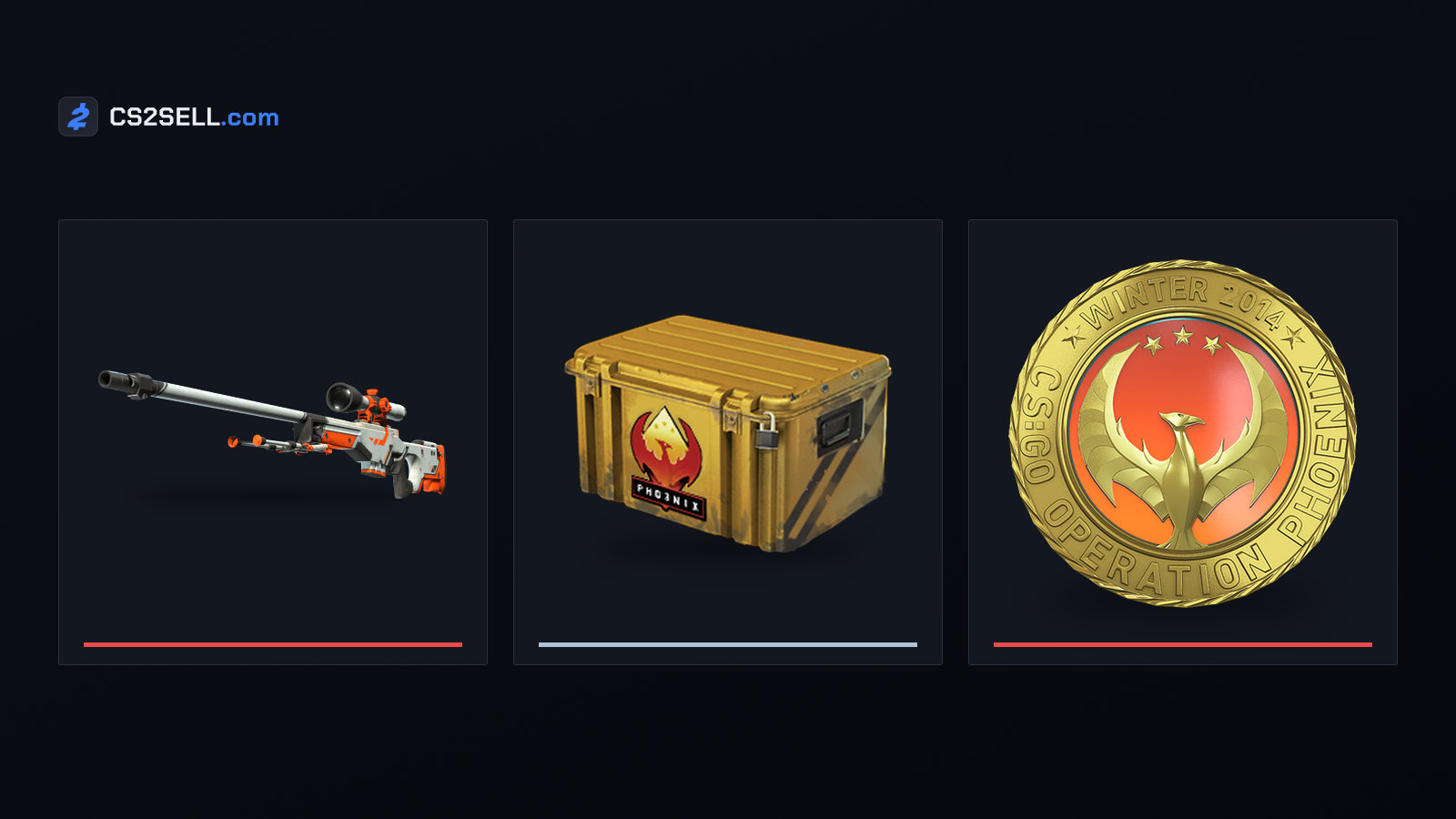
- An upgradable Operation Phoenix Coin that tracked your competitive matchmaking stats for the whole event.
- Exclusive access to the new Operation Phoenix Case, which pass holders received as an extra drop.
As with Payback and Bravo, part of the pass money went to the authors of the featured maps, Polygon noted.
Eight maps chosen by players
Phoenix was the first operation without any new maps. In Valve's words, "the CS:GO community voted for their favorite maps from the past two operations," and the eight most popular came back.
| Map | Mode | First appeared in |
|---|---|---|
| Downtown | Hostage rescue | Payback |
| Motel | Hostage rescue | Payback |
| Thunder | Hostage rescue | Payback |
| Favela | Bomb defusal | Payback |
| Seaside | Bomb defusal | Payback |
| Agency | Hostage rescue | Bravo |
| Ali | Bomb defusal | Bravo |
| Cache | Bomb defusal | Bravo |
Five came from Payback and three from Bravo. Payback's maps had been casual-only in 2013, so Phoenix was the first time Downtown, Motel, Thunder and Favela were available in official competitive matchmaking.
The coin and its scorecard
Buying the pass gave you a bronze Operation Phoenix Coin. Valve described it as an "operational scorecard" that kept track of "every kill and every win" in official competitive matches while Phoenix ran, continuing what Bravo's coin had started. According to the Counter-Strike Wiki, the upgrade rules matched Bravo's: silver after 10 hours on operation maps and 5 competitive wins there, gold after 30 hours and 15 wins.
The Operation Phoenix Weapon Case
The case was the main change from Bravo. Bravo's case had held Valve-made finishes and could drop for anyone. The Phoenix case held 13 community-created finishes, designs submitted through the Steam Workshop, and during the operation only coin holders could receive it.
| Grade | Finishes |
|---|---|
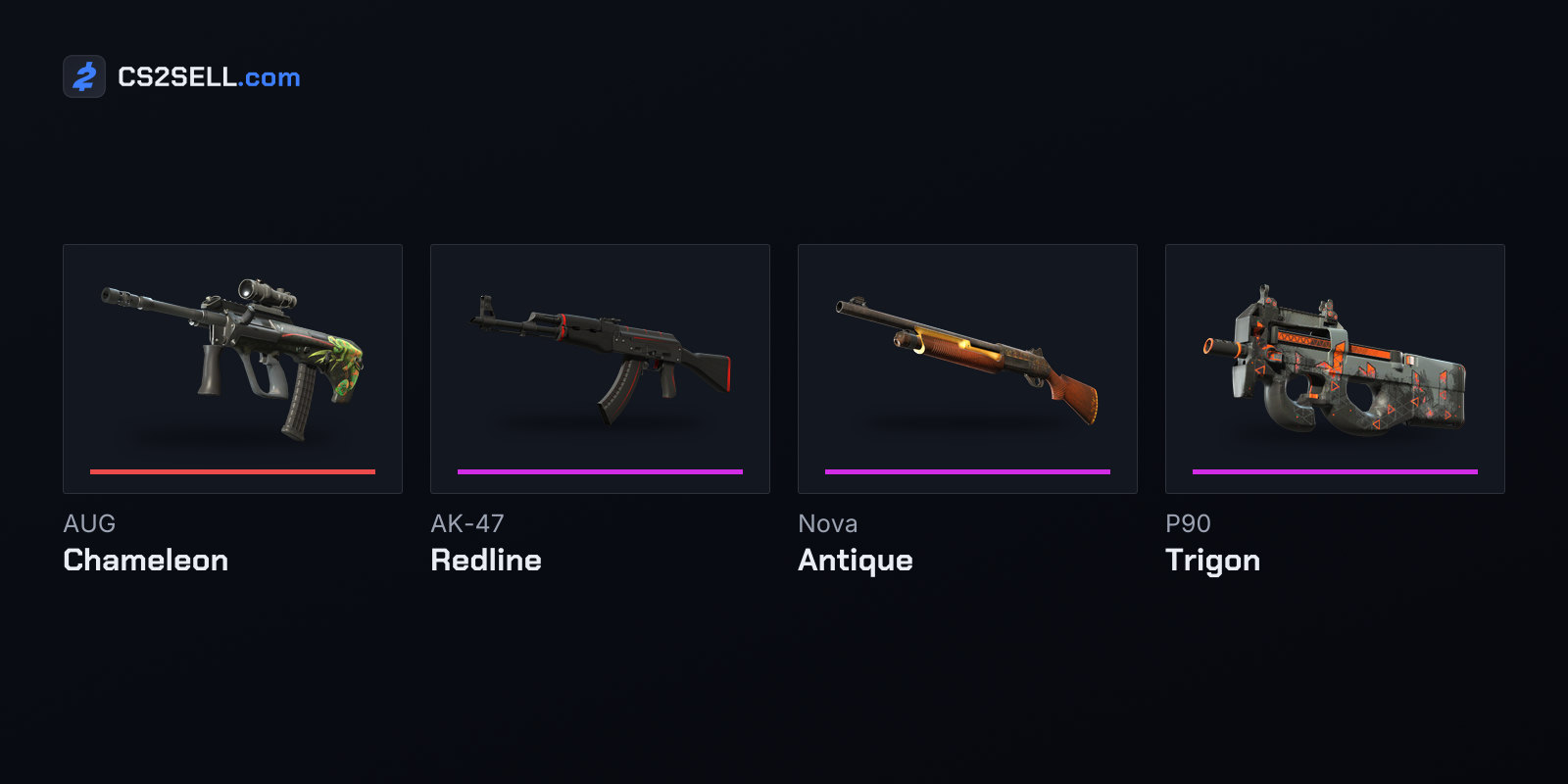
| Covert | AWP Asiimov, AUG Chameleon |
| Classified | AK-47 Redline, Nova Antique, P90 Trigon |
| Restricted | FAMAS Sergeant, MAC-10 Heat, SG 553 Pulse, USP-S Guardian |
| Mil-Spec | MAG-7 Heaven Guard, Negev Terrain, Tec-9 Sandstorm, UMP-45 Corporal |
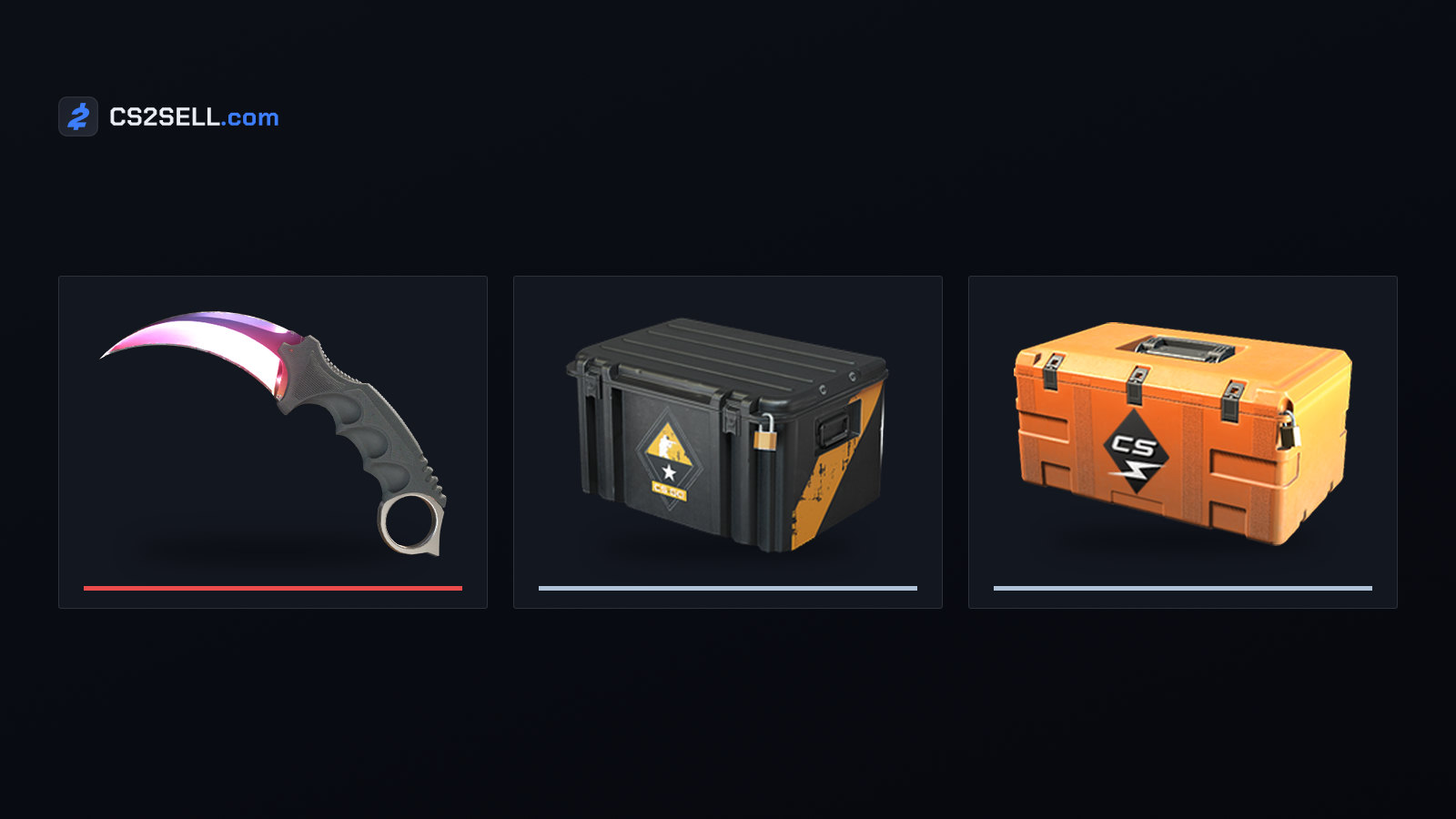
The rare special items are the original five knives (Bayonet, Flip, Gut, Karambit and M9 Bayonet) in the Arms Deal finishes, so Phoenix added no new knife. Unlike the Bravo Case, it opens with a key of its own, the Operation Phoenix Case Key.
The AWP | Asiimov, a white, black and orange design, sits at the top of the case alongside the AUG | Chameleon. The Counter-Strike Wiki adds a smaller detail lower down: the USP-S | Guardian carries a CT emblem on its slide, echoing the M4A1-S | Guardian from the Winter Offensive case.
When Phoenix ended on June 11, 2014, Valve opened the case to everyone: "you still have a chance to get a Phoenix Case – they're currently dropping for all CS:GO players."
What Phoenix changed
Pass-only cases. Phoenix was the first operation to tie its case to the pass. Every operation case from Breakout to Hydra followed that model, including the Falchion Case in Bloodhound, and the Breakout, Falchion and Wildfire cases were opened to every player once their operations closed, just as Phoenix's was.
Cache. After Bravo and Phoenix, Cache became an official map and, according to the Counter-Strike Wiki, the first community-made map in the Active Duty pool. It was in the map pool at ESL One Cologne in August 2014, where souvenir packages introduced the Cache Collection; the Cologne 2014 article has the details. Cache returned in a Valve-made version for CS2 in April 2026, covered in Cache returns to CS2.
The end of map-only passes. Phoenix was the last operation where the pass was mainly a ticket to play maps. From Breakout in July 2014 the maps were free for everyone, and the pass paid for missions, a journal and the case instead.
Community cases. Phoenix's was the first operation case built from community designs, two months after the Winter Offensive case of December 2013, which Valve called the first community-made case. Breakout's case and the operation cases after it carried community finishes too, a shift the weapon case history traces.
To find copies of these finishes today, the collection and rarity filters on Buy can show only Phoenix Collection skins of a given grade.
Sources
- The Rise of Operation Phoenix — Counter-Strike blog
- Release Notes for 2/20/2014 — Counter-Strike blog
- Phoenix comes to a close — Counter-Strike blog
- Counter-Strike GO's Operation Phoenix brings back fan-favorite maps, new finishes — Polygon
- Counter-Strike: Operation Phoenix adds 8 new maps, weapon decals and more — VG247
- Operation Phoenix — Counter-Strike Wiki
- Operation Phoenix Weapon Case — Counter-Strike Wiki
- Cache — Counter-Strike Wiki