ESL One Rio 2020 was meant to be the first Counter-Strike Major in Brazil. It was postponed by the COVID-19 pandemic, then cancelled, and 2020 became the first year without a Major since the series began in 2013. It still left two lasting things behind: the Regional Major Rankings that Valve used to qualify teams for years afterwards, and three sticker capsules for a Major that was never played.
The plan for Rio
ESL was to host the Major at the Jeunesse Arena in Rio de Janeiro from May 11 to 24, 2020. Liquipedia lists the planned format: 24 teams over three stages, called the New Challengers, New Legends and New Champions stages. The first two were 16-team Swiss groups with best-of-one matches, except for best-of-three games that decided advancement or elimination. The last eight would then play a single-elimination bracket of best-of-three series.
The prize pool was originally $1 million, the standard for a Major since 2016. It would have followed the StarLadder Berlin 2019 Major, which was played in September 2019.
Postponed to November
On March 23, 2020, ESL announced that the Major would move to November, taking the slot reserved for the second Major of the year. That second Major was cancelled and its prize money added to Rio's, giving a $2 million prize pool, which HLTV described as a record for a Counter-Strike tournament. The Champions Stage was set for the Jeunesse Arena from November 19 to 22, and tickets bought for May stayed valid.
Ten days later, on April 2, Valve published "The Road to the November Rio Major". It scrapped the existing invitations and the Minor qualifiers. Valve said it wanted current Legends and Challengers to "demonstrate that they are still in top form", and because travel was difficult, they would have to do it in their own region.
How the Regional Major Rankings worked
Under the new system, every one of the 24 Rio teams would earn its place through a Regional Major Ranking (RMR). Teams scored points at approved RMR events, and the top teams in each region were invited. Valve split the 24 places across six regions based on how each region did at Berlin 2019:
| Status | Europe | CIS | North America | South America | Asia | Oceania |
|---|---|---|---|---|---|---|
| Legends | 3 | 2 | 3 | 0 | 0 | 0 |
| Challengers | 6 | 1 | 1 | 0 | 0 | 0 |
| Contenders | 2 | 2 | 1 | 1 | 1 | 1 |
Valve renamed two groups at the same time. Returning Challengers became Challengers, and New Challengers became Contenders. Those three labels later became the names of the sticker capsules.
The rules were loose by design. An RMR event could have "any format, any prize pool, any duration", and could be played online, on LAN or both, as long as it invited the top-ranked teams in the region and ran qualifiers for the rest. A team's region was wherever it was based at the time, and changing a player cost 20% of the team's points. Valve itself sponsored a May and a fall RMR series, each with $255,000 in prize money split between the regions. The first, ESL One: Road to Rio, featured 56 teams across the six regions, according to HLTV.
The cancellation
On September 9, 2020, Valve published "Update on Majors and Coaching" and called off the event: "We're not going to ask players and fans to risk their health in order to attend a Major while the pandemic still poses a threat to travelers. Therefore, we have made the painful decision to cancel the November Major."
Valve added that it would not schedule another Major until, at a minimum, RMR events could be held on LAN around the world, and that online RMR events would continue in the meantime. ESL said it had "worked through several alternative options down to the last hour" before accepting that a Major could not take place. It promised to bring the Major back to Rio once "a return for an in-arena Major is safe", and offered refunds on tickets.
The Major itself was never moved online. Only the qualifying RMR events were played online, while Valve and ESL treated Rio as an arena event to the end. ESL filled the November slot with IEM Beijing-Haidian, an online event with $250,000 in prize money, and planned a studio LAN in Cologne in December, IEM Global Challenge.
The same Valve post dealt with a second problem. Several coaches had exploited a bug in the coach spectator view that could show them parts of the map they were not meant to see. On September 28, 2020, the Esports Integrity Commission (ESIC) issued bans to 37 coaches. In January 2021 Valve turned ESIC's demerit points into Major bans, from one Major for two demerits up to every Major for six or more. Teams disqualified for using the bug at an RMR event also lost their RMR points.
No Major, but stickers
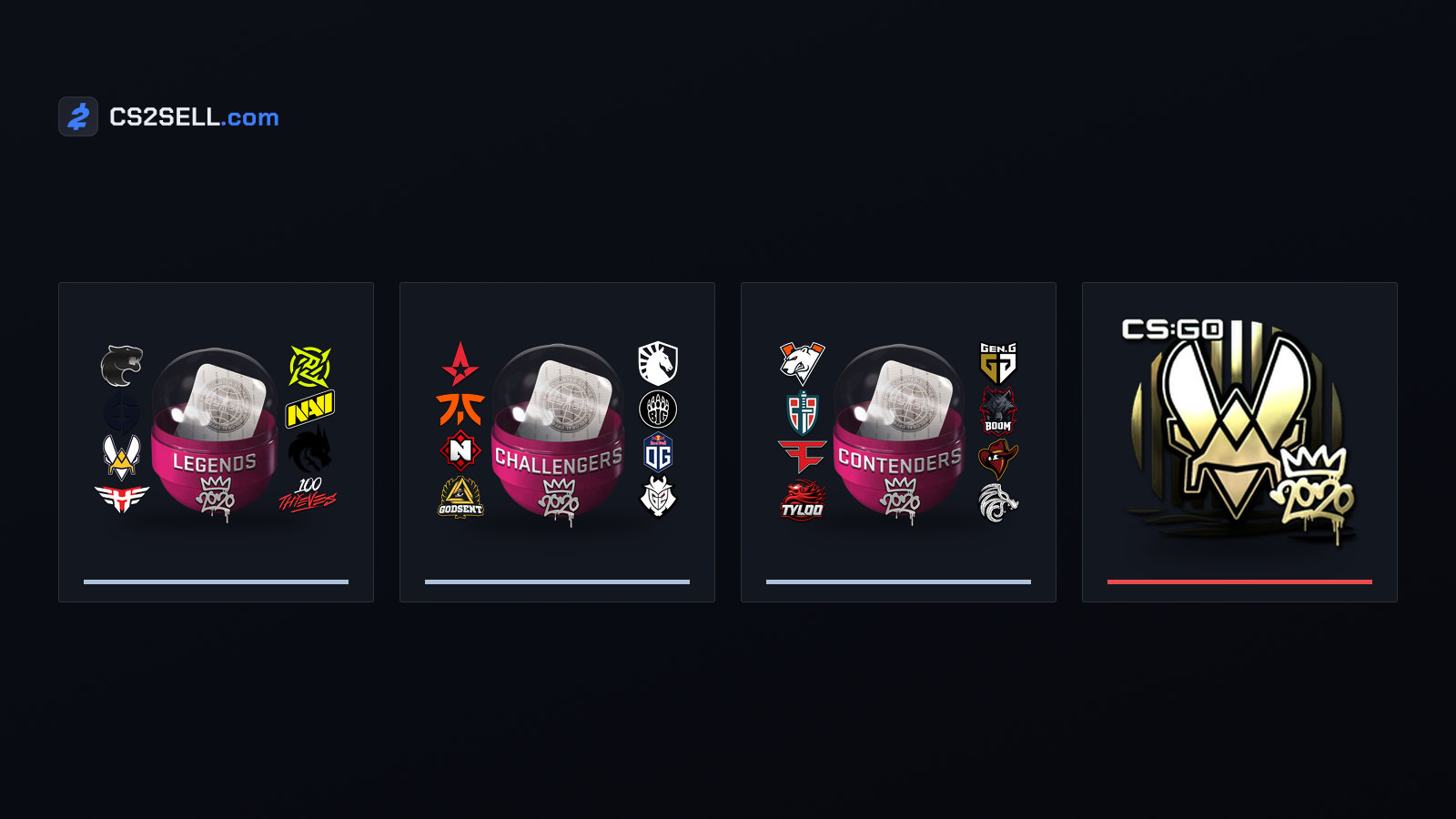
On January 27, 2021, in a post called "2021 RMR Update", Valve released three sticker capsules. "Ultimately there would be no Major in 2020," the post said, "but it is important that fans have an opportunity to celebrate and recognize the hard work of the best teams of 2020." The capsules held the teams that would have been invited to Rio, grouped by the status they had earned in the final 2020 standings, and 50% of the proceeds went to those teams.
| Capsule | Teams |
|---|---|
| 2020 RMR Legends | 100 Thieves, Evil Geniuses, FURIA, Heroic, Natus Vincere, Ninjas in Pyjamas, Spirit, Vitality |
| 2020 RMR Challengers | Astralis, BIG, Fnatic, G2, GODSENT, Liquid, Nemiga, OG |
| 2020 RMR Contenders | Boom, ESPADA, FaZe, Gen.G, North, Renegades, TYLOO, Virtus.pro |
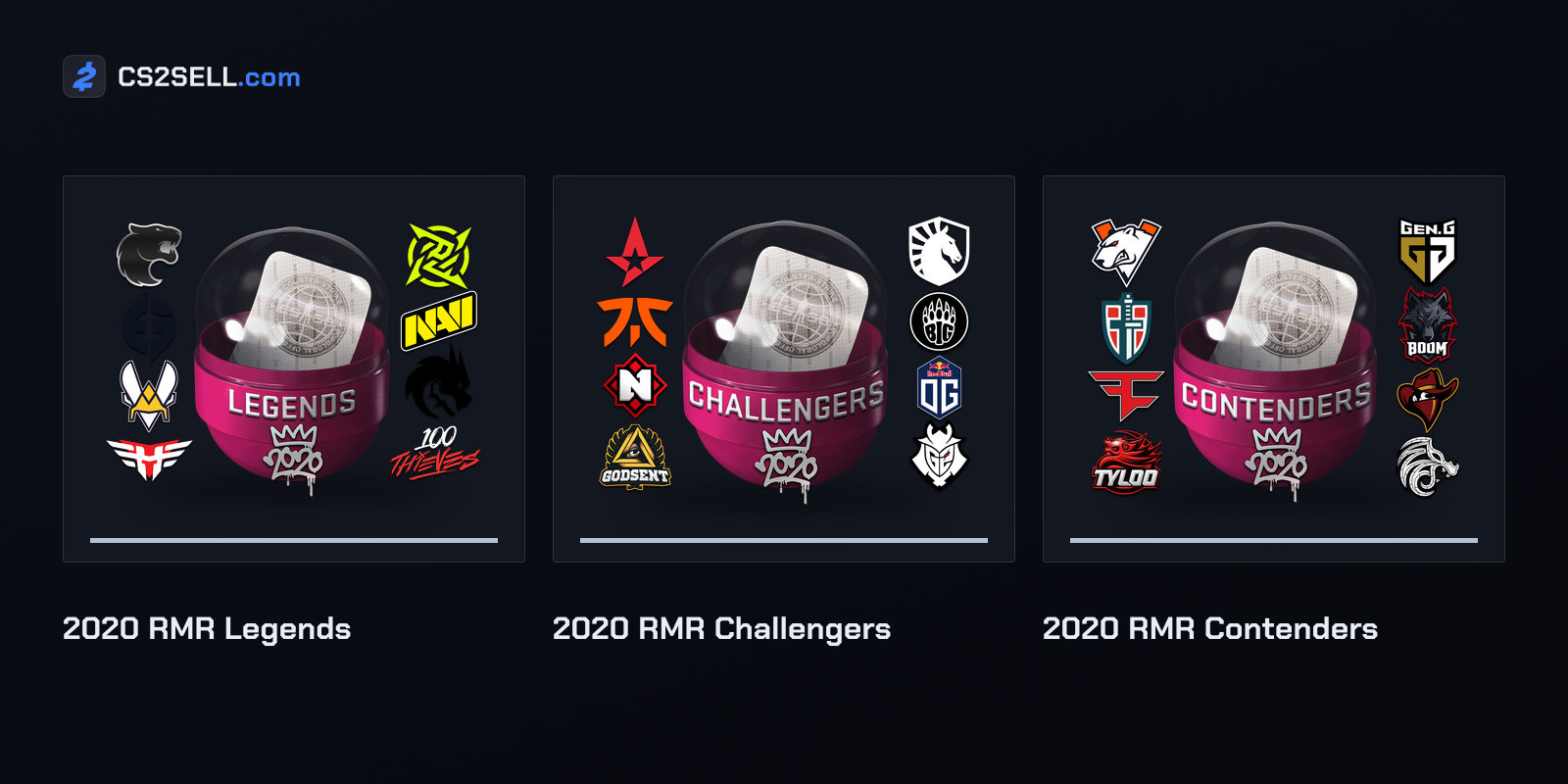
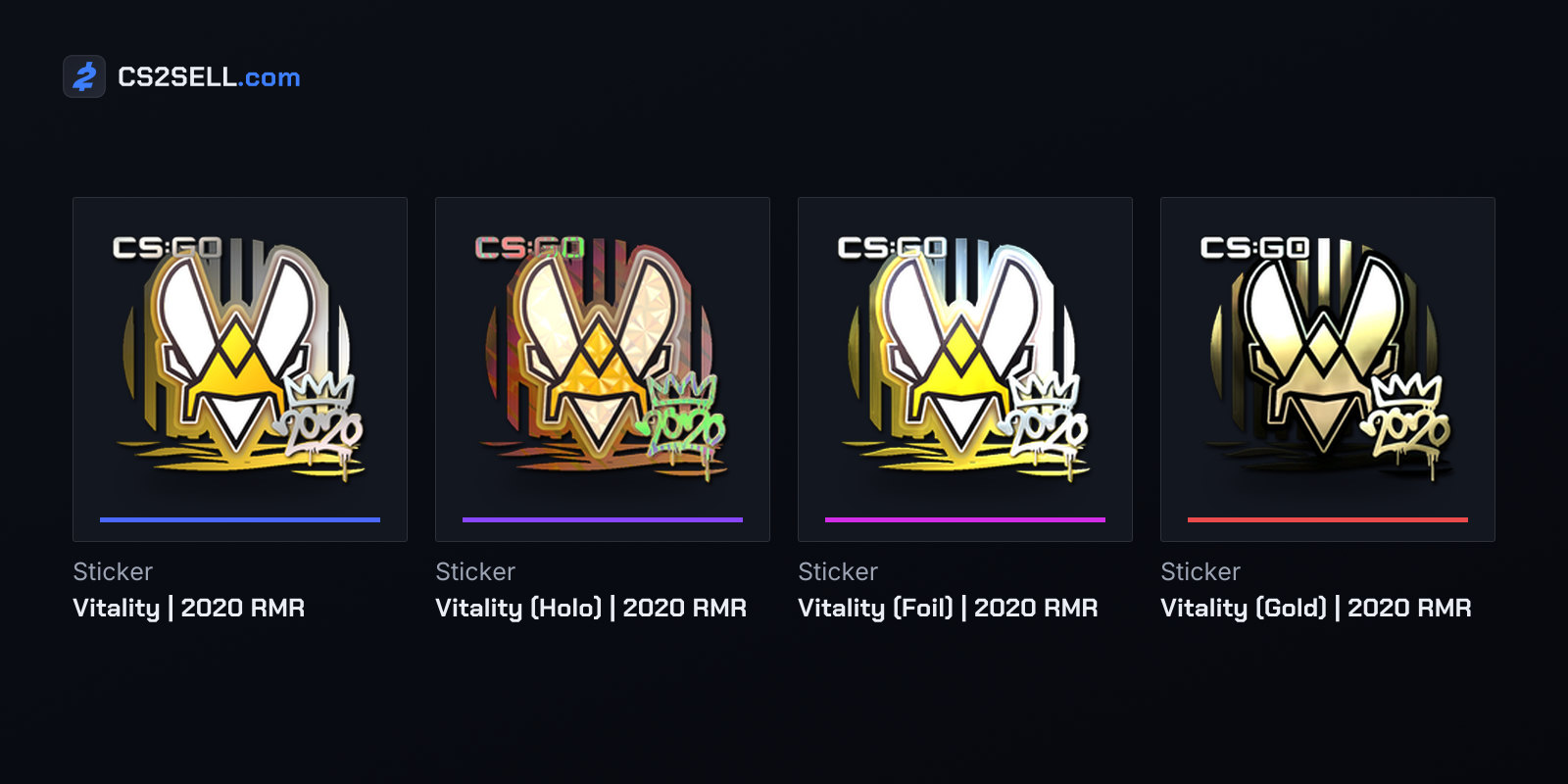
Each capsule held 32 stickers: every team in paper, holo, foil and gold. That made them the first capsules to include gold team stickers. Major team capsules from 2016 to 2019 held only holo and foil versions, as Valve's announcement for Katowice 2019 spelled out, and gold team logos had until then come only on Souvenir weapons.
The set is also unusual for what it lacks. There are no player autographs, no event or organiser sticker, and no Souvenir packages, because no Major matches were ever played. Some names are shorter than on later sets, such as "Liquid" and "G2" rather than "Team Liquid" and "G2 Esports".
The same post reset RMR points for 2021, with a head start for 2020's best: Legends began with 600 points, Challengers with 300 and Contenders with 100. It also barred coaches and other staff from the room and the server during online RMR matches.
What came next
The RMR system carried on through 2021 and decided the 24 teams for the next Major, the PGL Major Stockholm 2021, the first Major in more than two years. ESL kept its promise to Brazil: the IEM Rio Major 2022 was played in November 2022, with its playoffs at the same Jeunesse Arena.
Collecting 2020 RMR stickers today
- Read the full name. These stickers end in "2020 RMR", not "Rio". Nothing from this period carries a Rio 2020 name.
- Check the finish. Every team comes in paper, holo, foil and gold, and gold is the rarest grade in each capsule.
- Expect team logos only. There are no autographs or Souvenirs from 2020, so a player signature or a gold map sticker points to a different event.
- Inspect applied stickers. Scrape only increases, so check the sticker on the weapon itself in game. The sticker filter on Buy lets you search listings for a specific 2020 RMR sticker.
Sources
- The Road to the November Rio Major — Counter-Strike blog (Valve)
- Update on Majors and Coaching — Counter-Strike blog (Valve)
- 2021 RMR Update — Counter-Strike blog (Valve)
- ESL One Rio Major moved to November with increased $2 million prize pool — HLTV.org
- ESL One: Rio 2020 Major cancelled due to coronavirus pandemic — HLTV.org
- Valve unveils 2020 RMR stickers; announces points reset, coach limitations — HLTV.org
- Our CS:GO plan for the remainder of 2020 — ESL
- ESL One: Rio Major 2020 — Liquipedia