From 2016 to 2019, a CS:GO team without a place from the previous Major usually had to earn one at a Minor Championship, a regional event sponsored by Valve. Thirty-two were played in the Americas, Asia, the CIS and Europe before the Regional Major Rankings replaced them in 2020.
Before the Minors
Starting after DreamHack Winter 2013, the first Major, the eight teams that reached a Major's playoffs were invited to the next one as Legends. The other eight places, the Challengers, came from regional qualifiers.
For DreamHack Open Cluj-Napoca 2015, Valve added a 16-team qualifier before the Major. The previous Major's bottom eight went straight in, and regional qualifiers fed it instead of the Major. For the next Major, Minors replaced those regional qualifiers.
How the CS:GO Minors worked
Valve announced four Regional Minor Championships on December 9, 2015, hosted by StarLadder (CIS), PGL (Europe), ESL (Asia) and MLG (Americas). Each had a $50,000 prize pool, and each winner was invited to the offline qualifier for MLG Columbus 2016. Valve said the events would "spotlight players who have not recently gained exposure by participating in a CS:GO Major Championship".
Most of a team's players had to be citizens of the region, and none could have been a Legend or Challenger at the previous Major. Asia's Minor included Oceania: its first final, at IEM Taipei, was The MongolZ against Australia's Renegades.
The Columbus qualifier took one Minor team each from the Americas, the CIS and Europe, two from Asia and three from last-chance qualifiers. The MongolZ won Asia but could not get US visas, and the next teams in line, CyberZen and Chiefs, could not send a team either, so the place went to Splyce, runners-up of the Americas Minor.
From Cologne 2016, each Minor sent its top two to a 16-team offline qualifier with the previous Major's bottom eight, and the top eight went to the Major. Players from the last Major could now enter a Minor unless three of them had played there together. Valve tied places to players, not organisations: EnVyUs, ninth at Atlanta 2017, lost its qualifier spot when three of its players moved to G2 Esports.
Every Minor Championship winner
All but one of the 32 Minors had a $50,000 prize pool. The Atlanta 2017 Americas Minor, a four-team event at the ELEAGUE Arena, played only for two qualifier places.
| Major | Americas | Asia | CIS | Europe |
|---|---|---|---|---|
| Columbus 2016 | Enemy | The MongolZ | Gambit Gaming | HellRaisers |
| Cologne 2016 | OpTic Gaming | TyLoo | FLuffy Gangsters | Team Dignitas |
| Atlanta 2017 | Immortals | TyLoo | ALL-IN | GODSENT |
| Kraków 2017 | Cloud9 | Renegades | Vega Squadron | BIG |
| Boston 2018 | Team Liquid | Renegades | AVANGAR | Space Soldiers |
| London 2018 | compLexity Gaming | Renegades | HellRaisers | Ninjas in Pyjamas |
| Katowice 2019 | NRG Esports | Renegades | AVANGAR | ENCE |
| Berlin 2019 | NRG Esports | Grayhound Gaming | forZe | mousesports |
Renegades reached the first seven Asia finals, losing three and then winning four, five of them against TyLoo. NRG beat FURIA in the last two Americas finals. Europe never had a repeat winner, while AVANGAR won the CIS twice.
Kraków 2017: Minor teams in the qualifier
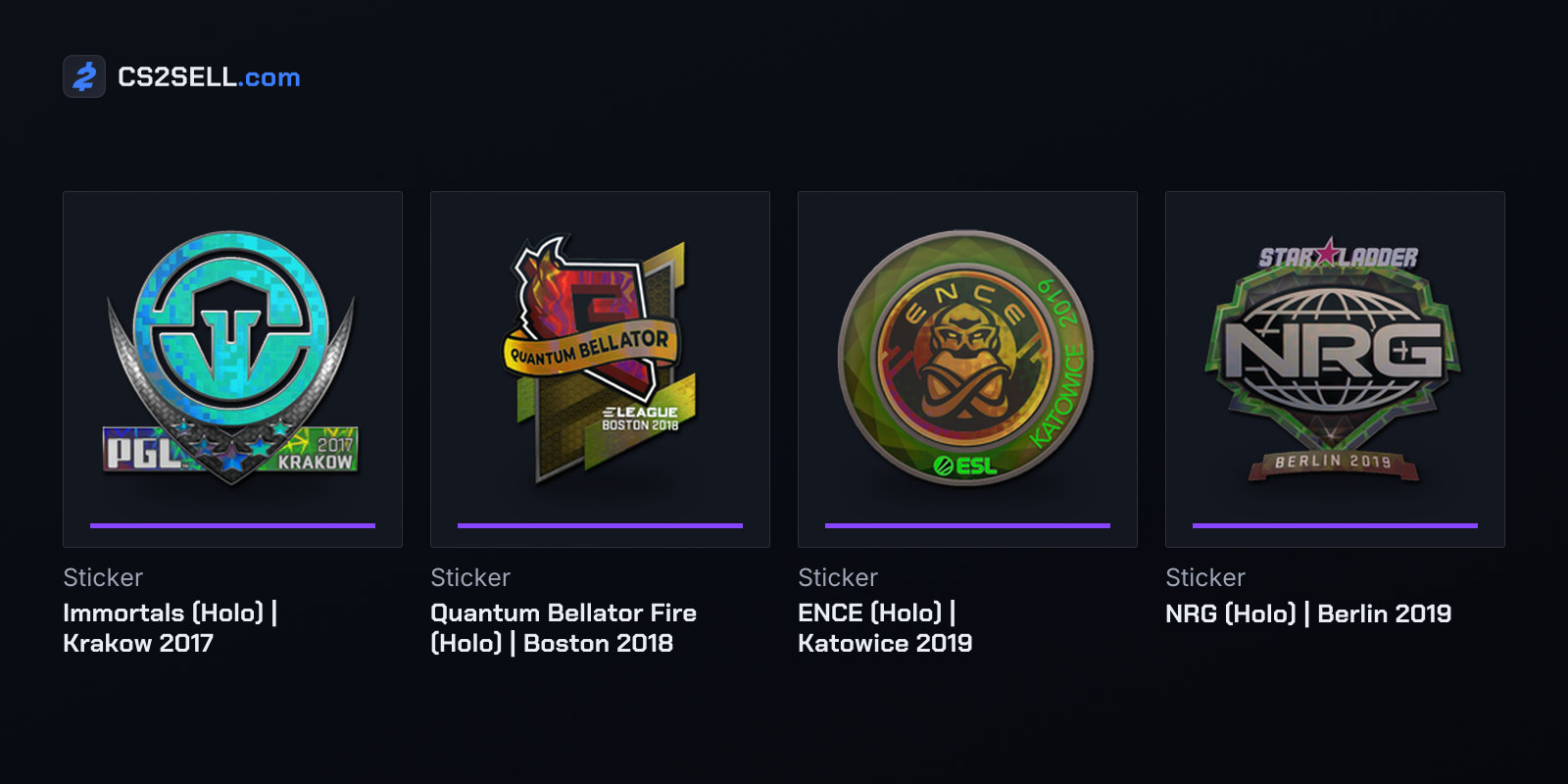
Before 2018, a Minor only led to the qualifier, where half the field went home. Kraków's, at PGL Studios in Bucharest from June 29 to July 2, 2017, used a 16-team Swiss system, which pairs teams with equal records, and every match was a best of one. Five of the eight teams that advanced came from Minors: BIG and PENTA Sports from Europe, Cloud9 and Immortals from the Americas and Vega Squadron from the CIS.
Immortals, beaten by Cloud9 in the Americas Minor final, went on to the Major final and lost 2-1 to Gambit. Renegades and TyLoo went out in the qualifier, which was not yet part of the Major, so the Kraków set has no stickers for them or for CIS runners-up Tengri.
2018 and 2019: the qualifier joins the Major
In December 2017, Valve made the qualifier the Major's first stage, New Challengers, and renamed the group stage and playoffs New Legends and New Champions, taking a Major from 16 to 24 teams. HLTV reported that all 24 would get team stickers and player autographs.
Boston 2018 opened with the eight Minor teams and Kraków's 9th–16th. Flash Gaming replaced TyLoo after visa and internal problems, and CIS runners-up Quantum Bellator Fire reached the quarter-finals. The Boston 2018 article lists that Major's capsules.
From London 2018, all four Minors were played in the Major's host city. Valve's "Winning is Everything" post also sent the two teams that went 0-3 in London's New Legends stage back to the Minors, with the third-placed Minor teams playing off for their two places. The Katowice 2019 article shows how that shaped the field.
ENCE won the Europe Minor in January 2019 and reached the Katowice final, losing to Astralis. At Berlin 2019, AVANGAR, the Katowice CIS Minor winners, were runners-up, and Berlin's Americas Minor winners NRG reached the semi-finals.
How the Minors ended
Four more Minors, set for April 26 to May 2, 2020, in Rio de Janeiro, never took place. On April 2, Valve wrote: "There will be no Minors ahead of the November Rio Major." Regional Major Rankings would decide all 24 teams, teams already qualified for the May Minors were invited to their region's RMR event, and Valve said it would sponsor two RMR series of $255,000 each instead.
The post also renamed the Returning Challengers as Challengers and the New Challengers as Contenders, a name used on capsules from the 2020 RMR Contenders to the Budapest 2025 Contenders Sticker Capsule. The Rio 2020 article covers the switch. Today Valve invites all 32 teams of a Major from its Valve Regional Standings, as How a CS2 Major works explains.
Minor Challengers capsules
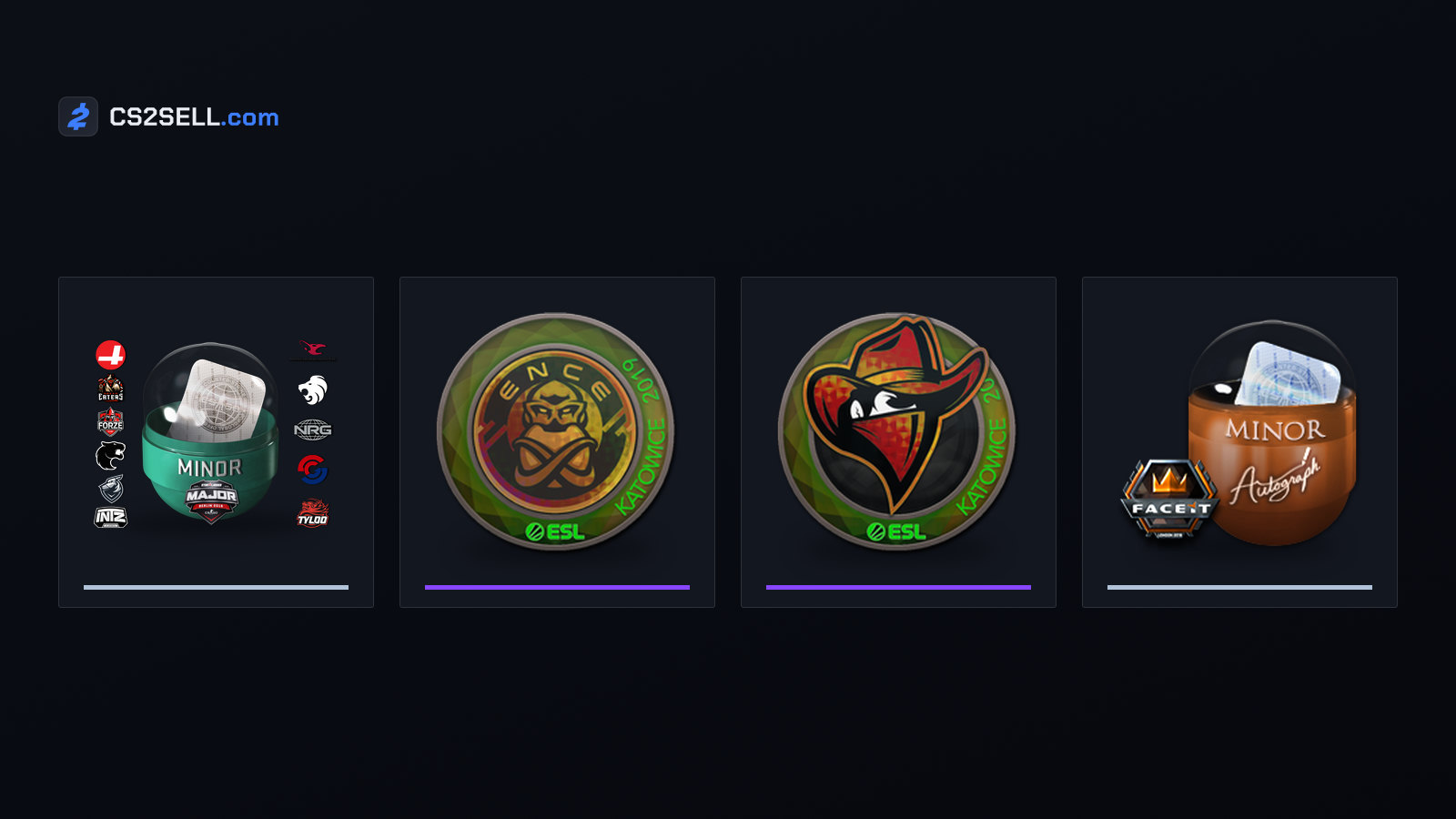
Because Minor teams now had stickers, four Majors got a Minor Challengers holo-foil capsule: the Boston 2018 Minor Challengers (Holo-Foil), London 2018 Minor Challengers (Holo-Foil), Katowice 2019 Minor Challengers (Holo-Foil) and Berlin 2019 Minor Challengers (Holo-Foil). Each has a matching autograph capsule, such as the Katowice 2019 Minor Challengers Autograph Capsule, and Boston has Flash Gaming versions of both, swapping TyLoo for Flash Gaming.
Valve's descriptions say a holo-foil capsule holds one holo or foil sticker of a participant, and an autograph capsule one High Grade, Foil or Gold autograph of a Minor Challengers player. The team lists match the teams that came through each Major's Minors, play-in teams included, plus the organiser's sticker.
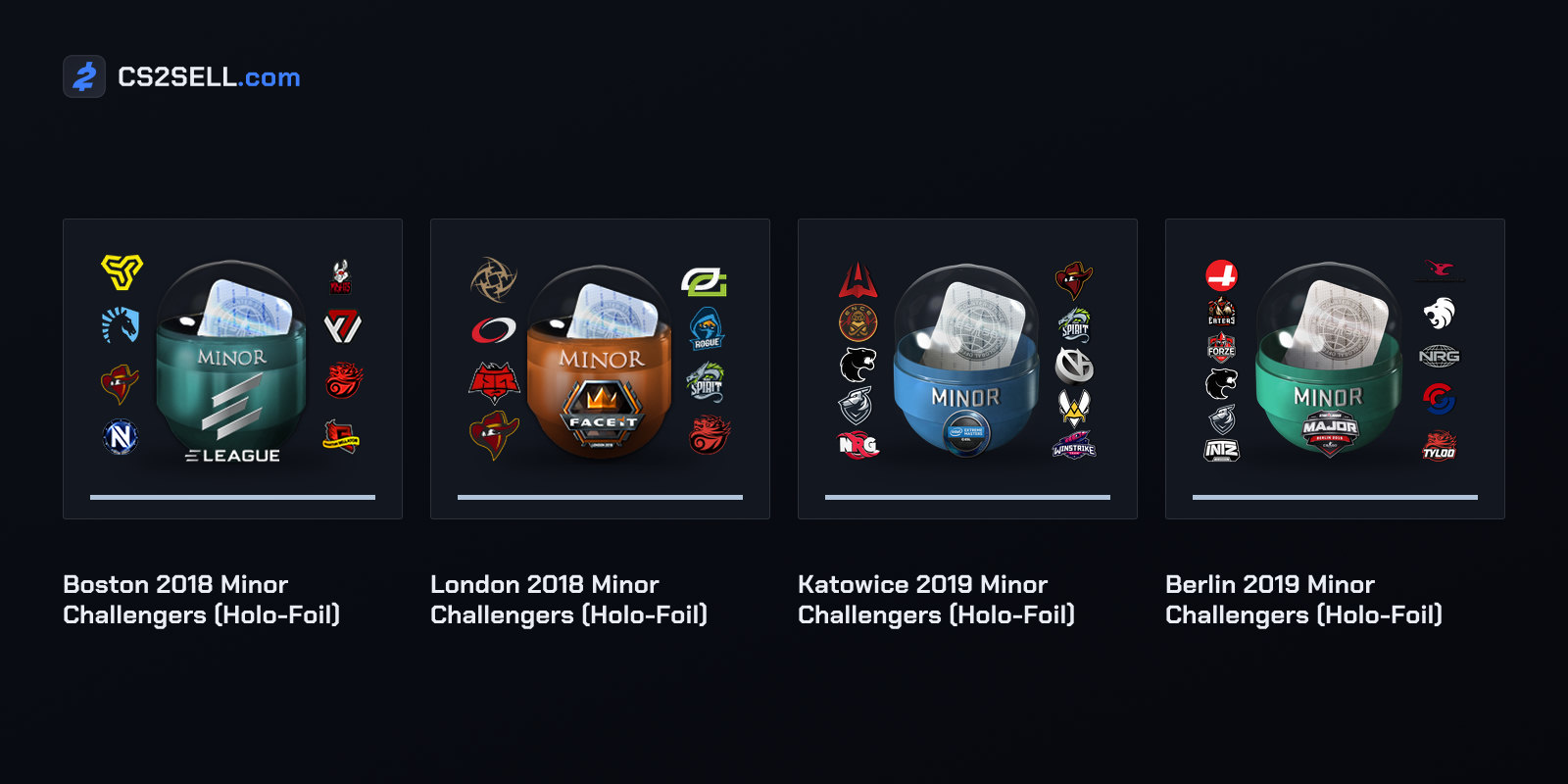
A team's status at a Major decides which capsule holds its sticker. AVANGAR have holo stickers from three Majors, but only the Sticker | Avangar (Holo) | Boston 2018 and Sticker | Avangar (Holo) | Katowice 2019 come from Minor Challengers capsules. By Berlin they were Returning Challengers, so their Berlin 2019 holo comes from the Berlin 2019 Returning Challengers (Holo-Foil). The sticker filter on CS2Sell's Buy page finds guns with a specific one applied.
Sources
- CS:GO Regional Minor Championships — Counter-Strike blog (Valve)
- SPLYCE set to replace TheMongolz — HLTV.org
- Minors — Liquipedia Counter-Strike Wiki
- PGL Major Kraków 2017 Offline Qualifier — Liquipedia Counter-Strike Wiki
- Valve revamps Major stage names to include qualifier; all 24 teams to have stickers — HLTV.org
- The Road to the November Rio Major — Counter-Strike blog (Valve)
- Counter-Strike Major Championships — Wikipedia
- csgo_english.txt, the game's English item names and descriptions — SteamTracking on GitHub