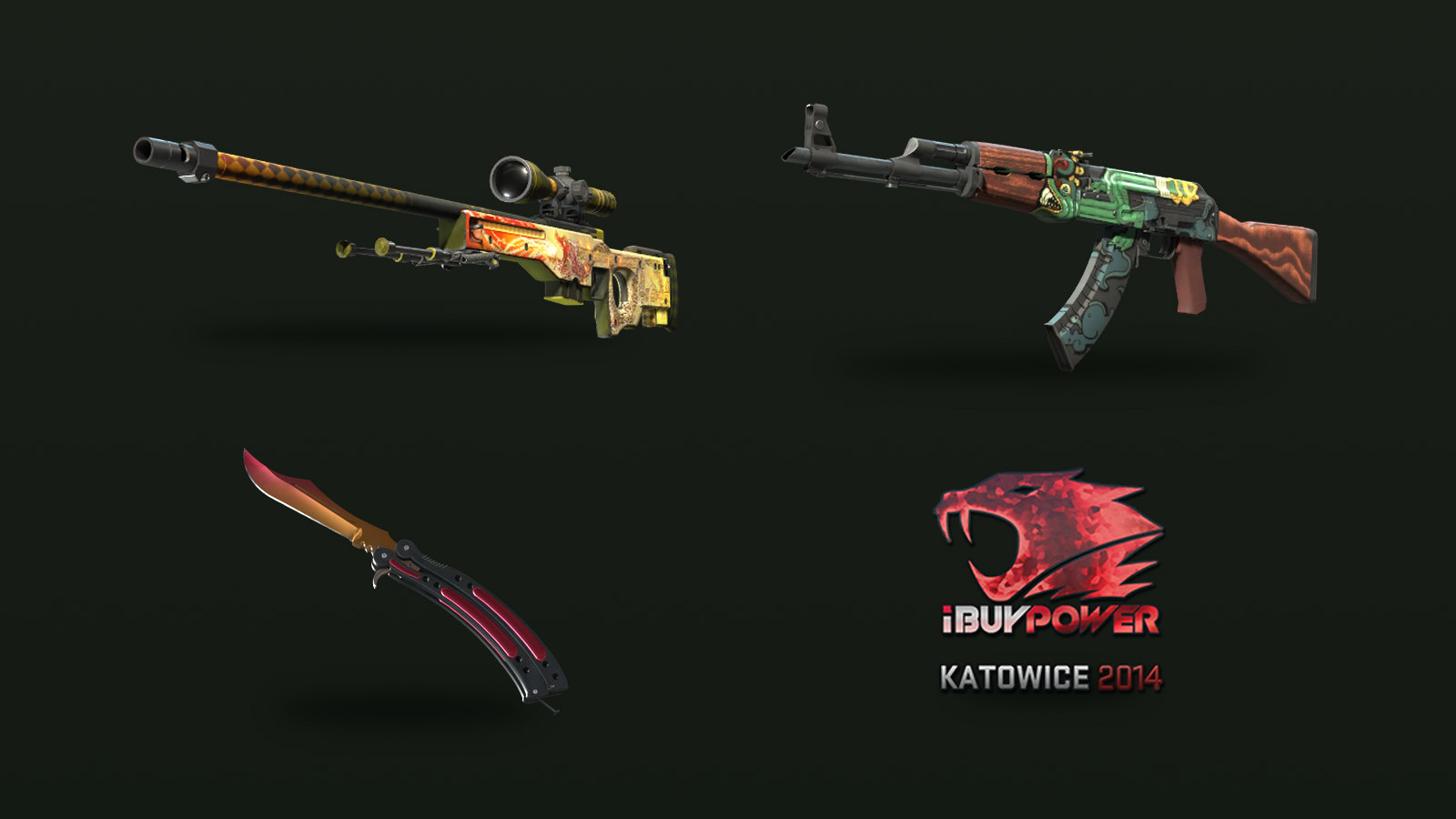
CS2 trading has its own vocabulary, and most of it gets used without explanation. This glossary covers the terms you'll run into most often, grouped by topic, with links to fuller guides where a word needs more than a couple of sentences.
Item condition and variants
Float. A number between 0 and 1 recorded when a skin is created by a drop, case opening or trade-up. It never changes. Lower means cleaner. See float values and wear.
Wear (FN, MW, FT, WW, BS). The five condition bands the float falls into: Factory New, Minimal Wear, Field-Tested, Well-Worn and Battle-Scarred. Each wear of a skin trades as a separate item with its own price.
Float cap. Some finishes can't reach every float. The P250 | Whiteout, for example, can't go below 0.06 or above 0.80, so it never comes in the cleanest or dirtiest extremes.
Pattern (paint seed, pattern template). A number of up to 1,000 that shifts how a finish sits on the weapon. It barely matters for most skins and decides the look of a few.
Blue gem. A Case Hardened copy whose pattern shows an unusual amount of blue. The best ones are among the most expensive items in the game. See blue gems.
Fade percentage. How much of a Fade finish's colour gradient is visible on a given copy. See fade percentage.
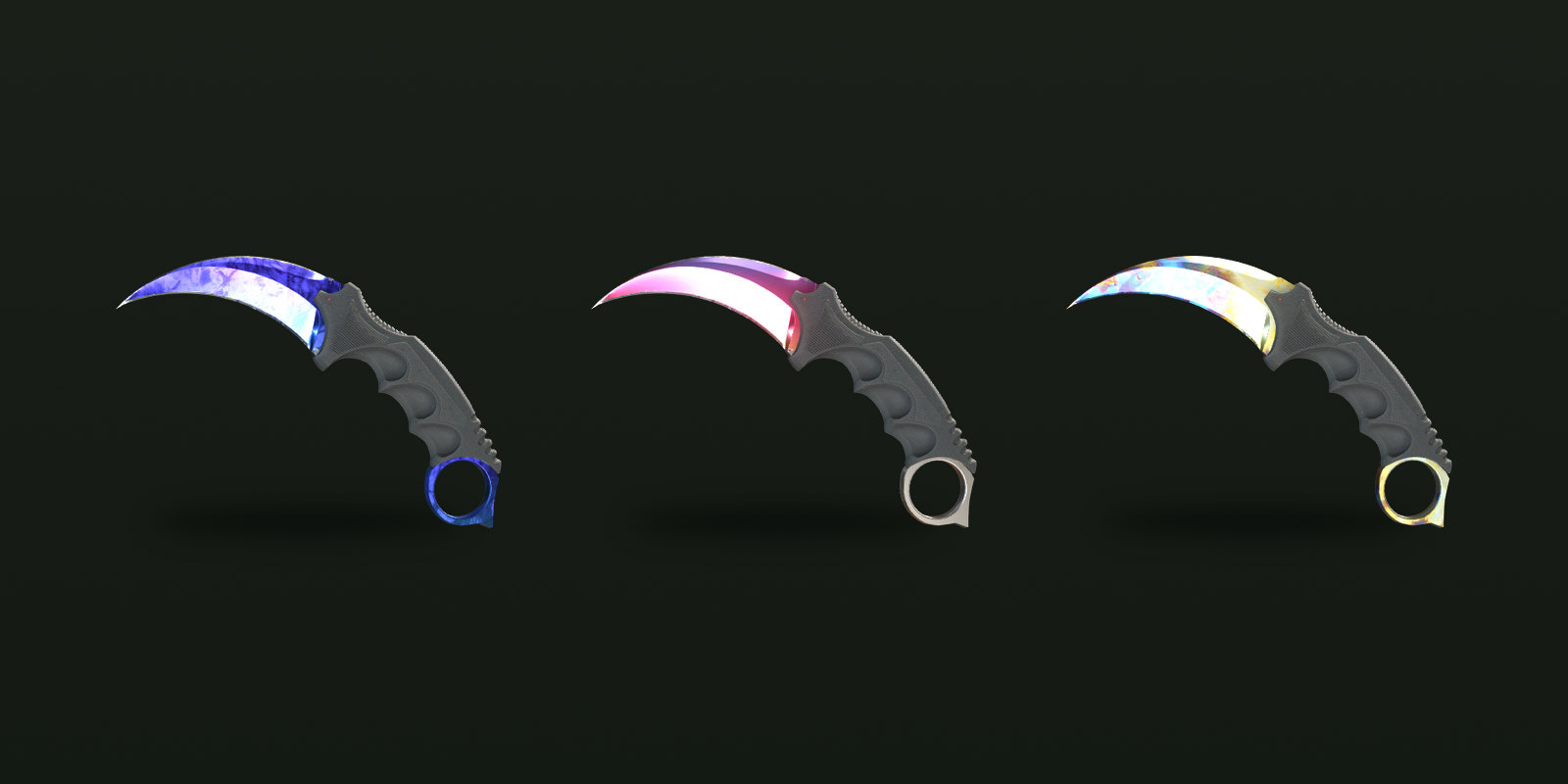
Phase. One of the colour variants of Doppler and Gamma Doppler knives, such as Phase 2 or Ruby. See Doppler phases.
StatTrak. A version of a skin with a counter that tracks kills made with it. It comes from containers like cases, or from trade-ups that use only StatTrak inputs, and map collections don't have it.
Souvenir. A version that comes out of souvenir packages instead of cases. See souvenir packages and StatTrak vs Souvenir.
★ (rare special). The star marks knives and gloves, the gold tier above Covert.
Craft. A deliberate combination of stickers applied for a particular look. See sticker crafts.
Rarity and where items come from
Rarity tiers. From most common to rarest: Consumer Grade (white), Industrial Grade (light blue), Mil-Spec (blue), Restricted (purple), Classified (pink) and Covert (red), with knives and gloves above them in gold. Contraband is a retired special tier. See rarity tiers.
Collection. A set of skins grouped by case, map or theme. Everything in one case except its knives or gloves forms one collection. See collections vs cases.
Case. A container opened with a key that gives one random item from its collection, with a small chance of a knife or gloves.
Key. Opens a case. Since October 28, 2019, keys bought in-game can't be traded or sold on the Steam Market; Valve said fraud networks had been using them to cash out.
Terminal. A container type introduced in September 2025. Unsealing it is free; an in-game arms dealer then offers random items from its collection at set prices, and you either buy one or decline. You get five offers per terminal.
Weekly care package. The weekly reward for Prime players: four items are offered and you keep two.
Drop pool. The set of cases, terminals and collections the care package can draw from. See drop pools.
Discontinued. No longer dropping. A discontinued case's supply only shrinks as people open it.
Trade-up contract. Ten skins of one rarity exchanged for one skin of the next tier. Since October 22, 2025, five Covert skins can also become a knife or gloves from the collection of one of the inputs. See trade-up contracts.
Market terms
Listing (ask). An item offered for sale at a fixed price. The lowest listing is the cheapest price you can buy at right now.
Buy order (bid). A standing offer to buy at up to a set price. On Steam, a buy order names an item and wear, and whichever copy is listed at or below the price fills it.
Spread. The gap between the highest buy order and the lowest listing. Narrow means an active market; wide means buyers and sellers disagree. See buy orders vs listings.
Volume. How many sales happened in a period. High volume makes a price more trustworthy.
Liquidity. How quickly you can sell near a fair price. See liquidity.
Base price. What an ordinary copy of an item sells for, ignoring float, pattern and stickers.
Overpay. The premium a specific copy earns over the base price. See overpay explained.
Instant sell (quick sell). Selling straight into a standing bid instead of waiting on a listing. See instant sell vs listing.
Undercut. Listing just below the current lowest listing to sell sooner.
Lowball. An offer well below an item's going price.
Steam balance vs cash. Steam Market sales pay into a Steam wallet, which can't be withdrawn, so a price in wallet funds isn't the same as a cash price.
Steam rules and safety
Market fees. The buyer on the Steam Market pays a 5% Steam fee plus a 10% Counter-Strike 2 fee on top of what the seller receives.
Wallet and listing caps. A Steam wallet holds at most $2,000, and a single Market listing can't exceed $1,800.
Trade offer. Steam's way to propose a swap of items between two accounts. Others can send you one through your trade URL.
Trade protection. Traded CS2 items arrive immediately but can't be traded, consumed, modified or moved into a storage unit for seven days.
Trade reversal. Within those seven days, an account can reverse all its trade-protected CS2 trades at once. The account that reverses gets a 30-day trade and Market cooldown; its trade partners don't. See what happens when a trade is reversed.
Trade hold. A delay Steam can place on outgoing trades depending on an account's security settings; see Steam Guard and trade holds. Steam says CS2 items aren't subject to trade holds or escrow, because trade protection covers them instead.
API key scam. A scam built on someone else gaining access to your Steam Web API key so they can interfere with your trade offers. How to check yours is in the API key scam.