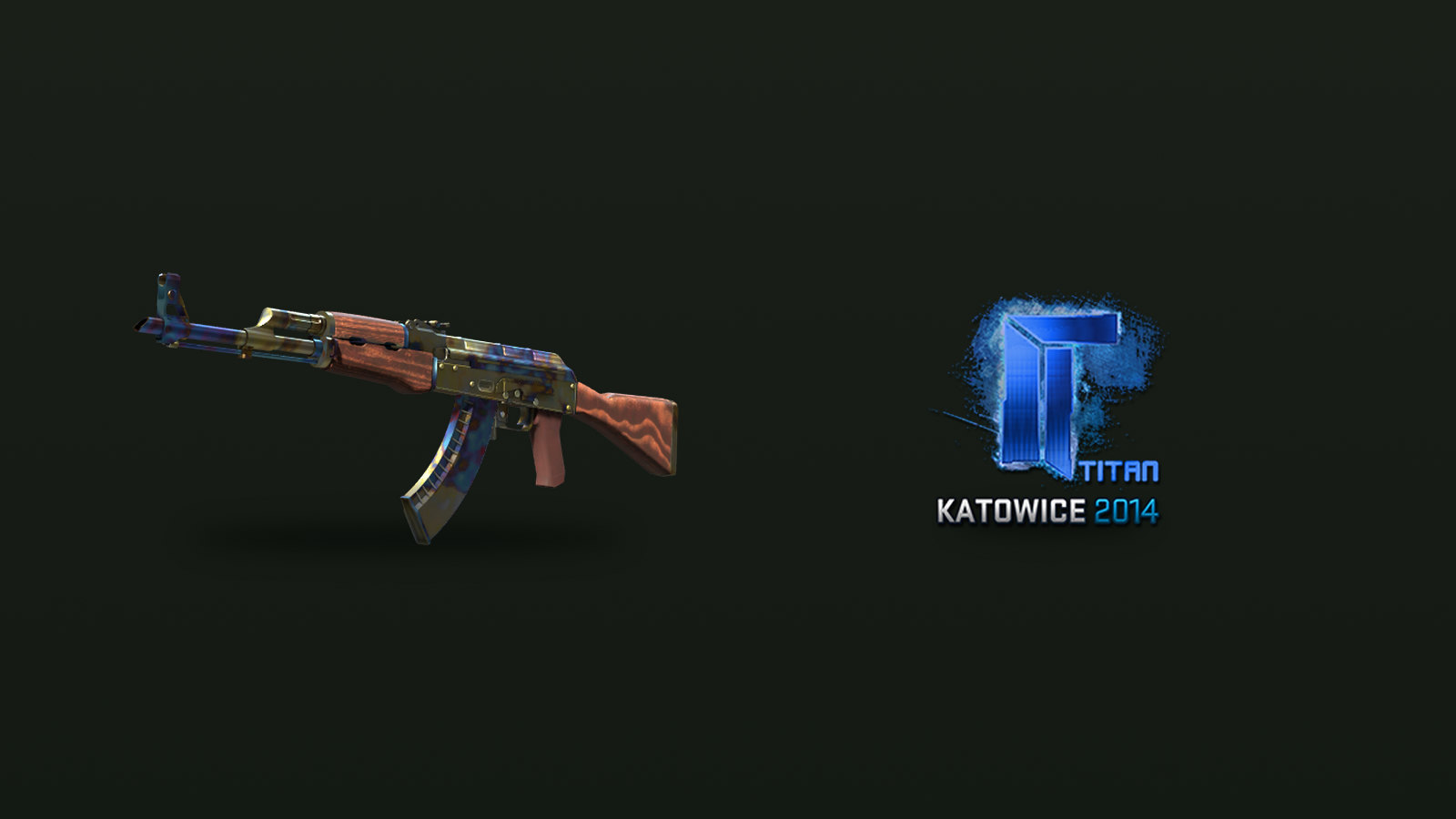
A sticker craft is a weapon whose stickers were chosen and placed as a set rather than slapped on one at a time. Most crafts are cheap projects that make a gun look good to its owner, but a small number are among the most expensive items in Counter-Strike. The difference comes down to a handful of factors you can check before you buy or build one.
What counts as a craft
"Craft" is a community term, not an official one. Any skin with applied stickers is technically crafted, but traders use the word for a deliberate combination: matching stickers, a theme, or a layout that works with the skin underneath.
Permanence is what gives crafts their weight. An applied sticker can't be peeled off and returned to your inventory; scraping or removing it destroys it. So every finished craft takes those stickers off the market for good, and nobody can take your craft apart to resell the pieces.
For most of Counter-Strike's history, guns had four fixed sticker slots, which is why the classic high-end craft is a "quad": four copies of one sticker. The February 2024 update raised the limit to five and let you place, rotate and zoom each sticker freely. Dexerto noted at the time that this left many existing crafts looking dated, because new ones could be far more inventive.
What makes a craft valuable
The stickers themselves
Sticker rarity sets the ceiling. At the top sit the Katowice 2014 holos, such as Titan and iBUYPOWER, followed by older foils like Crown. The best-known example: in April 2023 a StatTrak Minimal Wear AK-47 | Case Hardened with pattern 661 and four Katowice 2014 Titan Holos was reported sold for about $400,000, per PC Gamer. That figure came from the broker and wasn't independently verified, but PC Gamer put each Titan Holo at around $60,000 at the time, so the stickers accounted for a large share of the price.
Common capsule stickers are the opposite case. Applied, they usually add little or nothing to a gun's resale price, however good they look.
Matching and coherence
A full set of the same sticker is easy for buyers to understand and easy to compare with other sales. Mixed sets of unrelated stickers narrow the pool of buyers who want exactly that combination, so they usually earn a smaller premium than a matching set. A craft that matches the skin's colours or theme sits in between: it can sell well, but it depends on finding a buyer who shares your taste.
Condition and position
Unscraped stickers carry the most value, and a sticker's scrape level can only go up. Position matters too. A sticker that's visible in first person, rather than hidden under your hand or on the far side of the gun, is what most buyers pay for.
The skin underneath
A craft is still a skin. Float, pattern and StatTrak all count, and expensive stickers on a skin people already want tend to hold their value better than the same stickers on an unpopular finish. The 661 AK above is a top-tier blue gem in its own right; our guide to Case Hardened blue gems explains why.
Old crafts and new crafts
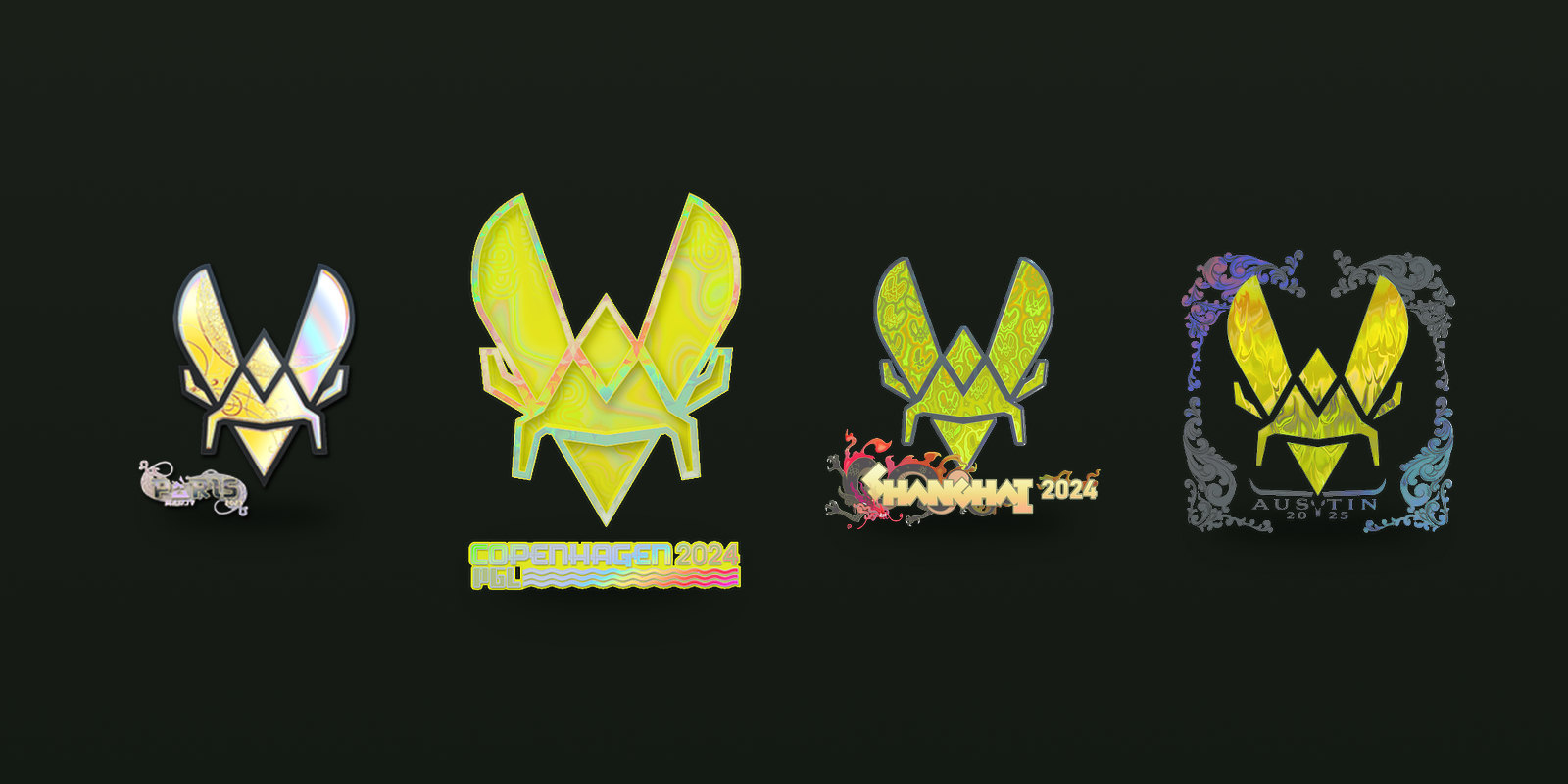
The 2024 update changed some preset positions and sizes. A community guide on Steam documents these weapon by weapon; the P90, for example, lost its big central slot. Crafts made before the update kept their original sizes and positions, so some legacy layouts can't be recreated on new skins today.
The same guide points out two details worth knowing when you inspect a craft. A newly applied sticker always sits on top of the stickers already there, so you can't slide one underneath. And the slot order shown in the inventory follows the order stickers were applied, which can reveal that a craft was finished after the update.
Common craft styles
| Style | What it looks like |
|---|---|
| Matching (4x or 5x) | The same sticker repeated across the gun |
| Team | One team's logo, often from different events or in different finishes |
| Roster | Autographs of the players from one lineup |
| Single centrepiece | One rare sticker on an otherwise clean skin |
| Colour match | Stickers picked to echo the skin's palette |
| Layered or lettering | Overlapping stickers that form letters, words or a new image |
| Scraped | Partial scrapes that wear away borders or create a weathered look |
Layered crafts only became practical with free placement. Community guides now catalogue which stickers can stand in for letters and show how to cover part of one sticker with another to build words.
Before you buy or build one
- Price check against similar crafts, not sticker prices. Adding up what the stickers would cost unapplied overstates almost every craft. Look for the same skin with the same stickers in similar positions; our guide to price-checking a skin covers how.
- Inspect in game. Thumbnails hide scrapes and overlaps. Check each sticker's position, wear and layering in the inspect view.
- Plan the apply order. Since later stickers always go on top, decide the order before you start, and put the one you want visible last.
- Mind trade protection. A weapon you received in a trade can't have stickers applied for seven days.
- Search before you build. Someone may already own the craft you want. The sticker filters on Buy let you search listings by sticker, by slot and by sticker combinations.
For the basics of placement and scraping, see our CS2 stickers guide; for why the top Katowice stickers are so scarce, see Katowice 2014 stickers.
Sources
- Counter-Strike skin sells for $400K — PC Gamer
- CS2 Feb 6 update brings huge Sticker placement tweak that changes everything — Dexerto
- All CS2 sticker changes, visual guide — Steam Community
- CS2 Stickers as Letters — Steam Community
- CS2 Sticker Update: individual placement and five stickers per weapon — CS-Resource