The Karambit is one of the five knives Valve added with the Arms Deal update in 2013, and more than a decade later it is still the model many players picture when they think of a CS2 knife. This guide covers where it drops, how it looks and moves, every finish it comes in and the details that make one Karambit different from the next. For a comparison of all 20 models, see our knife types guide.
Where the Karambit came from
The Karambit arrived on August 14, 2013, in the first CS:GO Weapon Case, alongside the Bayonet, Flip Knife, Gut Knife and M9 Bayonet. Its in-game description says the curved blade mimics "a tiger's claw" and traces it to silat, a Southeast Asian martial discipline. The knife is usually held in a reverse grip, with the finger ring on the index finger.
The Counter-Strike Wiki adds two details. The model is based on a real knife, the United Cutlery Honshu Karambit, and the third-person model holds it in a "pistol-grip" style even though your first-person view shows the traditional grip. Like every cosmetic knife, it deals the same damage at the same range as the default knife.
How it draws and inspects
Much of the Karambit's reputation comes from its animations. Hotspawn's rundown of every knife calls its flicking draw and roundabout inspect "legendary", and credits them with keeping the model popular. The Talon Knife, added in 2018, borrows much of this set, including one of the Karambit's inspects.
Valve has kept adjusting it in CS2. The August 14, 2025 update improved the deploy and quick-inspect animations for every knife, and an April 28, 2026 fix for the new Animgraph 2 animation system made sure the Karambit and Talon are held correctly while defusing.
The 16 cases that drop it
No case has added a Karambit since the Gamma 2 Case in August 2016. The 16 that carry it fall into three groups, and the game's item files point every case in a group to the same knife list:
| Finish line | Cases | Released |
|---|---|---|
| Original (12 finishes plus vanilla) | CS:GO Weapon Case, Weapon Case 2, Weapon Case 3, eSports 2013, eSports 2013 Winter, eSports 2014 Summer, Operation Bravo, Winter Offensive, Operation Phoenix, Operation Vanguard, Revolver | 2013 to 2015 |
| Chroma | Chroma, Chroma 2, Chroma 3 | 2015 to 2016 |
| Gamma | Gamma, Gamma 2 | 2016 |
Each of these cases shares its knife pool with the other four original knives, so a Karambit is one possible result among many. Since October 2025 there is a second route: five Covert skins from one of these cases can be traded up into a knife from that case's pool. Our article on the Covert trade-up update covers the rules.
Every finish and its float range
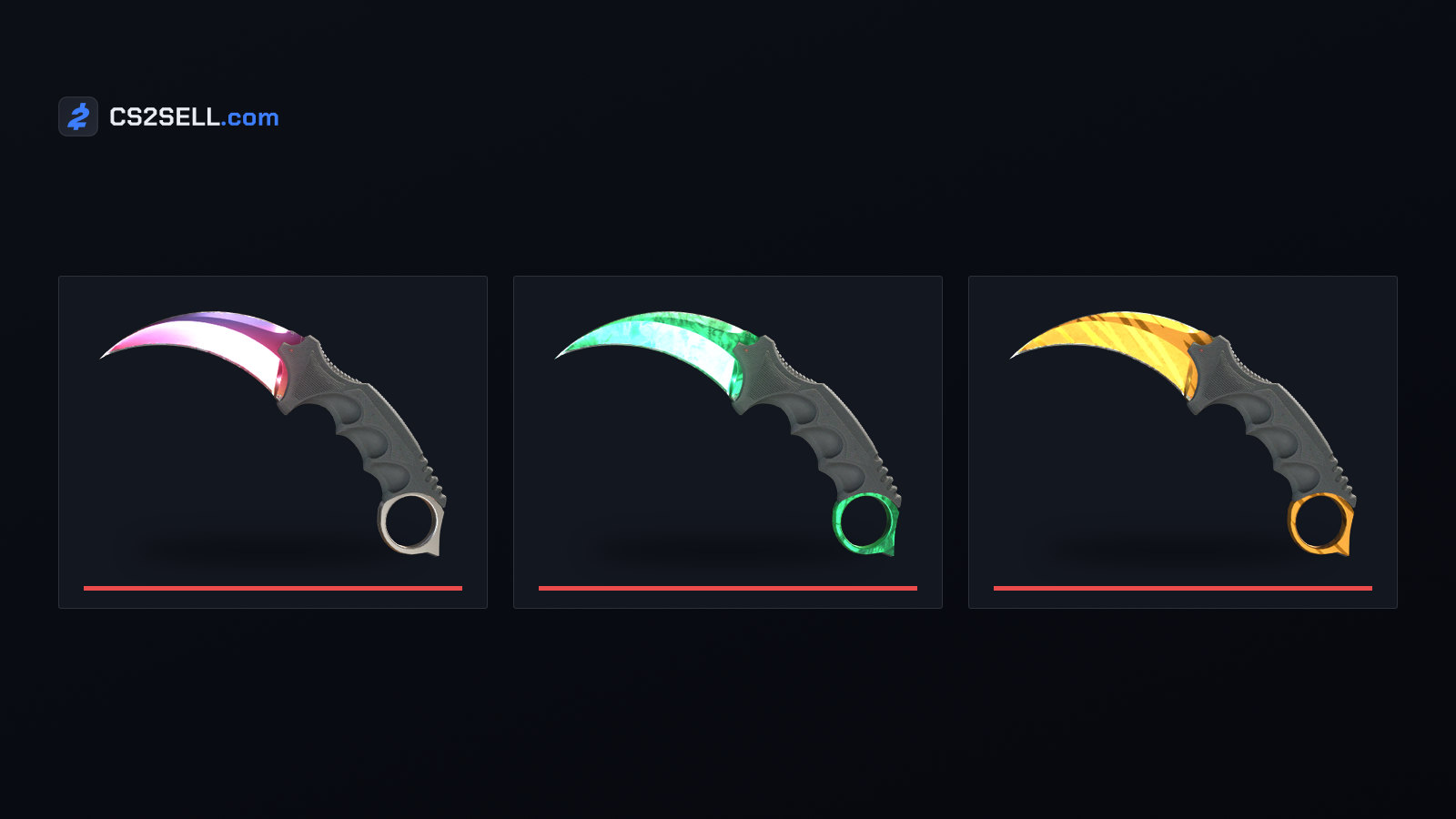
The Karambit comes in 25 versions: the vanilla knife with no finish, the 12 original finishes, six Chroma finishes and six Gamma finishes. Every one exists in StatTrak, and the Counter-Strike Wiki confirms that this includes the vanilla knife, which has its own guide.
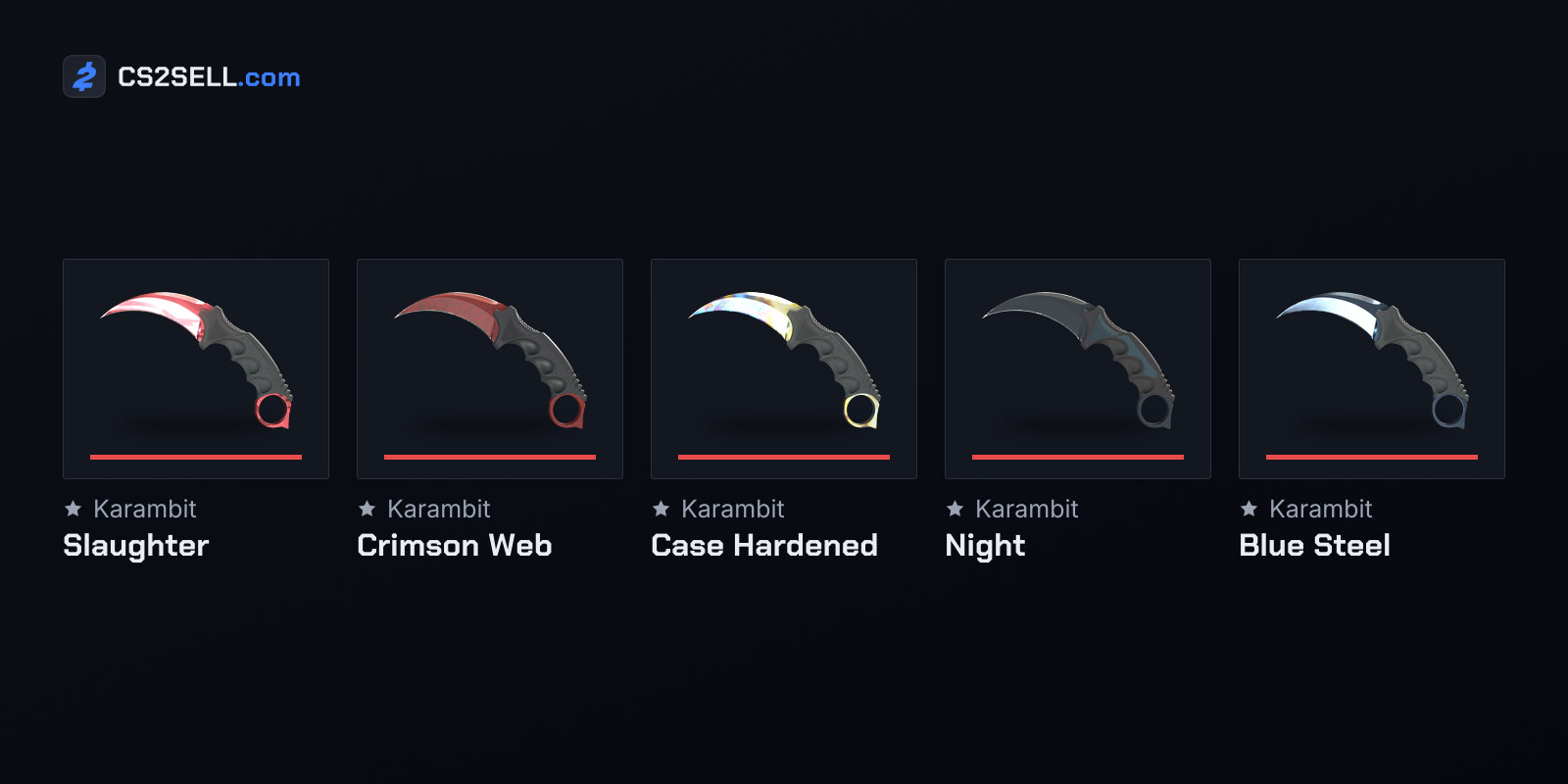
Float ranges come from the game's item definitions and decide which wear levels can exist. Our float guide explains the tiers.
| Finish | Float range | Wears that exist |
|---|---|---|
| Doppler, Gamma Doppler, Fade, Marble Fade, Tiger Tooth | 0.00 to 0.08 | Factory New, Minimal Wear |
| Slaughter | 0.01 to 0.26 | Factory New to Field-Tested |
| Rust Coat | 0.40 to 1.00 | Well-Worn, Battle-Scarred |
| Freehand | 0.00 to 0.48 | All five |
| Damascus Steel, Bright Water | 0.00 to 0.50 | All five |
| Lore | 0.00 to 0.65 | All five |
| Autotronic | 0.00 to 0.85 | All five |
| Case Hardened, Blue Steel, Stained, Black Laminate | 0.00 to 1.00 | All five |
| Crimson Web, Night, Ultraviolet and the camos | 0.06 to 0.80 | All five |
Finish details that matter on a Karambit
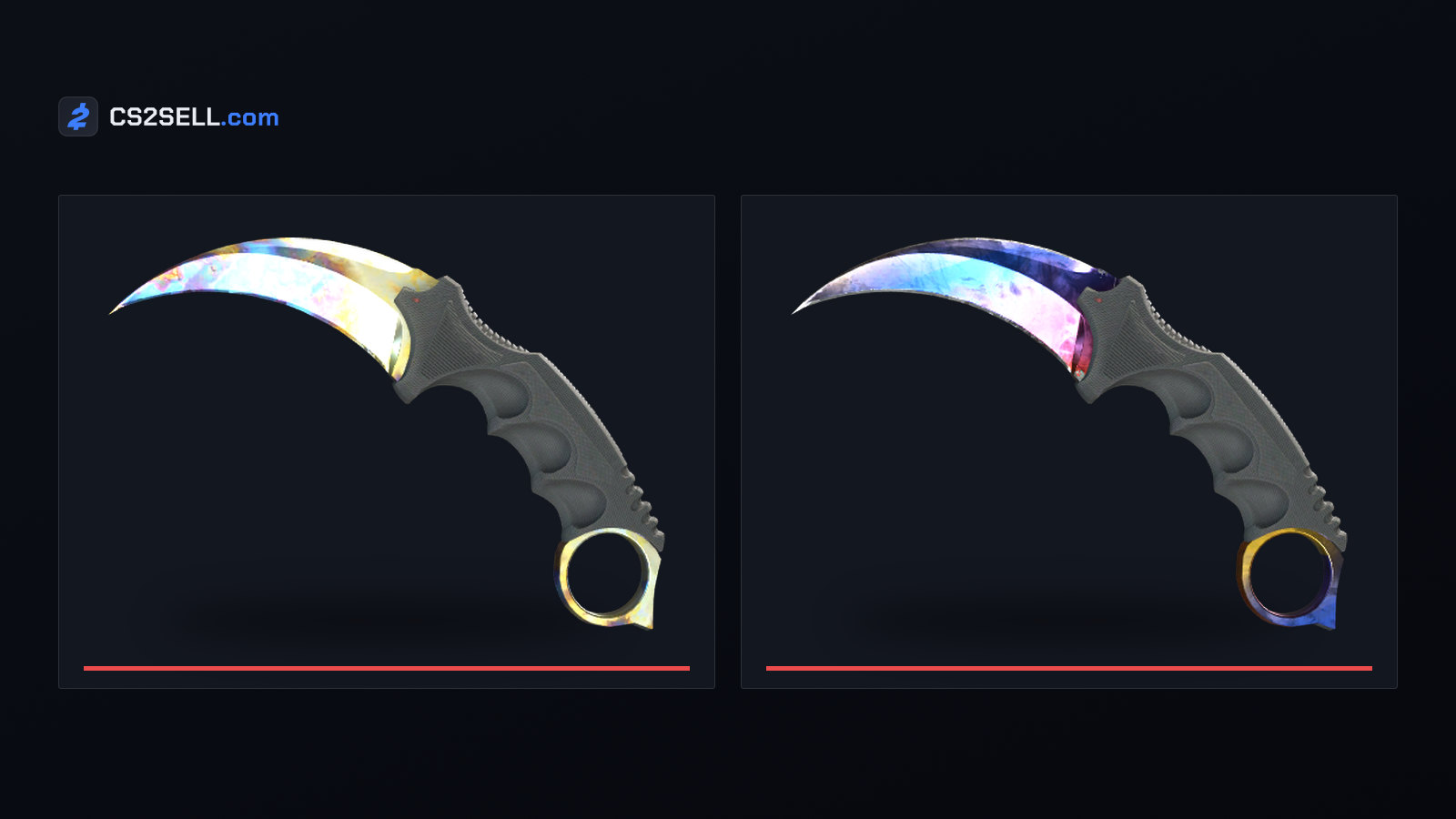
Doppler and Gamma Doppler. Each phase is a separate paint with its own Finish Catalog number, so two knives called "Doppler" can be very different items. Our Doppler phases guide shows how to tell Phase 1 to 4, Ruby, Sapphire, Black Pearl and Emerald apart.
Fade. Fade Karambits are graded by fade percentage, a community score worked out from the paint seed rather than anything the game displays. The fade guide explains the scale.
Marble Fade. The layout collectors chase is Fire & Ice: red and blue on the side you see in play, with no yellow. A widely used Steam Community guide ranks seed 412 as the "1st Max" and counts ten tiers of true Fire & Ice on the Karambit within the first 43 pattern shifts. The author found 123 of the 1,000 seeds qualify, about 12%. Once any yellow reaches the blade, the knife counts as a "fake" Fire & Ice.
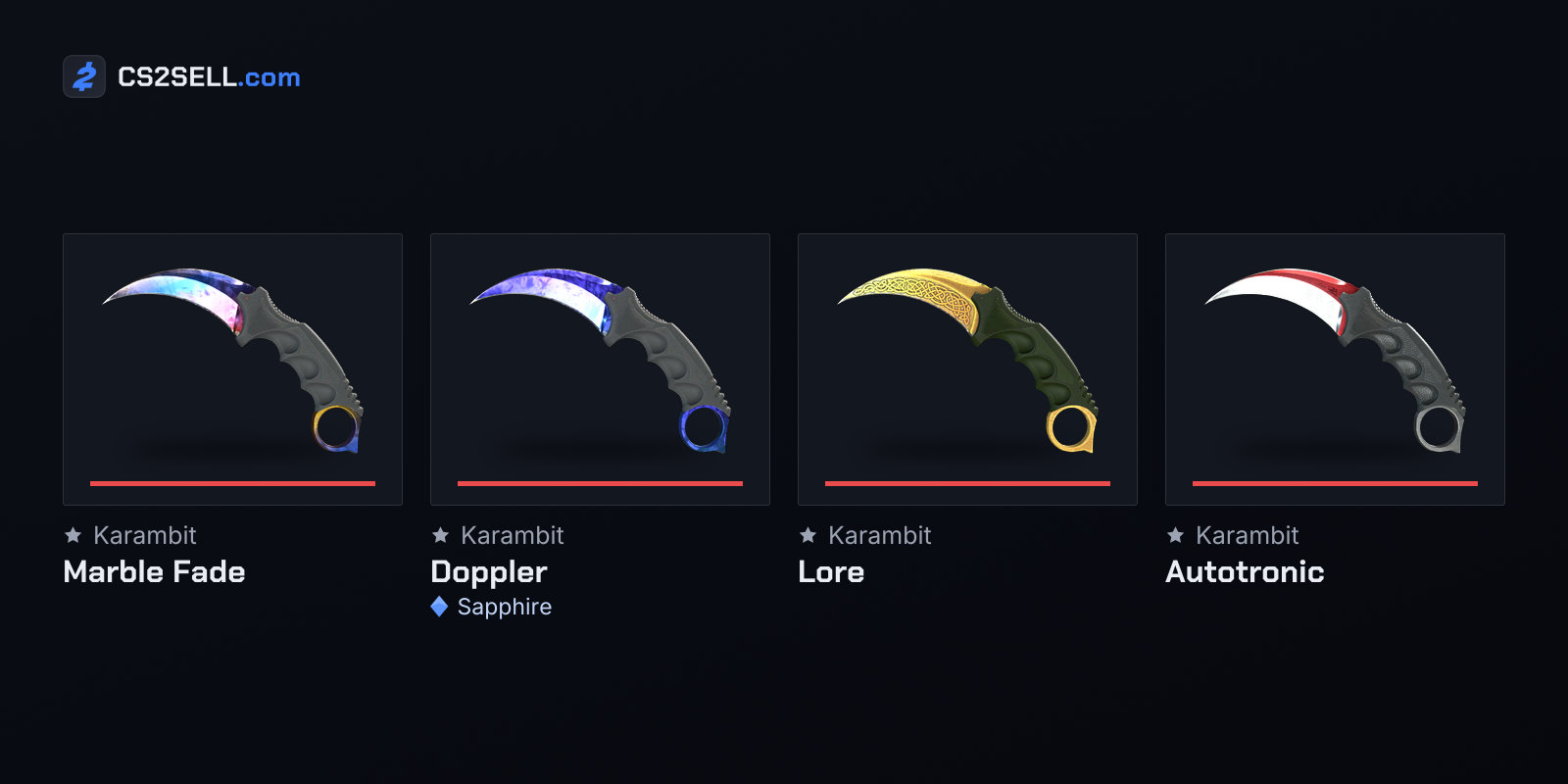
Case Hardened. Karambits in this finish are judged on how much of the play side turns blue, and a seed that is excellent on one model means nothing on another. Our blue gem article covers the famous patterns.
Gamma finishes. Lore, Autotronic and Black Laminate are drawn for each knife model separately in the game files, so a Karambit Lore is its own design rather than a texture shared with the Bayonet.
Before you buy
- Open the information panel. In game, the Finish Catalog number confirms a Doppler phase, and the Pattern Template is the seed you check against a Fire & Ice or blue gem list.
- Check the wear window. A Minimal Wear Fade can only sit between 0.07 and 0.08, while a Battle-Scarred Case Hardened can be anywhere from 0.45 to 1.00.
- Compare like with like. Phase, seed, float and StatTrak each change what a Karambit is worth, so line up copies that match on all four.
On CS2Sell, Buy has filters for Doppler phase, fade percentage, blue percentage and paint seed, which makes it easier to compare Karambits that differ in only one of those details.
Sources
- Karambit — Counter-Strike Wiki
- CS2 Knife Animations - All Knives Explained — Hotspawn
- What CS2 cases have Karambits? — Hotspawn
- The Complete Fire & Ice Guide — Steam Community
- items_game.txt — GameTracking-CS2 on GitHub
- Counter-Strike 2 Update, August 14, 2025 — Counter-Strike 2 news
- Counter-Strike 2 Update, April 28, 2026 — Counter-Strike 2 news
- StatTrak — Counter-Strike Wiki