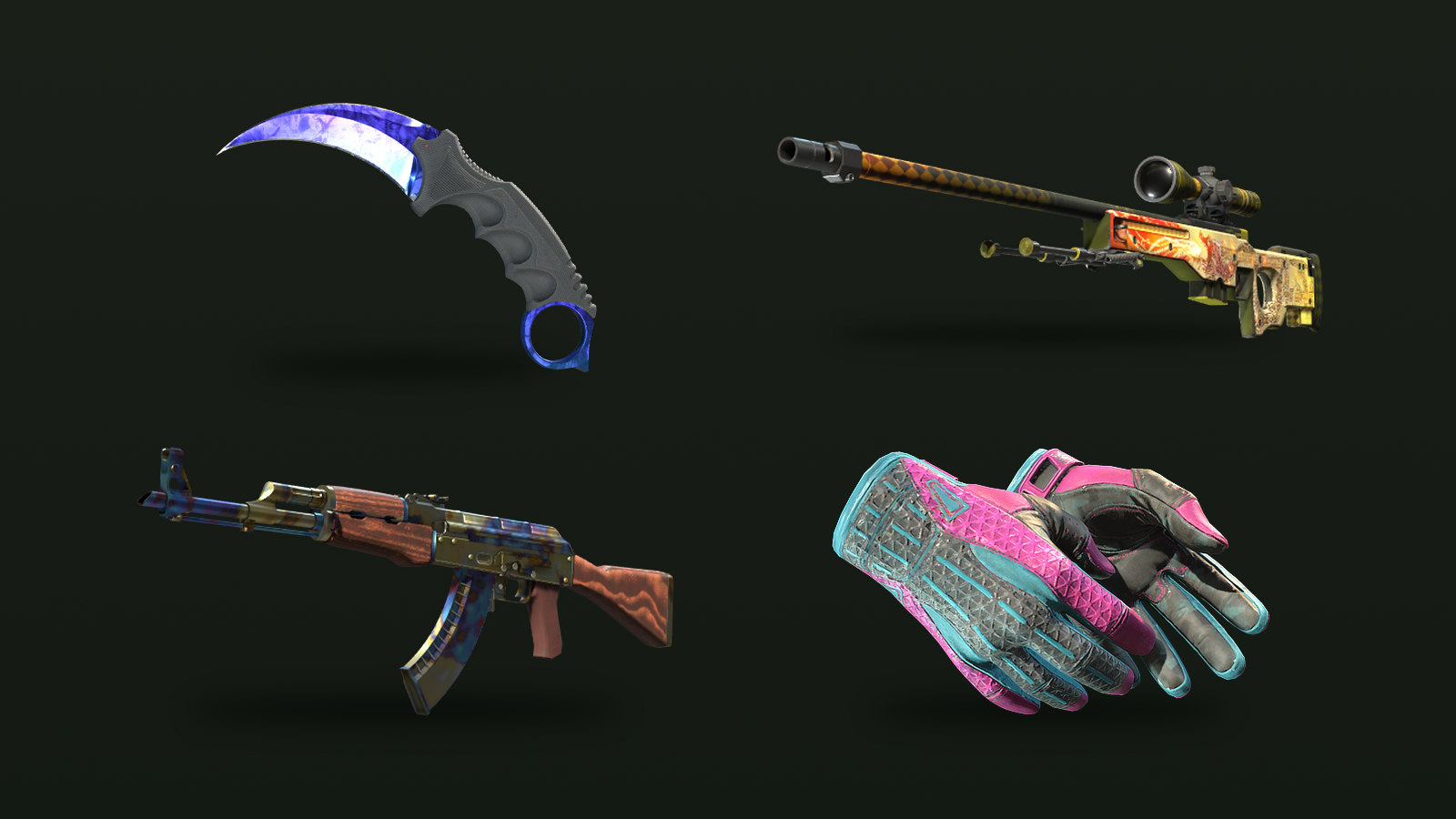
Valve doesn't set the market price of a CS2 skin. Players do, every time someone buys a listing or fills a buy order, and that price moves with two things: how many copies exist or keep arriving, and how many people want one. Everything else, from float values to patch notes, works through one of those two levers.
Supply starts with drop odds
Most skins enter the game through containers. When Valve's Chinese partner Perfect World published case odds in 2017, the tiers worked out to roughly 79.92% Mil-Spec, 15.98% Restricted, 3.2% Classified, 0.64% Covert and 0.26% for a knife or gloves, with a 10% chance that any item comes out as StatTrak. From Mil-Spec up to Covert, each tier is about five times rarer than the one below it, so pulling any Covert is roughly 125 times less likely than pulling a Mil-Spec.
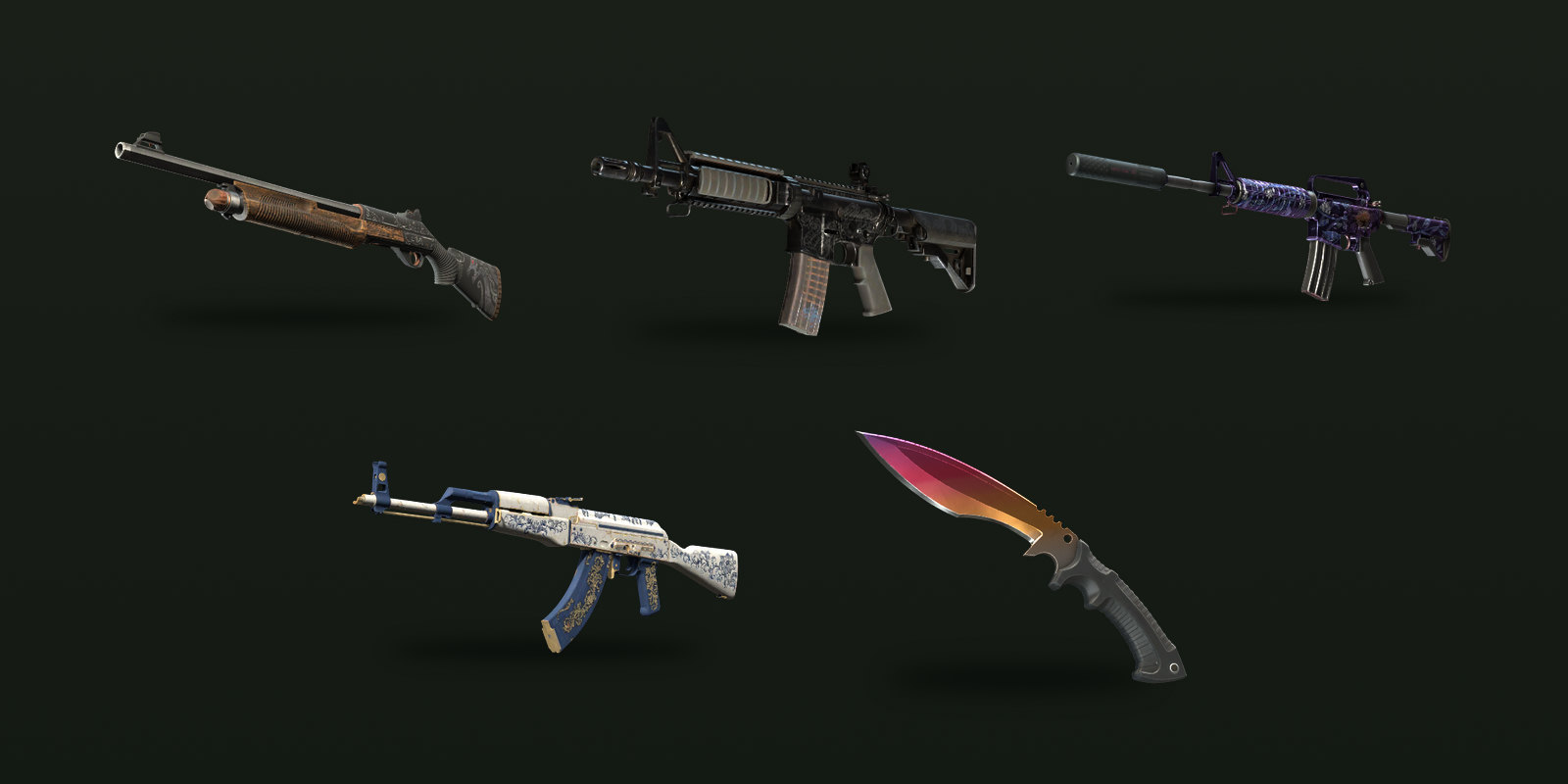
That ratio explains the broad price ladder inside a case. It doesn't explain why two Coverts from the same case can be priced far apart. That part comes from demand, covered below.
Supply also leaves the game. Every opened case is gone for good, and a trade-up contract consumes ten skins of one rarity to produce a single skin of the next tier. Since Valve's October 22, 2025 update, five Covert skins can also be traded up into a knife or gloves from the collection of one of the inputs, which turned ordinary Coverts into raw material for the most expensive items in the game.
Drop pools decide which supply keeps flowing
Prime players get one weekly care package, and the cases and collections it can contain make up the active drop pool. Containers in that pool receive a steady stream of new copies, which keeps them cheap. Once a case leaves, no new copies arrive and the remaining stock only shrinks as people open it.
In December 2025, drop-tracking data showed that older cases had stopped appearing in weekly drops altogether, ending the small trickle the old "rare drop pool" used to provide. Valve never announced the change. The full picture is in our guide to drop pools.
Discontinued doesn't automatically mean expensive, though. A case that dropped in huge numbers for years can stay cheap for a long time, because the existing stock is large and a fixed supply only matters once demand eats into it.
No two copies are quite the same
Every skin carries a float value between 0 and 1 that sets its wear tier and never changes, so Factory New and Battle-Scarred versions are effectively separate products with separate prices. Some finishes are capped: the Counter-Strike Wiki gives the P250 | Whiteout as an example that can't go below 0.06 or above 0.80. The details are in float values and wear.
Each copy also has a pattern seed, a number of up to 1,000 that shifts how the paint sits on the weapon. For most finishes the difference is barely visible. For finishes like Case Hardened or Fade it decides how the item looks, and a sought-after pattern can be worth many times the standard price. StatTrak and Souvenir versions trade as their own items, and applied stickers can add value as well. These premiums are covered in overpay explained.
Demand is about looks, weapons and attention
Rarity limits supply, but demand decides whether anyone pays for it. According to the Counter-Strike Wiki's summary of a Valve talk on the economy, the designers first put the finishes they expected to be most popular in the common tiers and the riskier bright or unrealistic ones in the rare tiers. Players turned out to prefer the bright, distinctive skins, and later collections were tailored to that.
The weapon matters as much as the paint. A finish on a rifle or sniper you buy almost every round is seen far more often than one on a gun you rarely pick, so it has a bigger pool of potential buyers. Knives and gloves combine that visibility with the scarcity of the 0.26% tier.
Hype is the hardest factor to pin down. A streamer showcase, a Major or a skin appearing in a famous highlight can bring in buyers for a while, but those effects are hard to separate from everything else moving the market, and there is no reliable way to tell in advance whether the interest will last.
Valve can change the rules overnight
Because supply depends on game mechanics, a single patch can reprice a whole category. The October 2025 trade-up change is the clearest recent case. Ars Technica reported the next day that a knife which had sold for over $14,000 less than 24 hours earlier had seen its minimum price fall by more than half, while the median Steam sale price of the P90 | Asiimov, a Covert, jumped from $10 to well over $100.
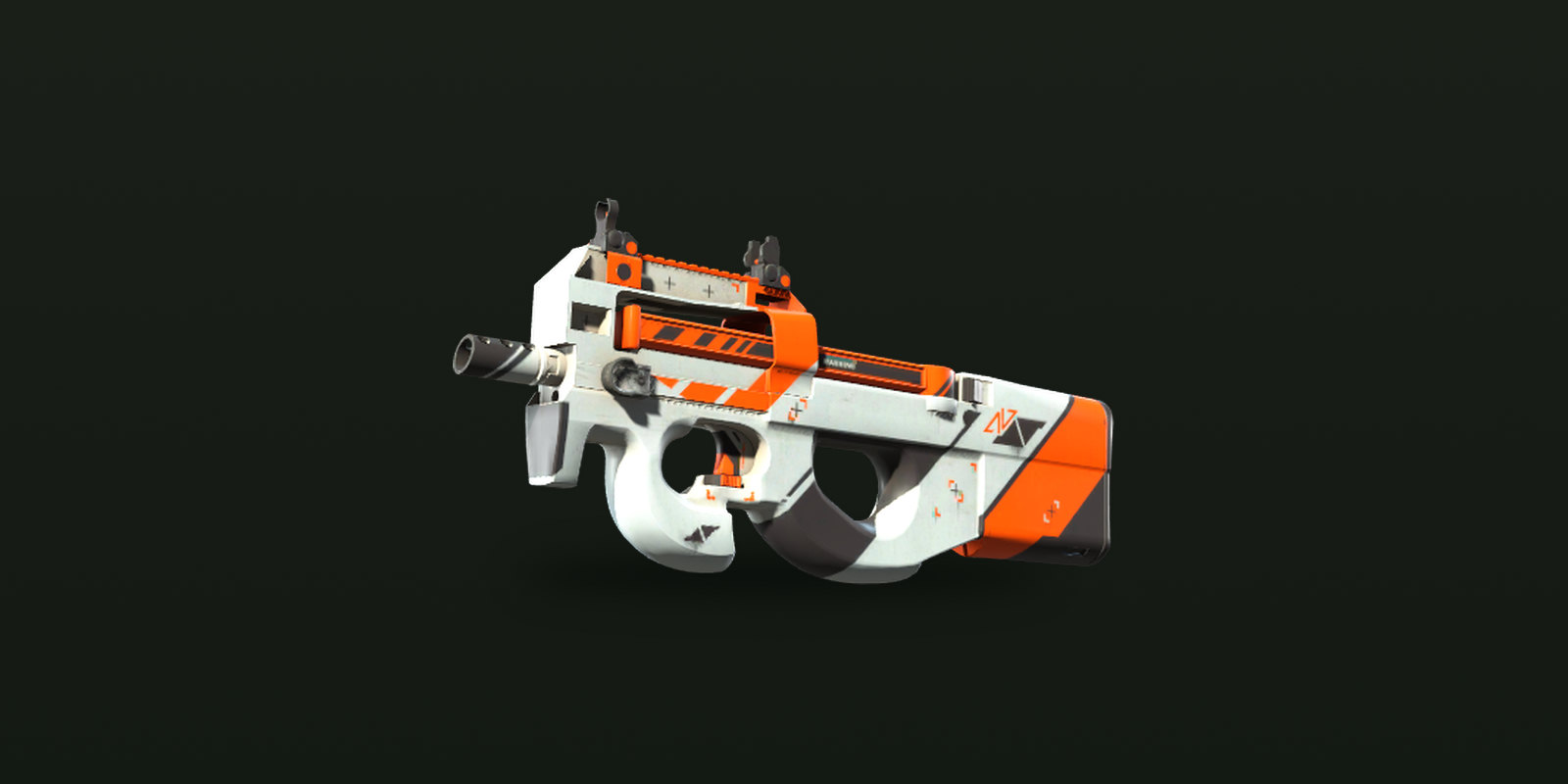
A third-party tracker cited in the same report estimated that the combined value of all CS2 items fell from just over $6 billion to just under $4.3 billion overnight. Knife holders lost on paper, owners of Covert skins gained, and nothing about the items themselves had changed.
Where you look changes the number
The same skin can carry different prices depending on where it trades. On the Steam Community Market, the buyer pays a 5% Steam fee and a 10% Counter-Strike 2 fee on top of what the seller receives. Steam wallets are capped at $2,000, a single listing can't exceed $1,800, and wallet money can't be withdrawn.
That has two consequences. Items worth more than the listing cap simply don't sell on Steam, so their prices form elsewhere. And because wallet funds can only be spent inside Steam, a price paid in wallet money isn't directly comparable to a price paid in cash on a third-party marketplace.
When you compare prices, note the venue, whether fees are included, and what kind of money changed hands. CS2Sell's price pages on Prices give you another reference point to set against Steam's sales history.
Sources
- Here are CS:GO's loot box odds — PCGamesN
- Skins — Counter-Strike Wiki
- Counter-Strike 2 patches/October 22, 2025 — Counter-Strike Wiki
- CS2 item market loses nearly $2B in value overnight due to "trade up" update — Ars Technica
- Is CS2 removing cases? Rumors explained — Hotspawn
- Community Market FAQ — Steam Support