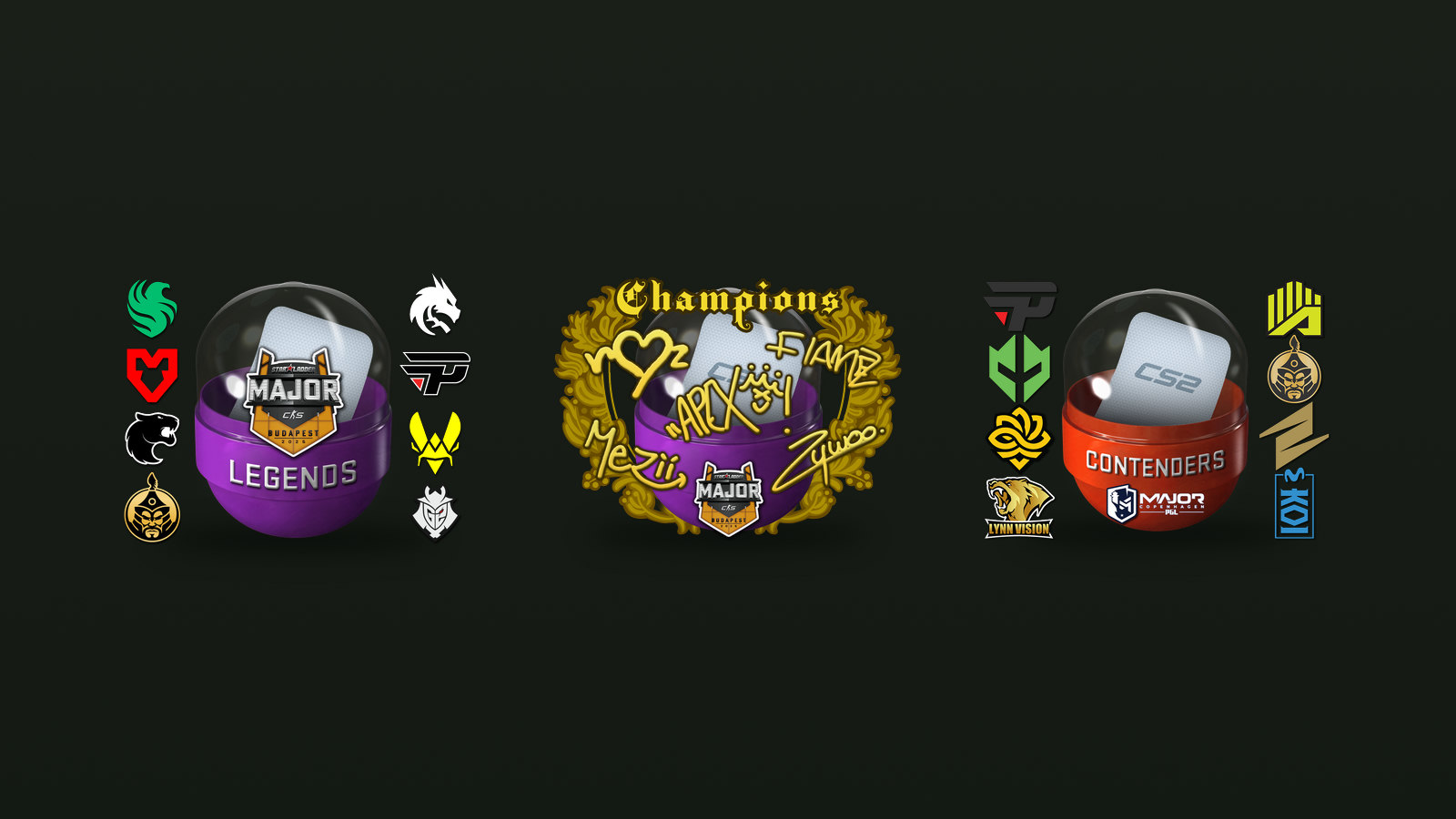
Since 2014 every Counter-Strike Major has come with stickers of the teams and players taking part, and for many teams the money from those sales is worth far more than the prize pool. For more than a decade most of them came in random capsules, until Valve replaced capsules with a shop at the Cologne 2026 Major and changed how the money is split. Here is how both systems work.
How it started
The first team stickers went on sale for EMS One Katowice 2014, in two capsules called Legends and Challengers, with part of the proceeds shared among the teams in each one. Our Katowice 2014 stickers guide covers that event.
Player autographs followed at ESL One Cologne 2015. An autograph sticker is a player's own signature turned into a sticker. Valve's announcement said 50% of autograph sales went "to players and organizations", and added that, "just like all previous team stickers", half of team sticker sales went to the organisations. That 50% figure has been the headline number for Major items ever since.
How the capsule era worked
By the final years of the capsule era, from Paris 2023 to Budapest 2025, each Major had two kinds of capsule, both sold in the in-game store:
- Team sticker capsules, with team logos.
- Autograph capsules, with player signatures.
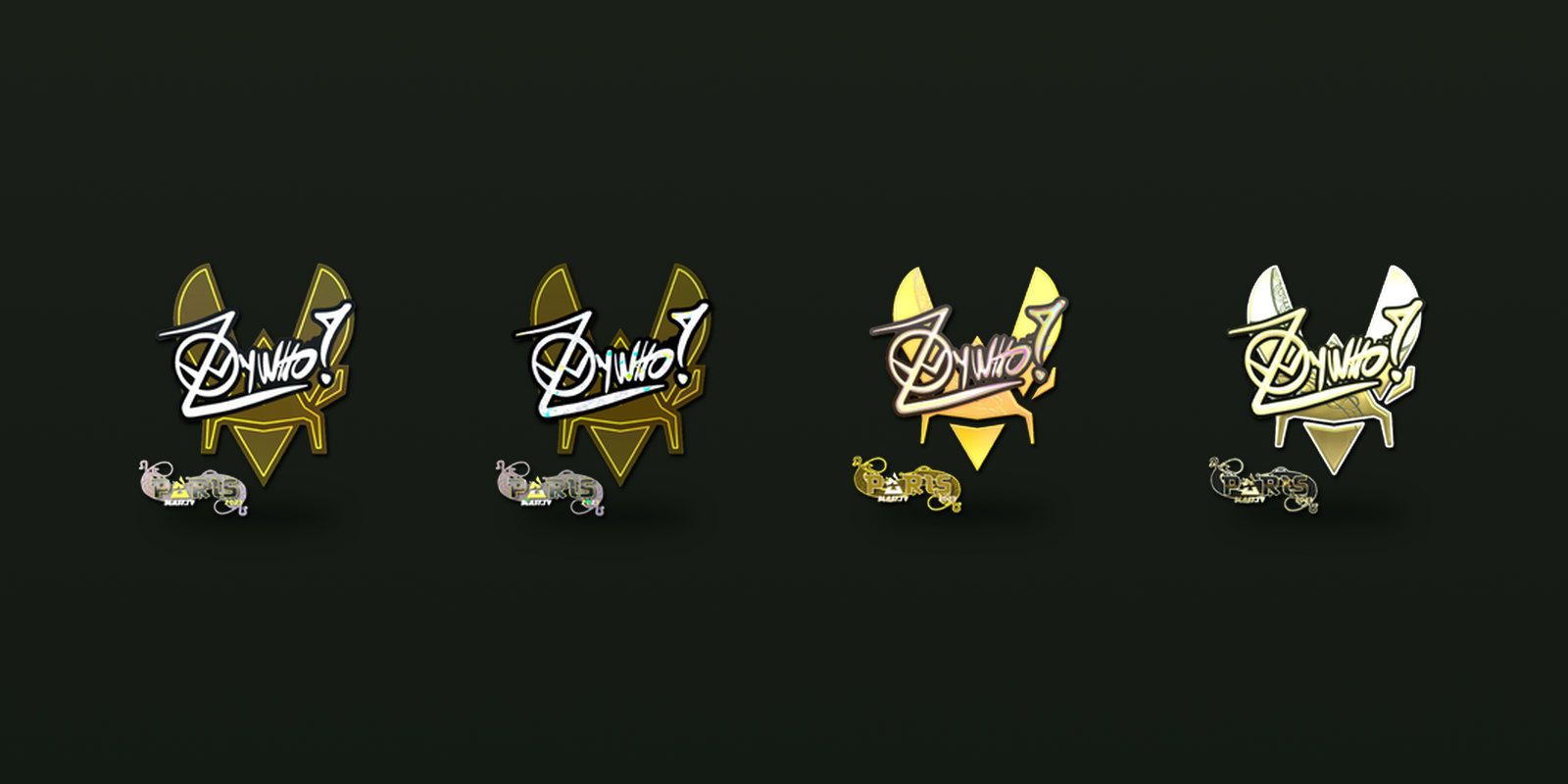
Teams were grouped into capsules by their status at the event: Legends, Challengers or Contenders. HLTV reported that the Copenhagen 2024 capsules cost $0.95 each. Each capsule gave one random sticker in one of several finishes. Paris 2023 used paper, glitter, holo and gold, and Budapest 2025 added an embroidered finish. Shortly after each final, a Champions Autograph Capsule with the winners' signatures went on sale.
The way the money was divided mattered as much as the 50% share. According to HLTV's team sources, each capsule's earnings were split equally among the eight teams in a team capsule, or the 40 players in an autograph capsule. A team's income therefore depended on how well its whole capsule sold, not on how popular its own logo was.
How much the stickers paid out
| Major | Paid to teams and players | Basis |
|---|---|---|
| StarLadder Berlin 2019 | over $11 million | Valve, as cited by HLTV |
| PGL Stockholm 2021 and Antwerp 2022 | $70 million combined | Valve, as cited by HLTV |
| BLAST.tv Paris 2023 | over $110 million | Team sources, reported by HLTV in January 2024 |
Paris was the outlier. HLTV's sources put Contenders teams at about $4.5 million each plus $250,000 per player, Legends at $3.5 million plus $200,000, and Challengers at $2.6 million plus $200,000, not counting the Champions capsule. HLTV linked that to the stickers being on sale for nearly five months, from May 4 to September 27, 2023, while CS2's arrival pushed player counts to records.
Cologne 2026: a shop instead of capsules
On May 21, 2026 Valve opened the Cologne 2026 Major Shop and dropped capsules. Its FAQ gave two reasons: feedback that players would rather buy stickers directly, and the fact that "players in certain regions cannot purchase sticker capsules".
The new system works like this:
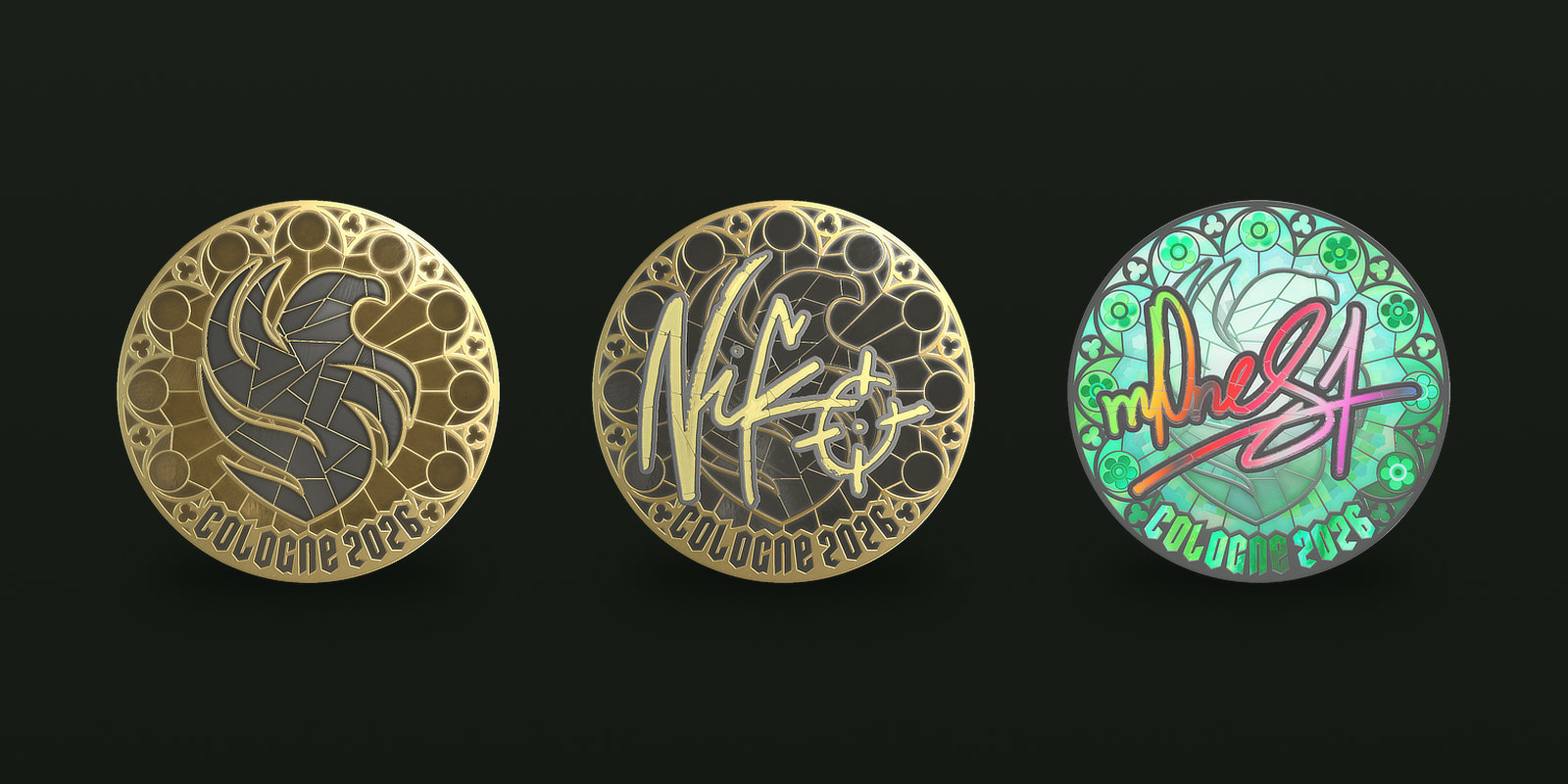
- Pick the exact sticker. Any team or player, in paper, holo, foil or gold.
- Pay in tokens. Tokens are bought only at checkout, with a minimum of 100 tokens for $0.99, according to Valve's May 2026 FAQ. Each Pick'Em coin upgrade also granted 300 tokens.
- Prices follow demand. When one sticker sells disproportionately well its price rises and others fall. Prices are the same worldwide and update in batches.
- Partial protection. If a sticker's price drops by 25 tokens or more within 24 hours of your purchase, the difference comes back as tokens after a week.
The new revenue split
Valve kept the 50% share but tied it to results. Of total Major Shop and Major Pass revenue, the tournament organiser receives 5%. The other 45% is spread across the 32 team positions, from 2.85% for the winner down to 0.72% each for 31st and 32nd. Until the grand final the positions followed each team's Valve Regional Standings seeding; after it, the final standings. Within each position, half goes to the organisation and half is split equally among the five players.
In practice, for every $1 million of shop and pass revenue after the final, the champion's slot earns $28,500: $14,250 for the organisation and $2,850 for each player.
Ranked Series and the shop closing
On July 29, 2026 Valve added Ranked Series stickers that show each team's final standing in the design. Valve said the original dynamic pricing "didn't produce reasonable prices", so the Ranked stickers are cheaper while keeping the same price relationship between players and teams. Royalties stayed at 50%. Valve said the Cologne 2026 Shop would close on September 29, 2026.
What this means for collectors
- Capsule-era stickers keep their old logic. Each set was sold for a limited time, so supply stopped growing once sales ended. Every sticker applied or scraped since then makes the unapplied supply smaller.
- Token-shop stickers have no luck element. What you paid depended on when you bought, not what you pulled.
- The format may change again. The next Major, PGL Singapore, runs from November 25 to December 13, 2026. As of early October Valve had not said whether it will keep the token shop or bring back capsules.
- Track a sticker across events. To compare one team's or player's stickers on guns, the sticker filters on Buy let you search listings by sticker and slot.
Sources
- Cologne 2015 Pick'Em Challenge — Counter-Strike blog (Valve)
- Sources: Paris Major sticker earnings exceeded $110 million — HLTV.org
- Valve release Copenhagen Major stickers — HLTV.org
- IEM Cologne 2026 announcement and FAQ (Valve) — GLeagues
- Valve release IEM Cologne Major stickers — HLTV.org
- CS2 July 29 update adds new Cologne 2026 stickers — Talkesport